
KILLED IN ACTION
KIA Japanese soldiers from the defense of Saipan
Please be advised that nudity and corpses may be seen and is displayed for historical context only.
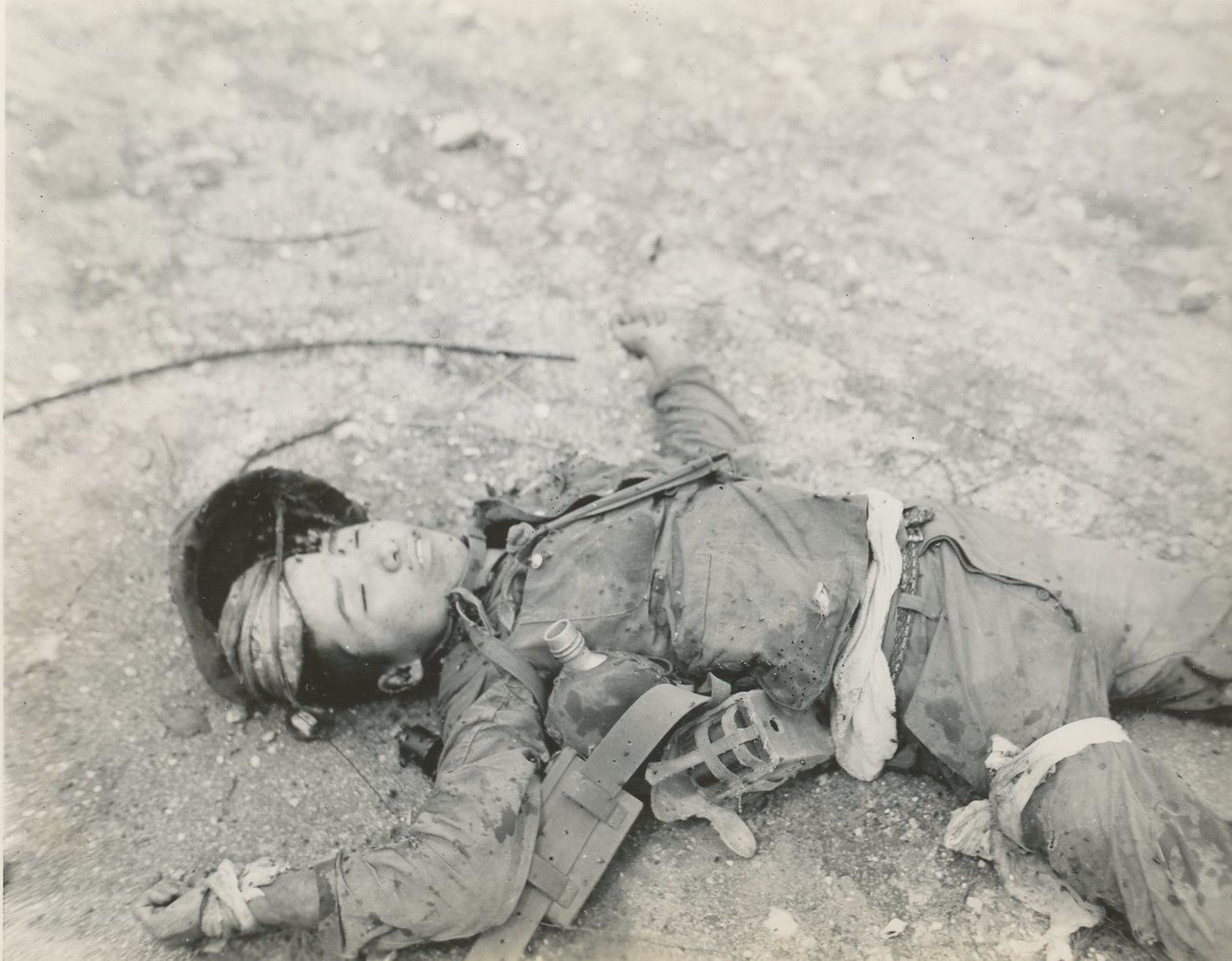
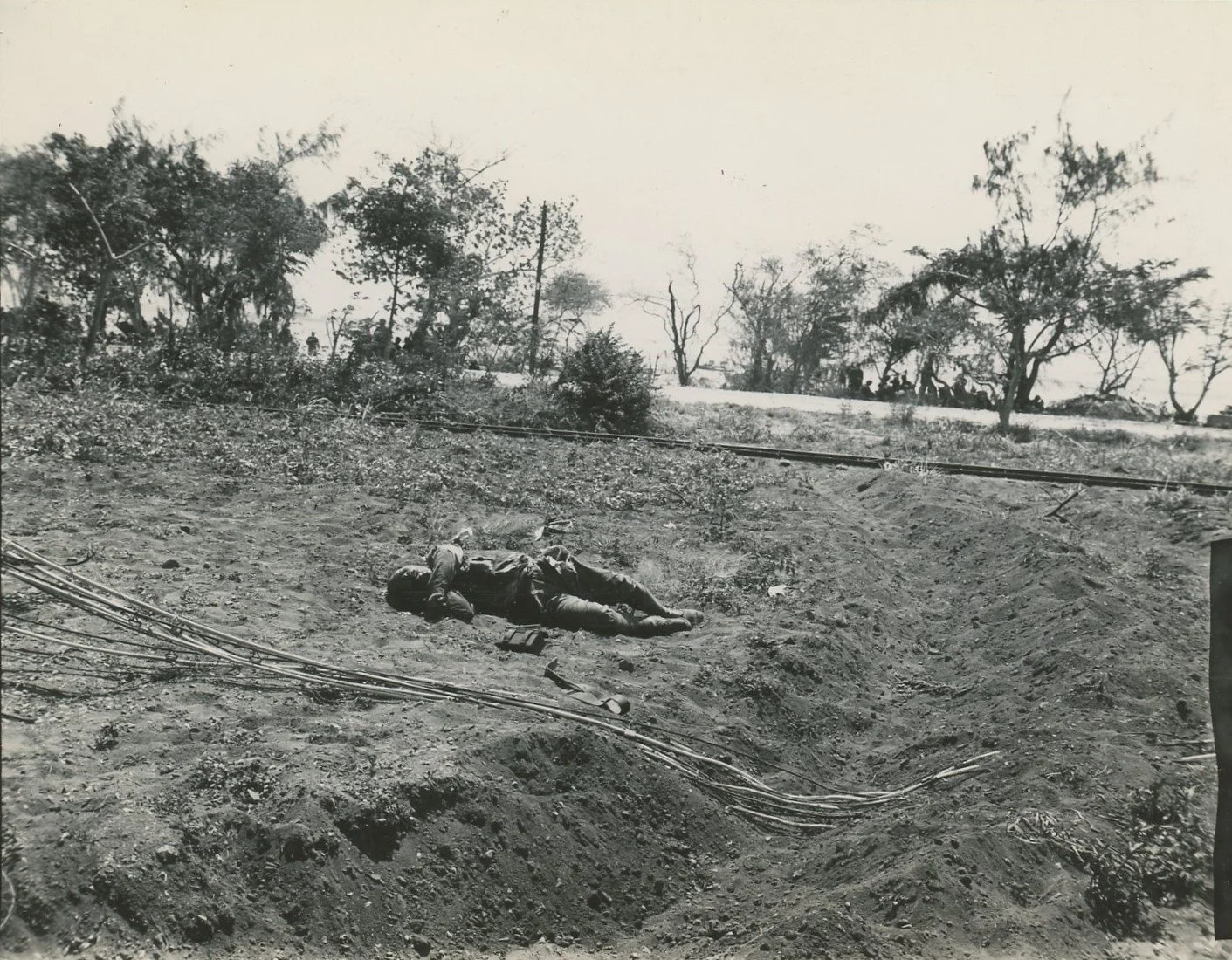
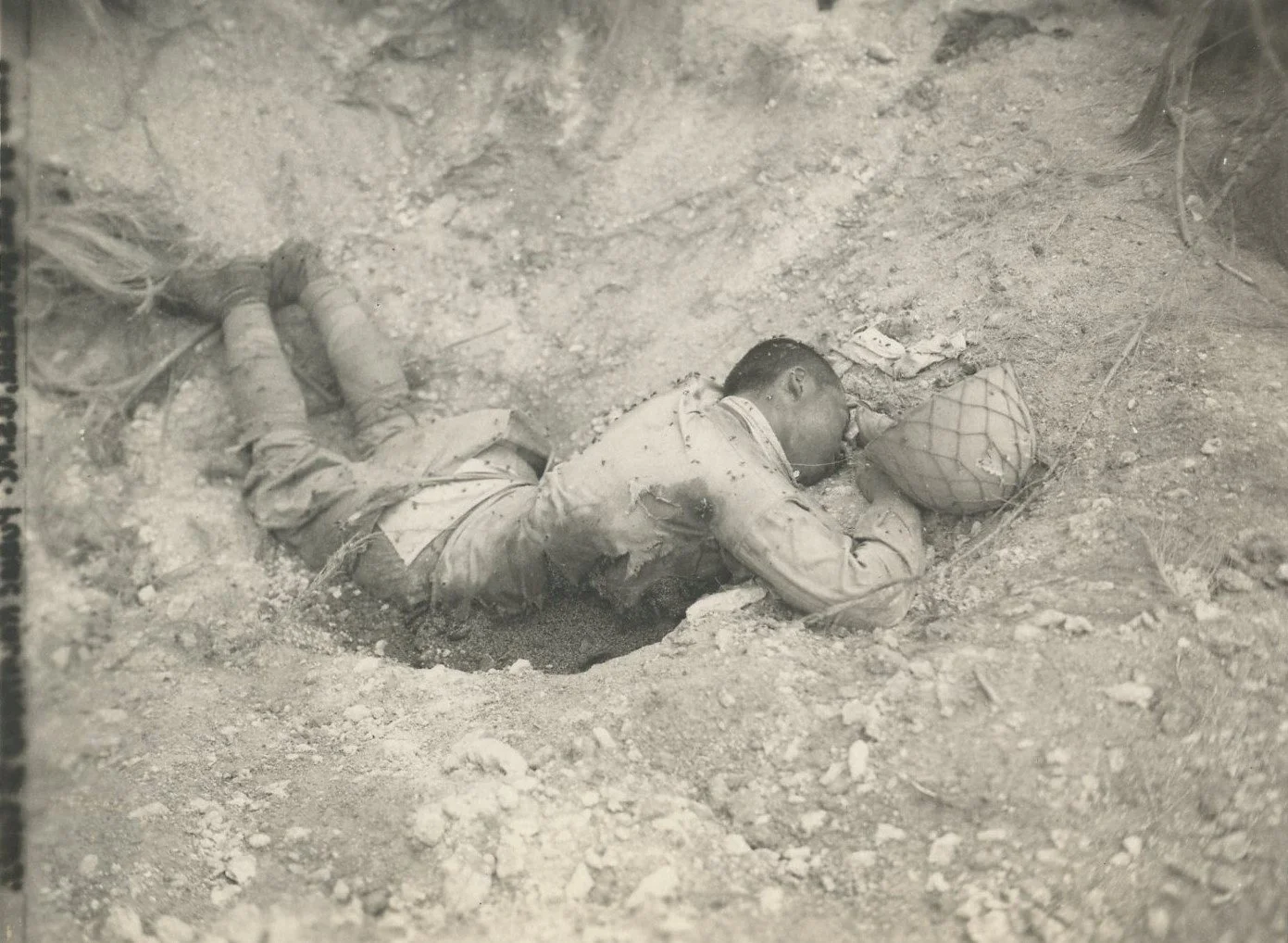
A member of the Imperial Japanese Navy killed near Garapan in 1944 is visible in the scene.
He wears a five-button work uniform, a braided civilian belt, a Class 2 cap, IJN canteen with a later-model black topper, a substitute rubberized belt set, and an IJN helmet fitted with cover and netting.
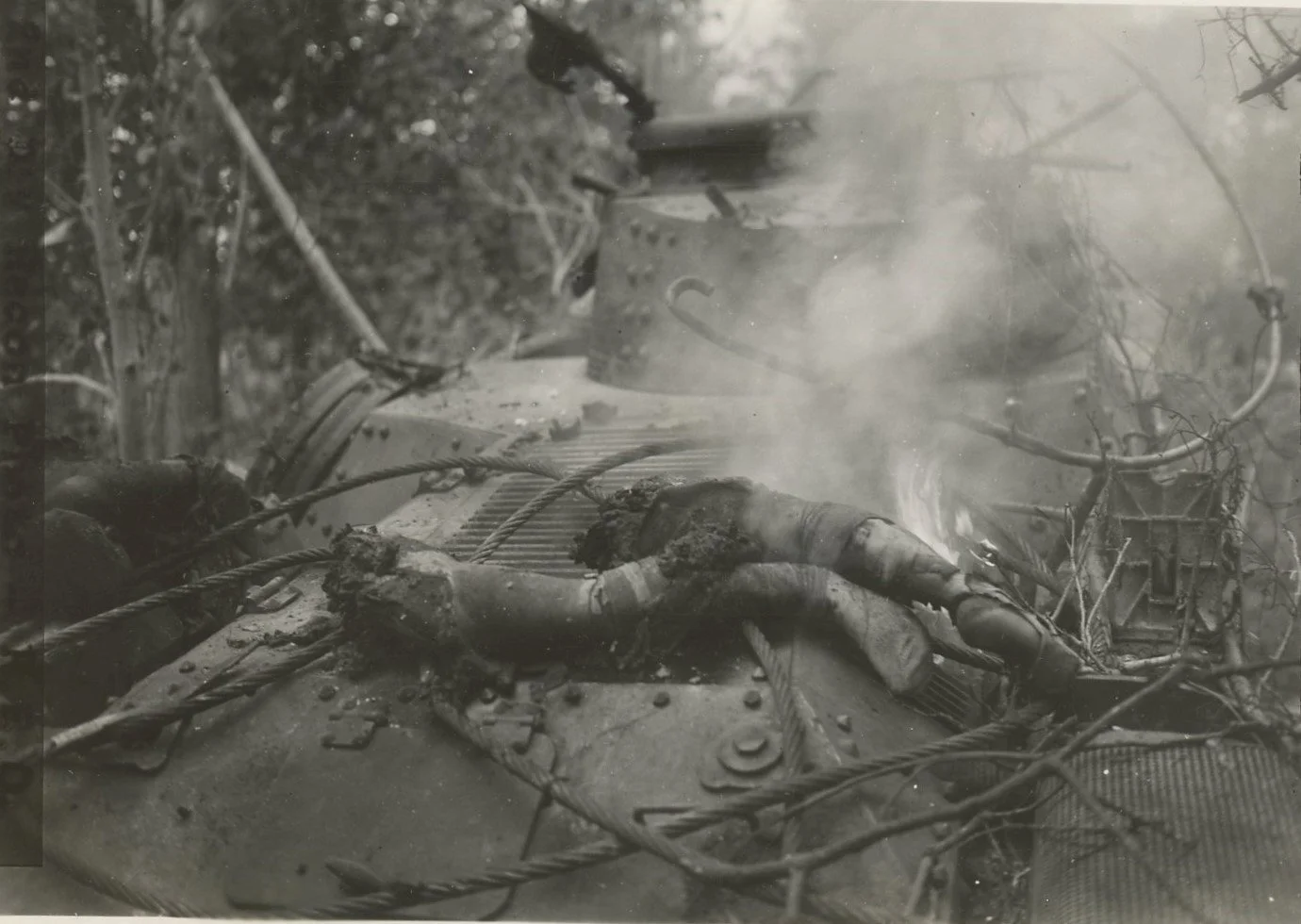
The charred leg remains of a Japanese soldier rest atop a tank of the Imperial Japanese Army’s 9th Tank Regiment, 3rd Company. The remainder of his body is visible to the left of the frame.
Reference: Jarae.co 9TR, 9TR-03-03
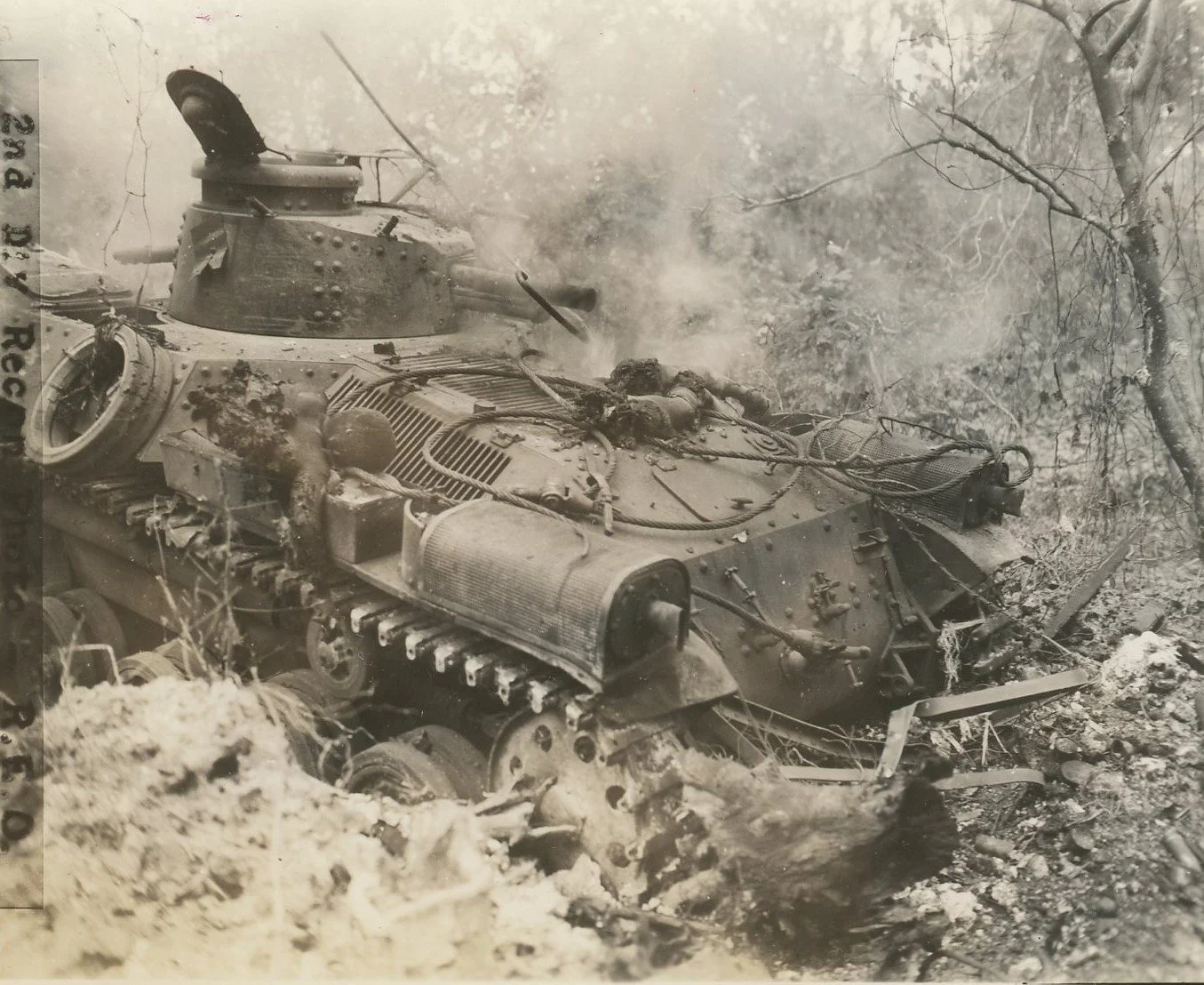
The charred leg remains of a Japanese soldier rest atop a tank of the Imperial Japanese Army’s 9th Tank Regiment, 3rd Company. The remainder of his body is visible to the left of the frame.
Reference: Jarae.co 9TR, 9TR-03-03
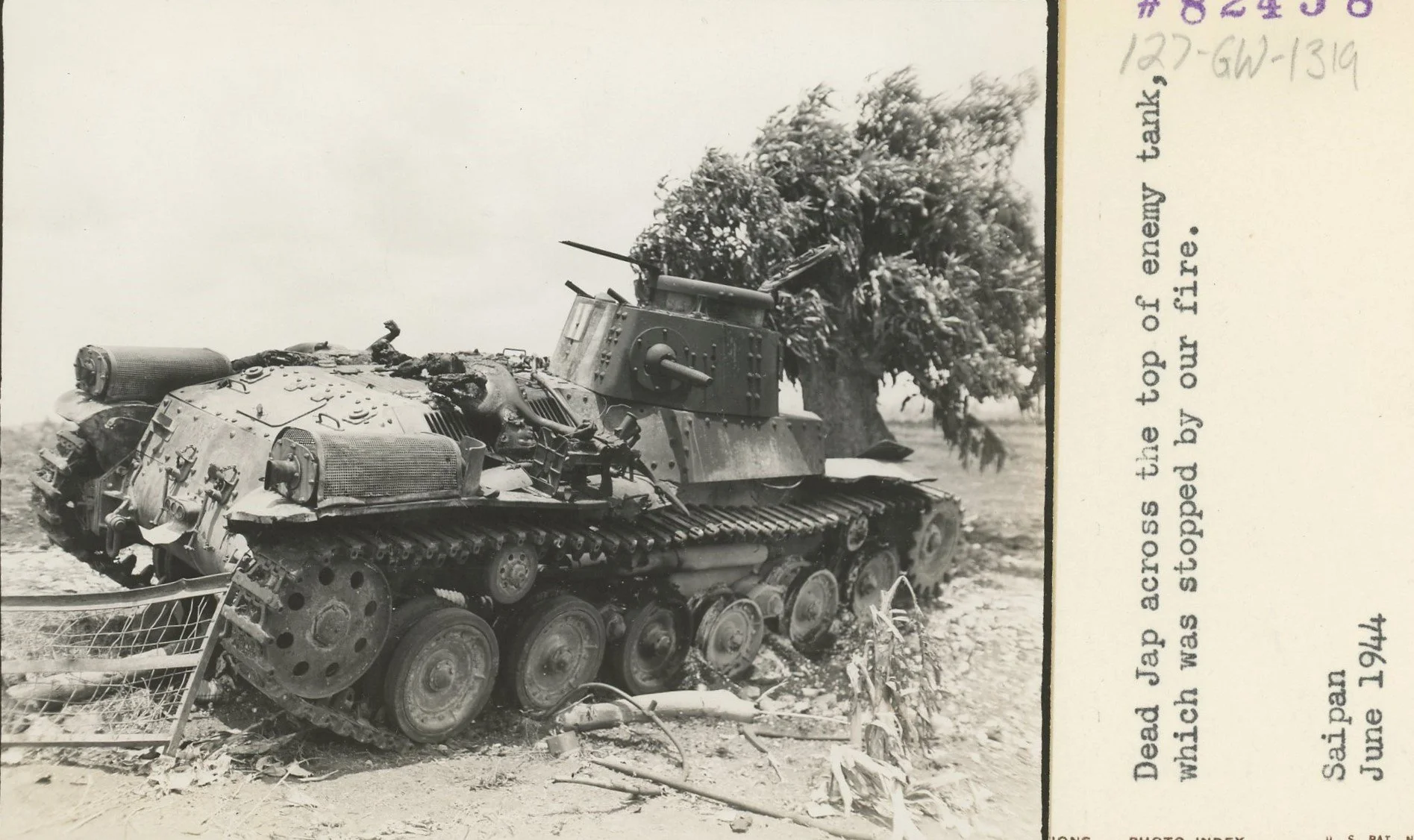
The charred remains of a Japanese soldier rest atop a tank of the Imperial Japanese Army’s 9th Tank Regiment, 3rd Company.
Reference: Jarae.co 9TR, 9TR-03-02
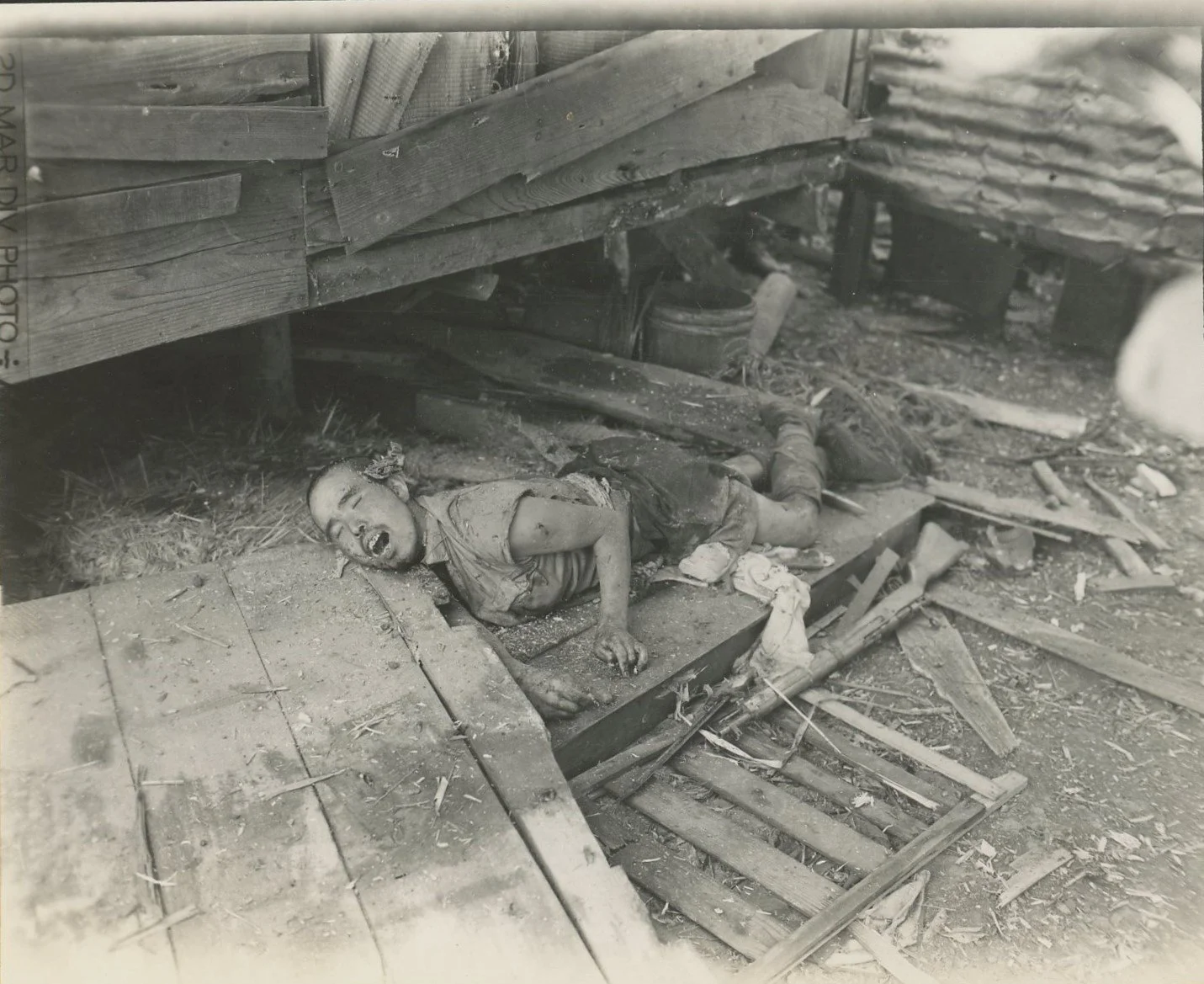
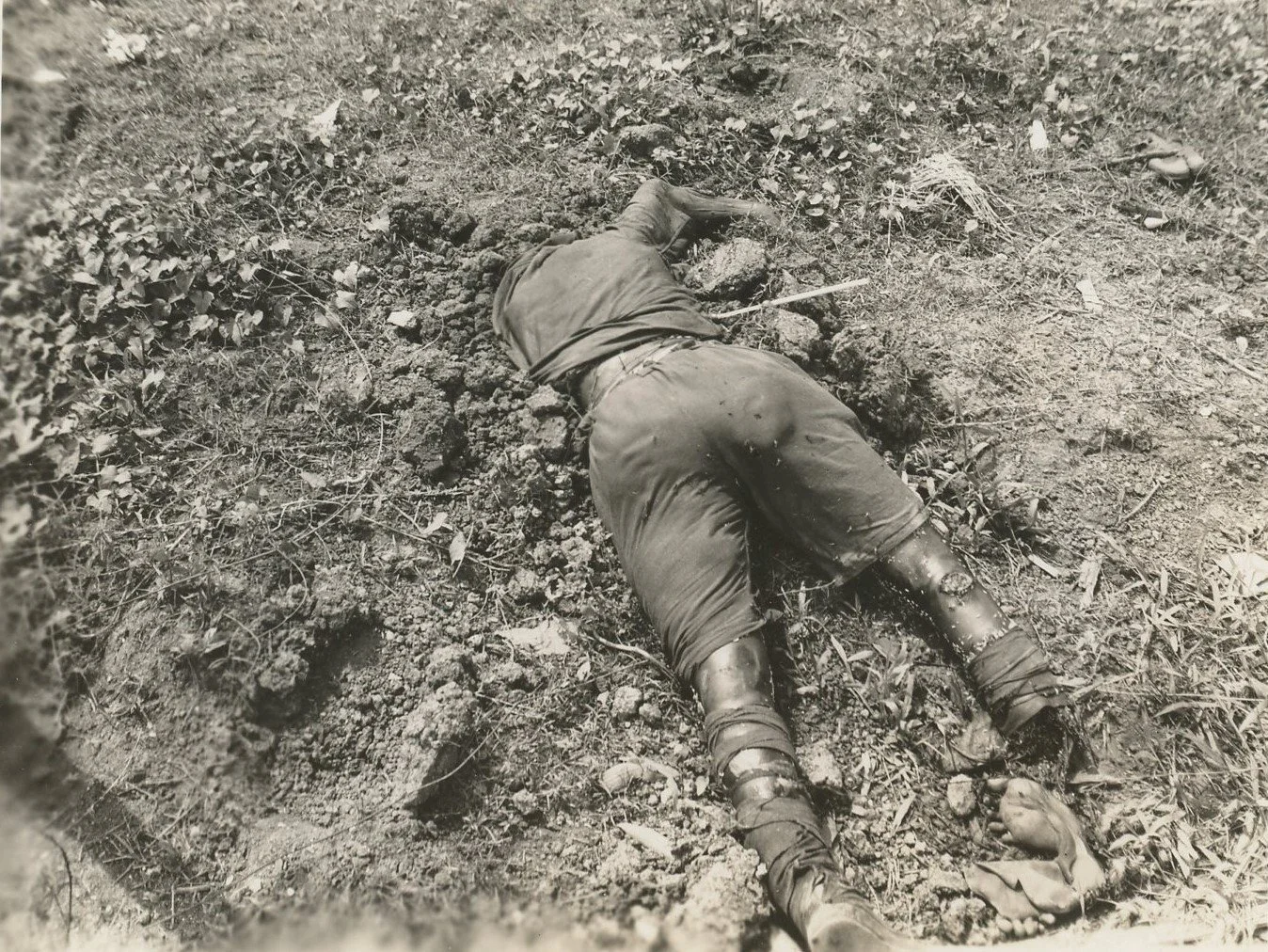
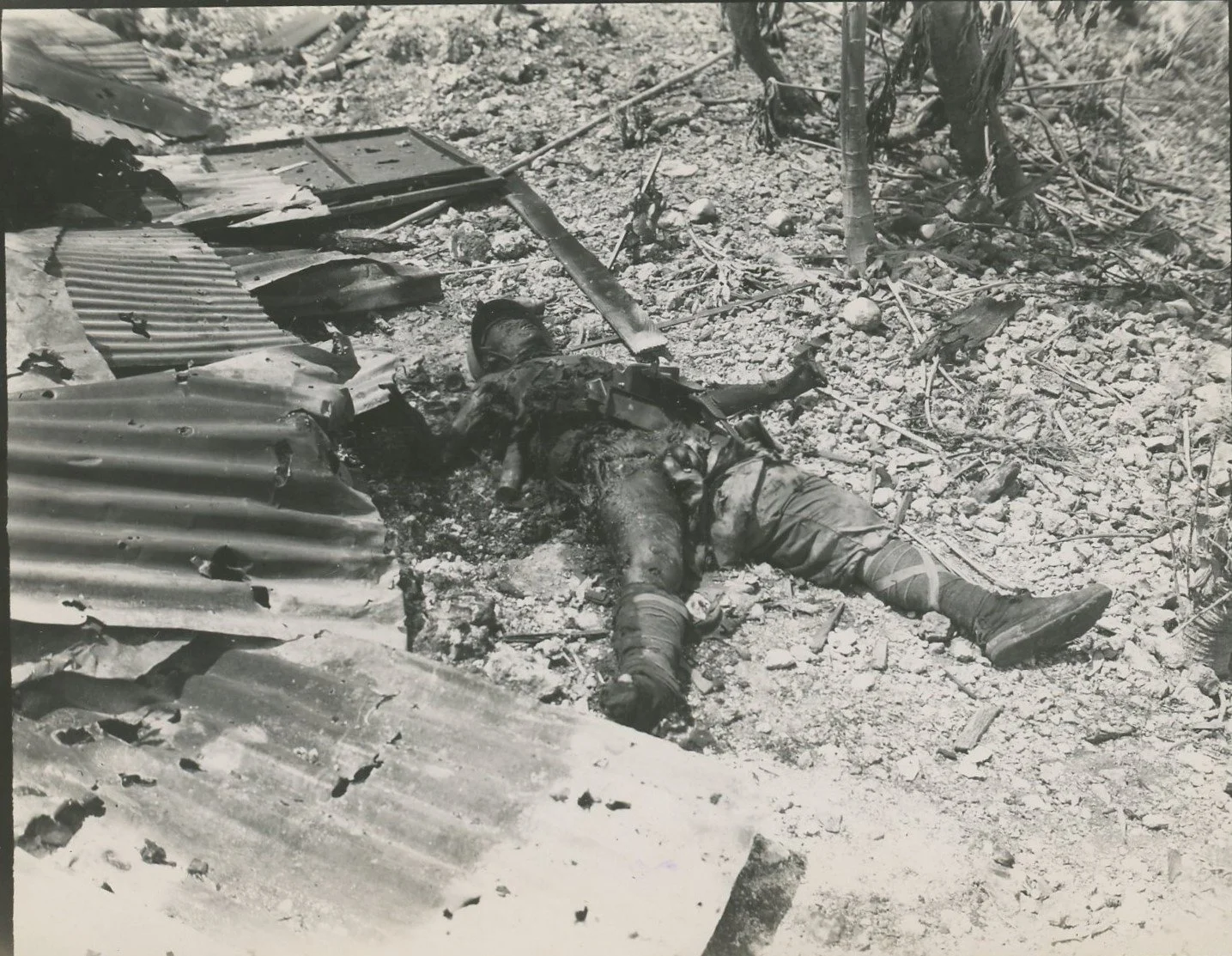
An Imperial Japanese Army soldier killed during urban fighting in Garapan is visible in the scene.
He wears a short-sleeve anti-heat jyuban, anti-heat shorts, puttees, and closed-toe tabi. To his right lies a mid-war Type 99 rifle, lacking a dust cover and monopod but retaining the cleaning rod and anti-aircraft sights. An early-war Type 30 bayonet rests beside the rifle.
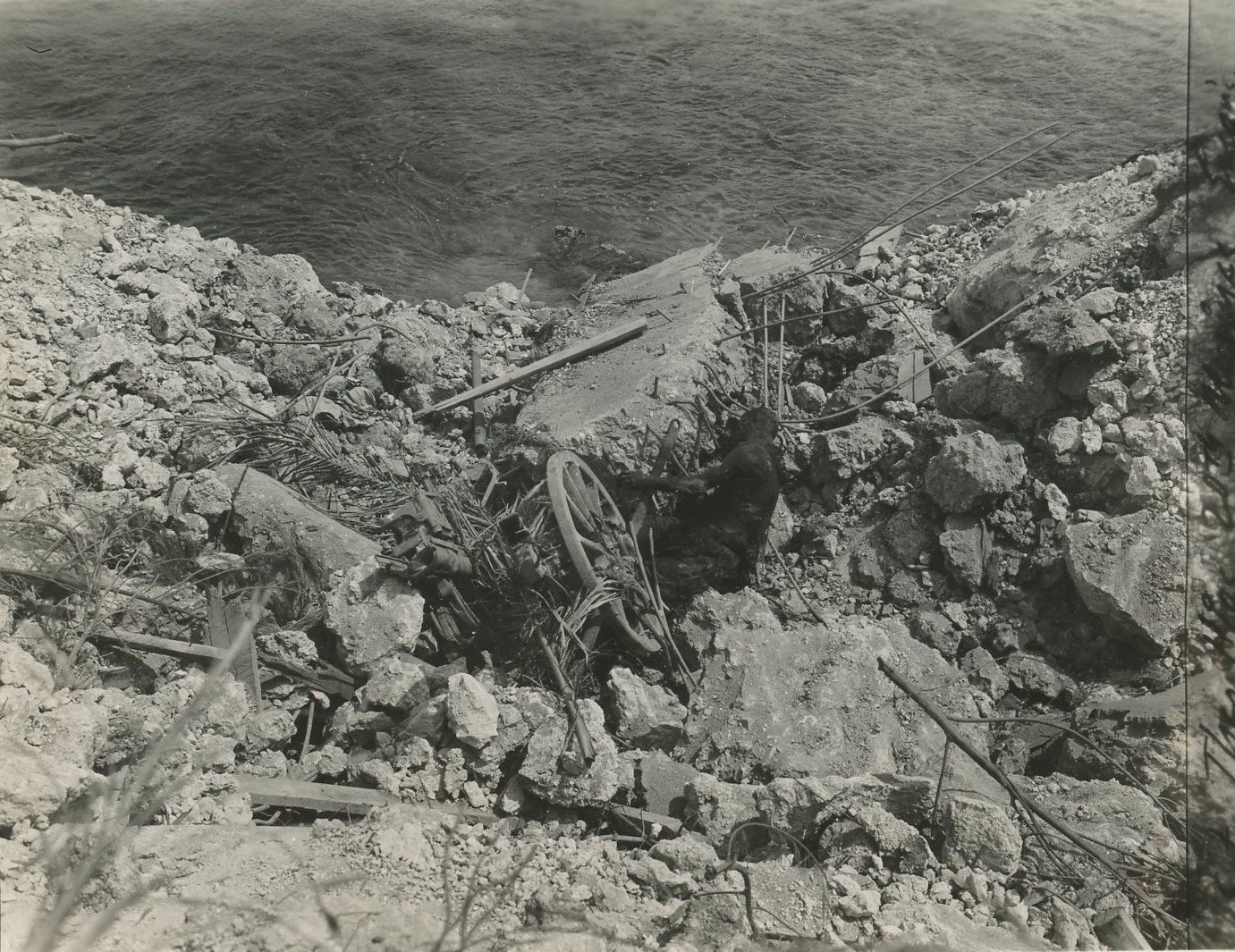
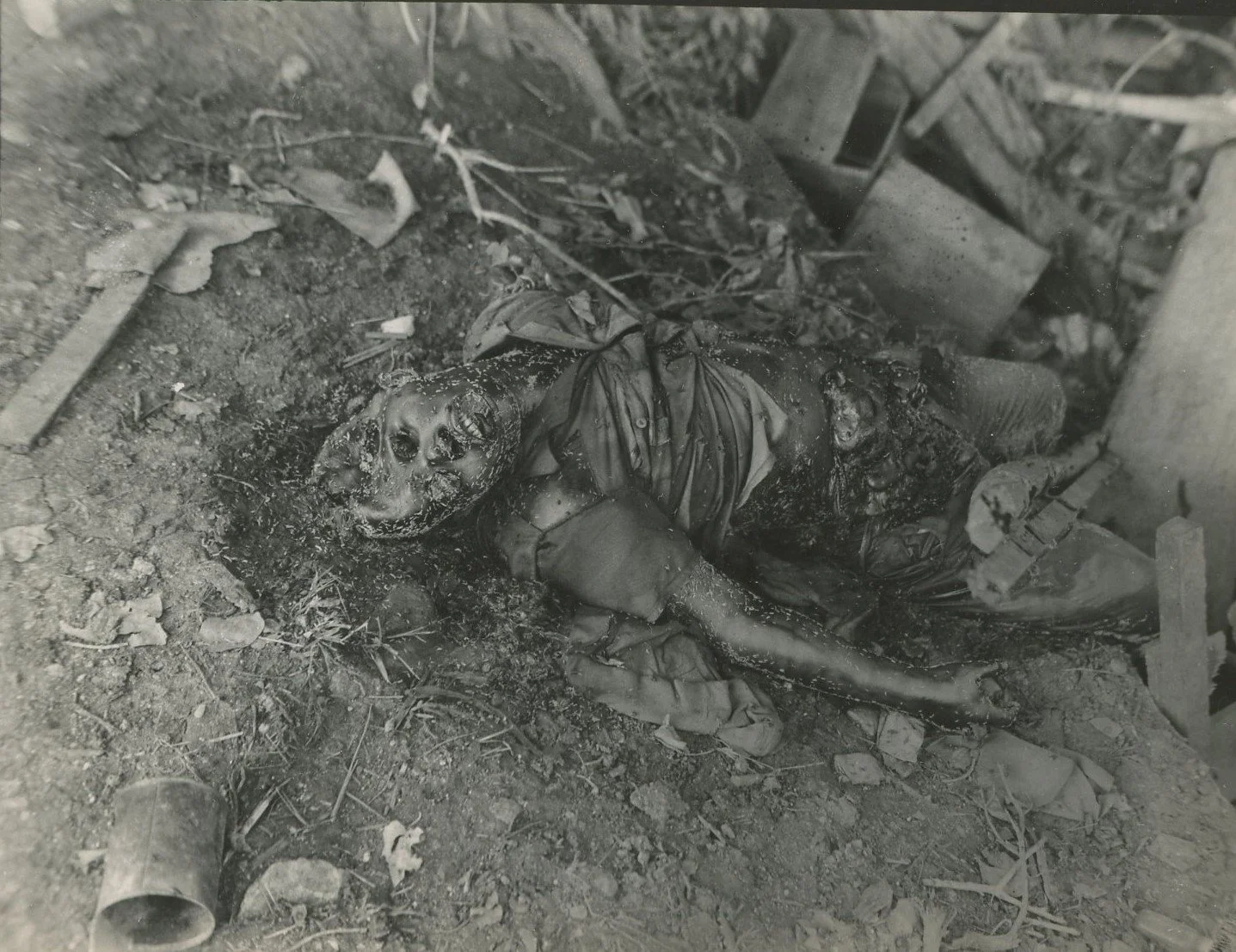
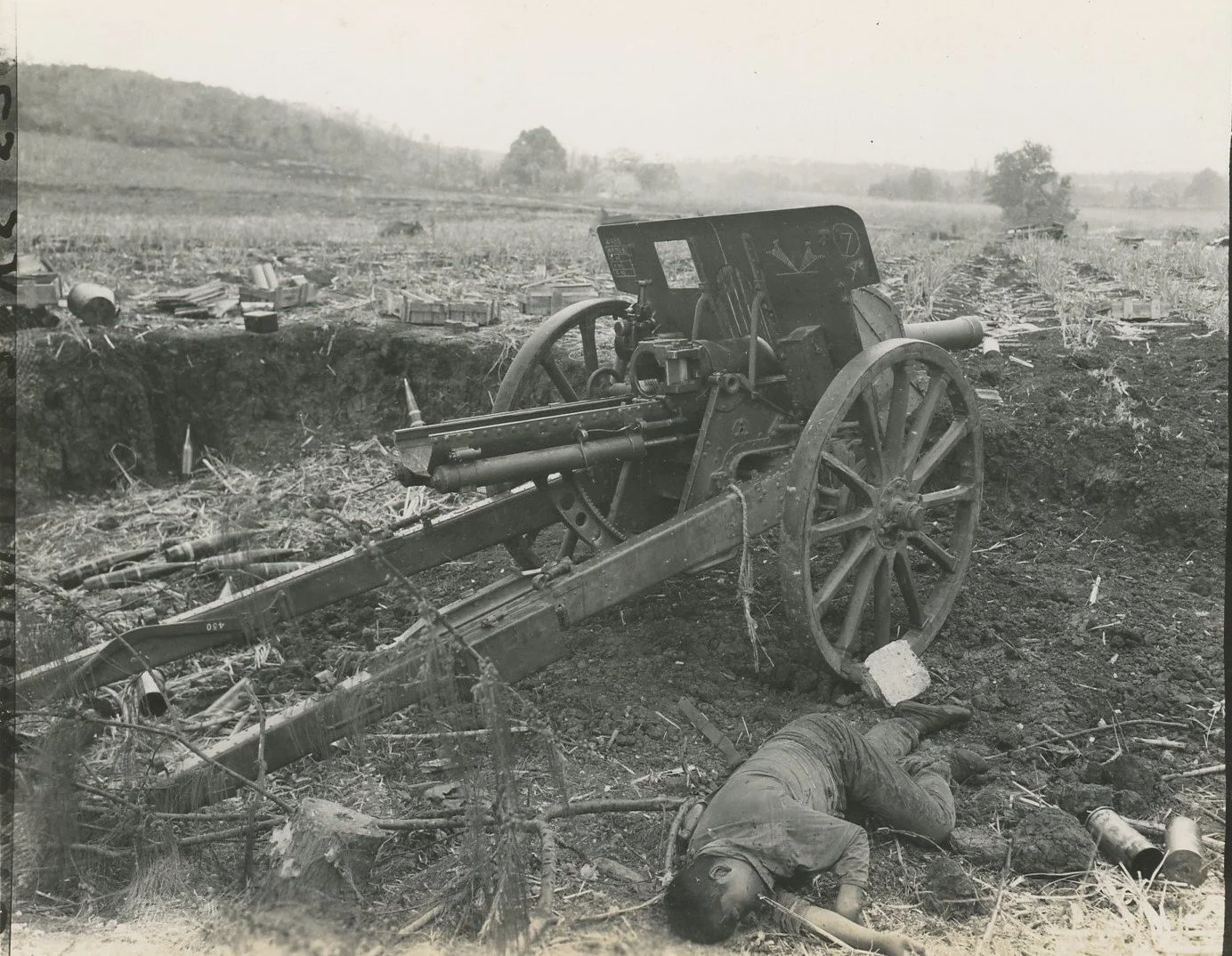
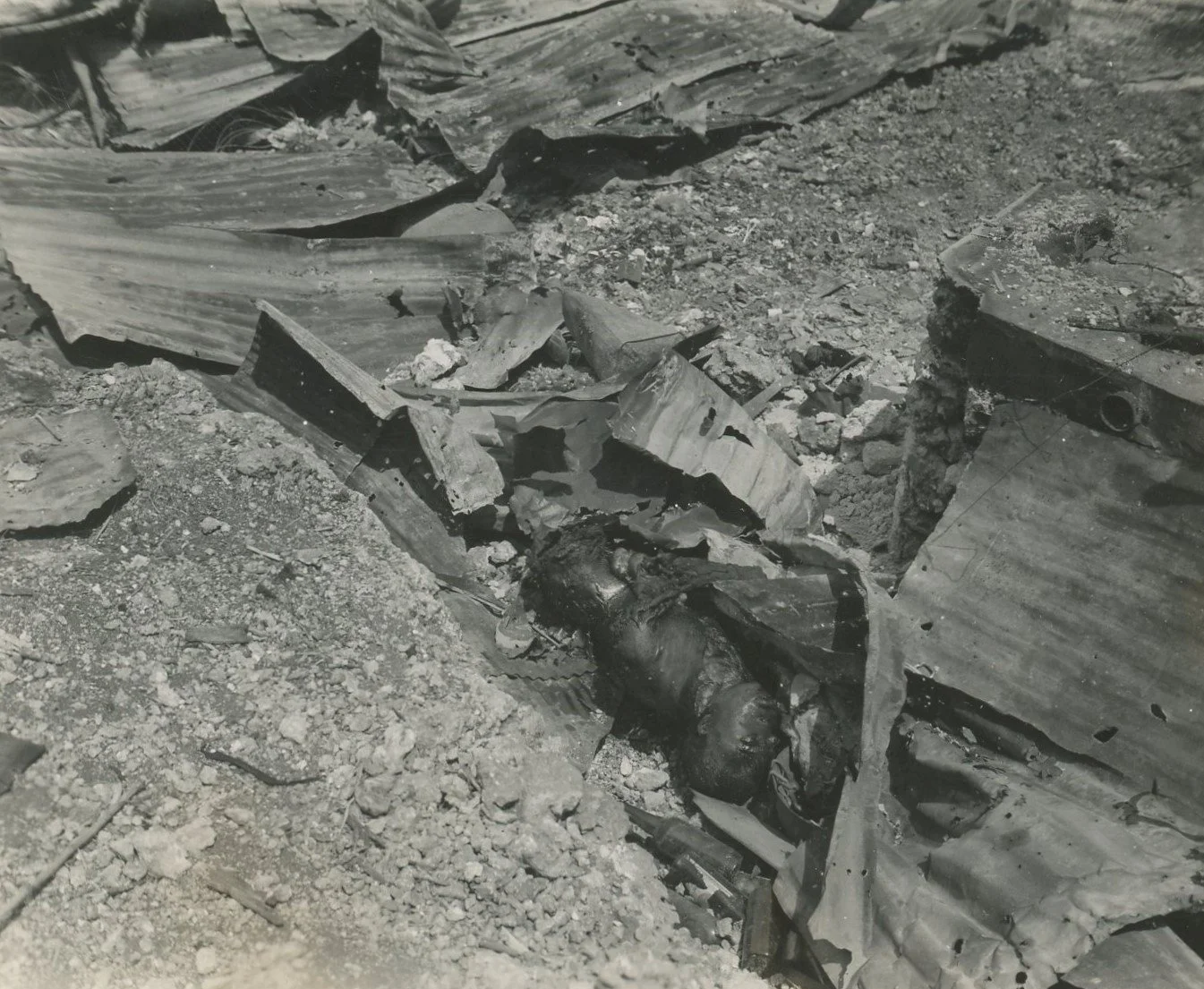
The charred remains of a Japanese soldier lie beneath the wreckage of a Type 94 75mm mountain gun, located near Marpi.
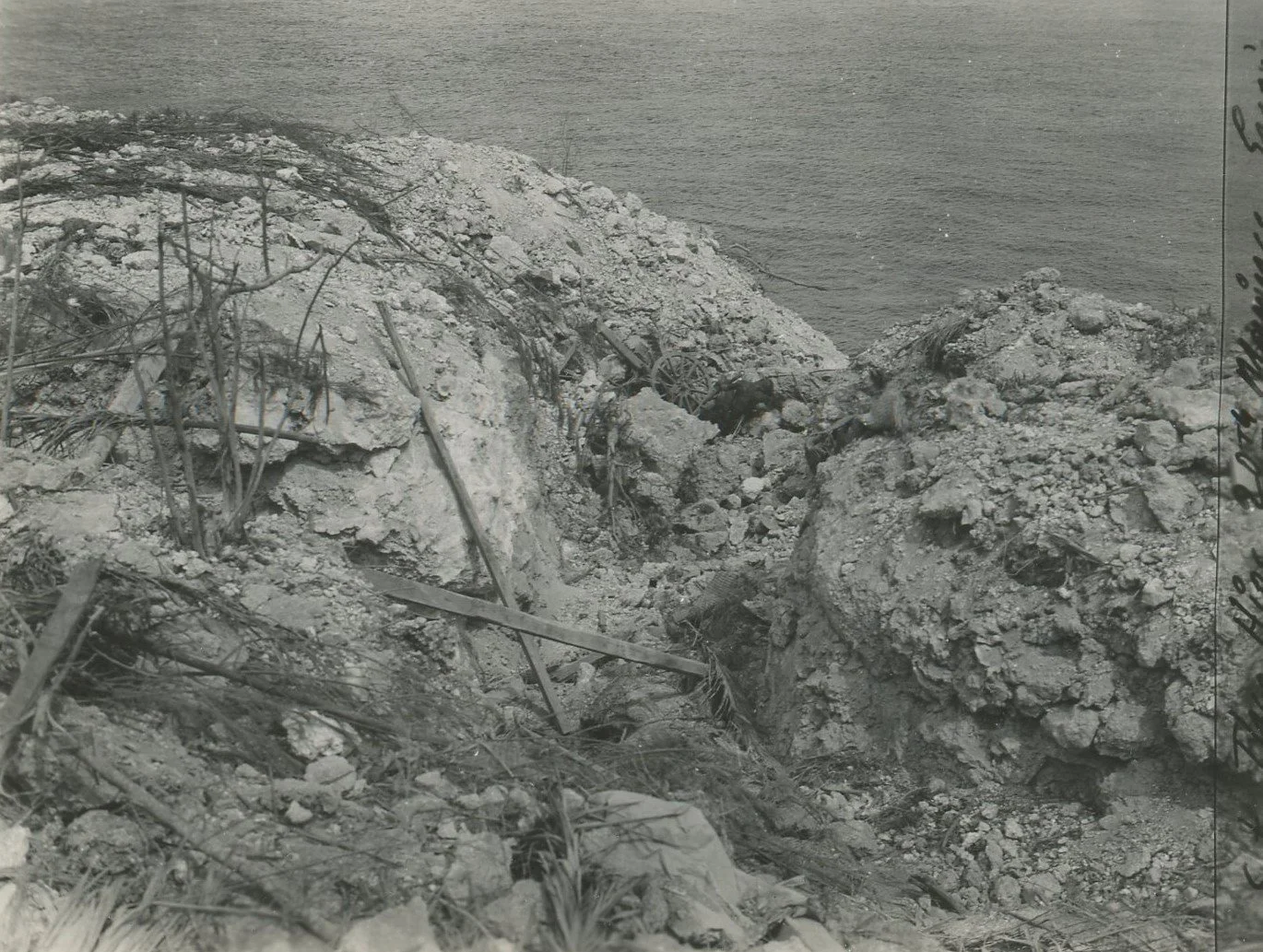
The charred remains of a Japanese soldier lie beneath the wreckage of a Type 94 75mm mountain gun, located near Marpi.
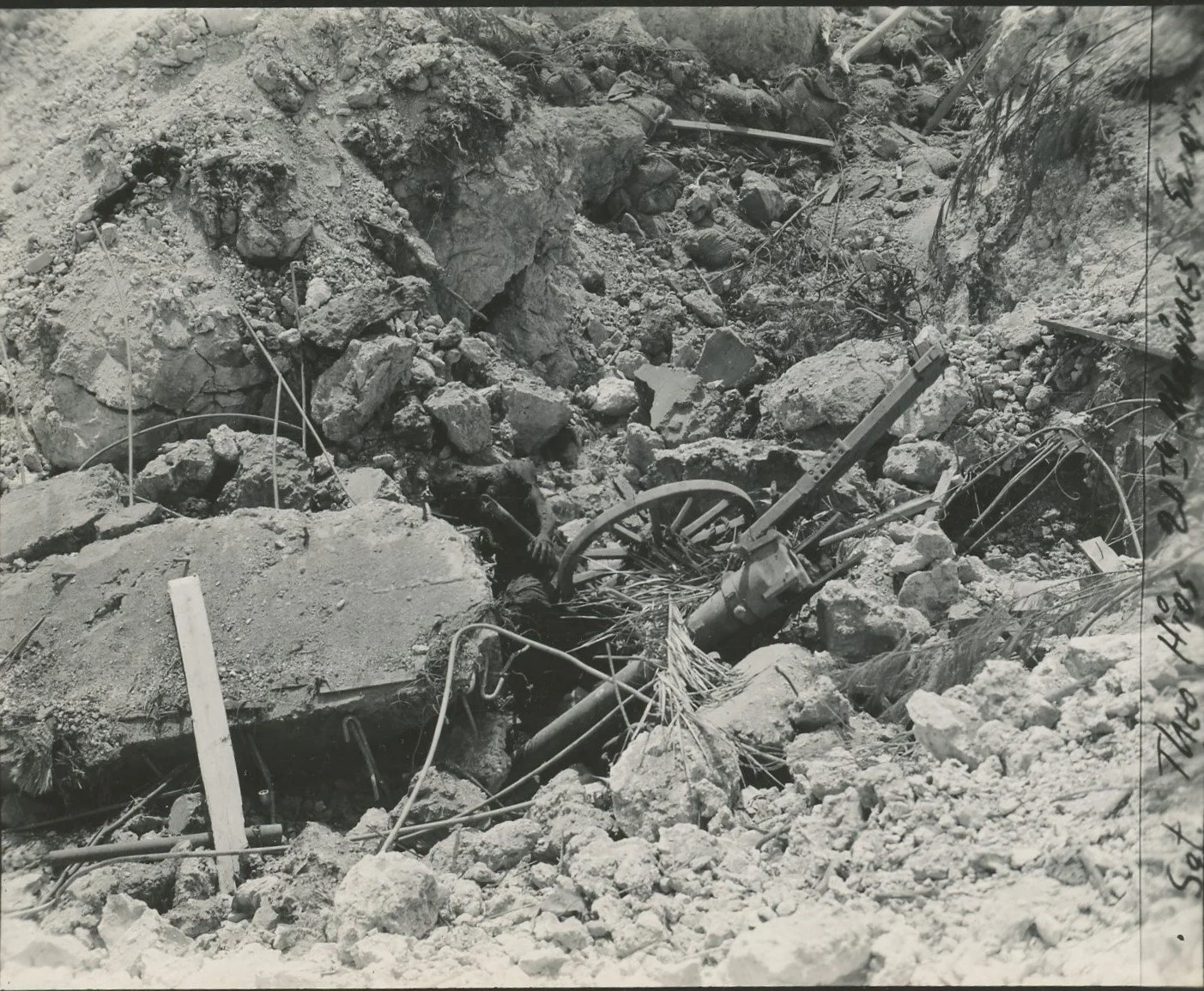
The charred remains of a Japanese soldier lie beneath the wreckage of a Type 94 75mm mountain gun, located near Marpi.
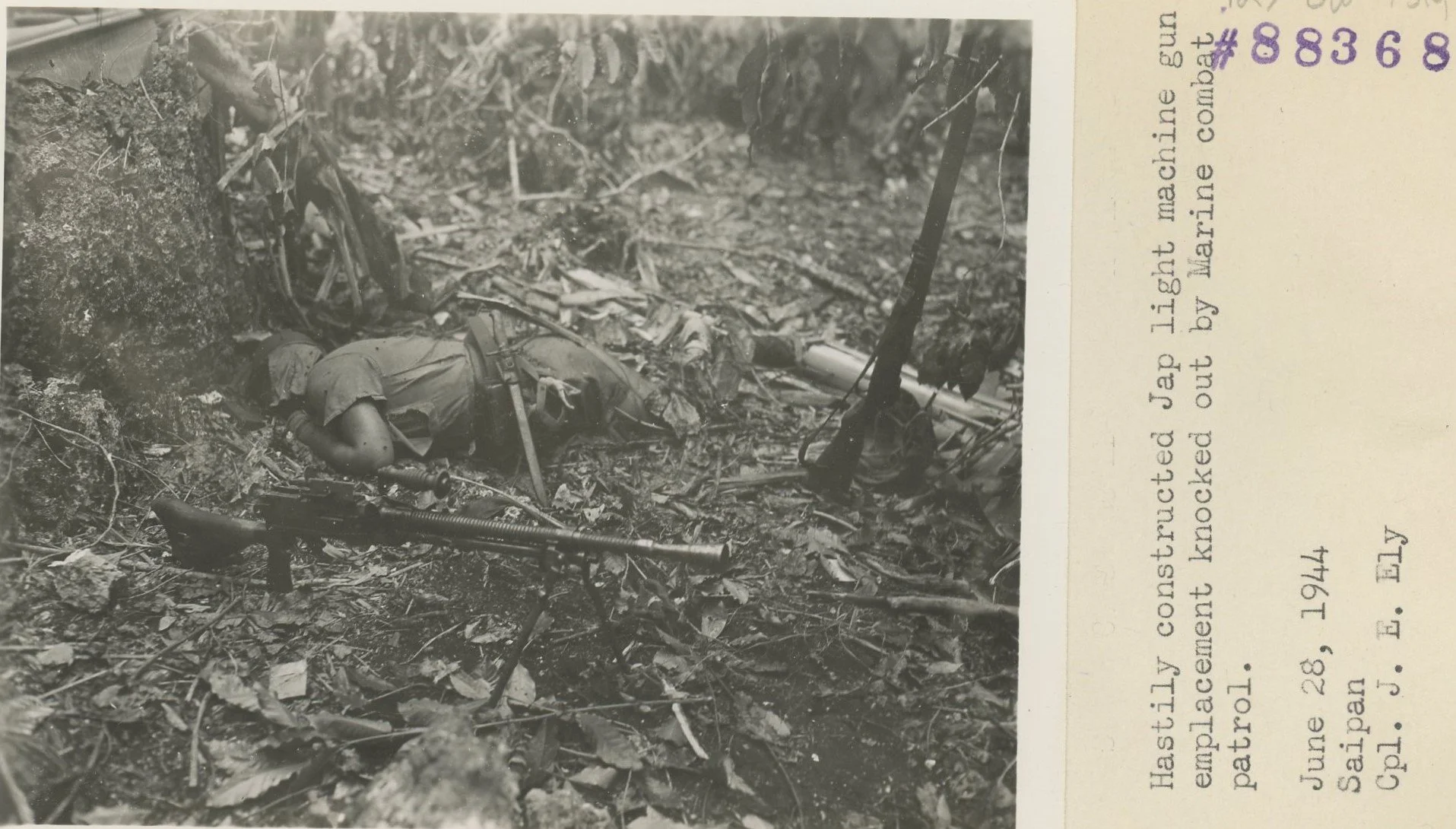
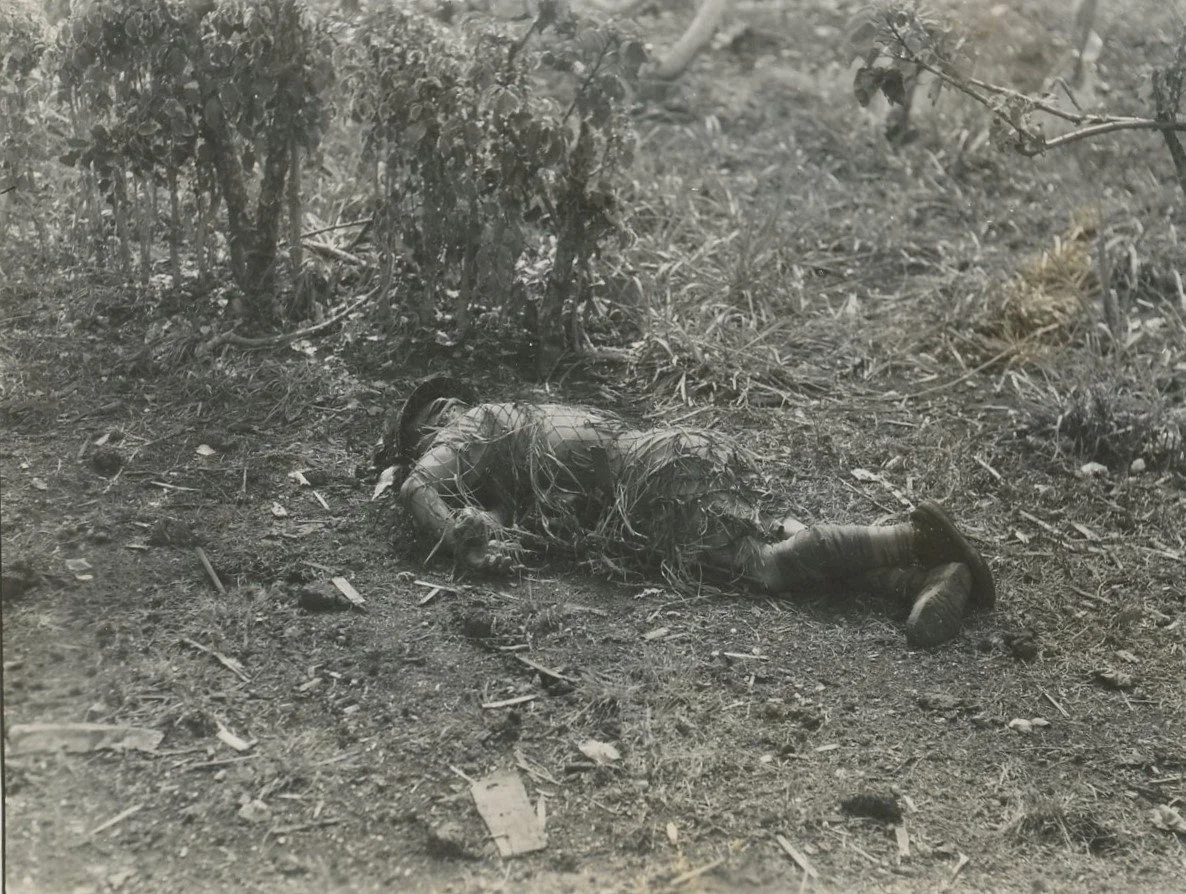
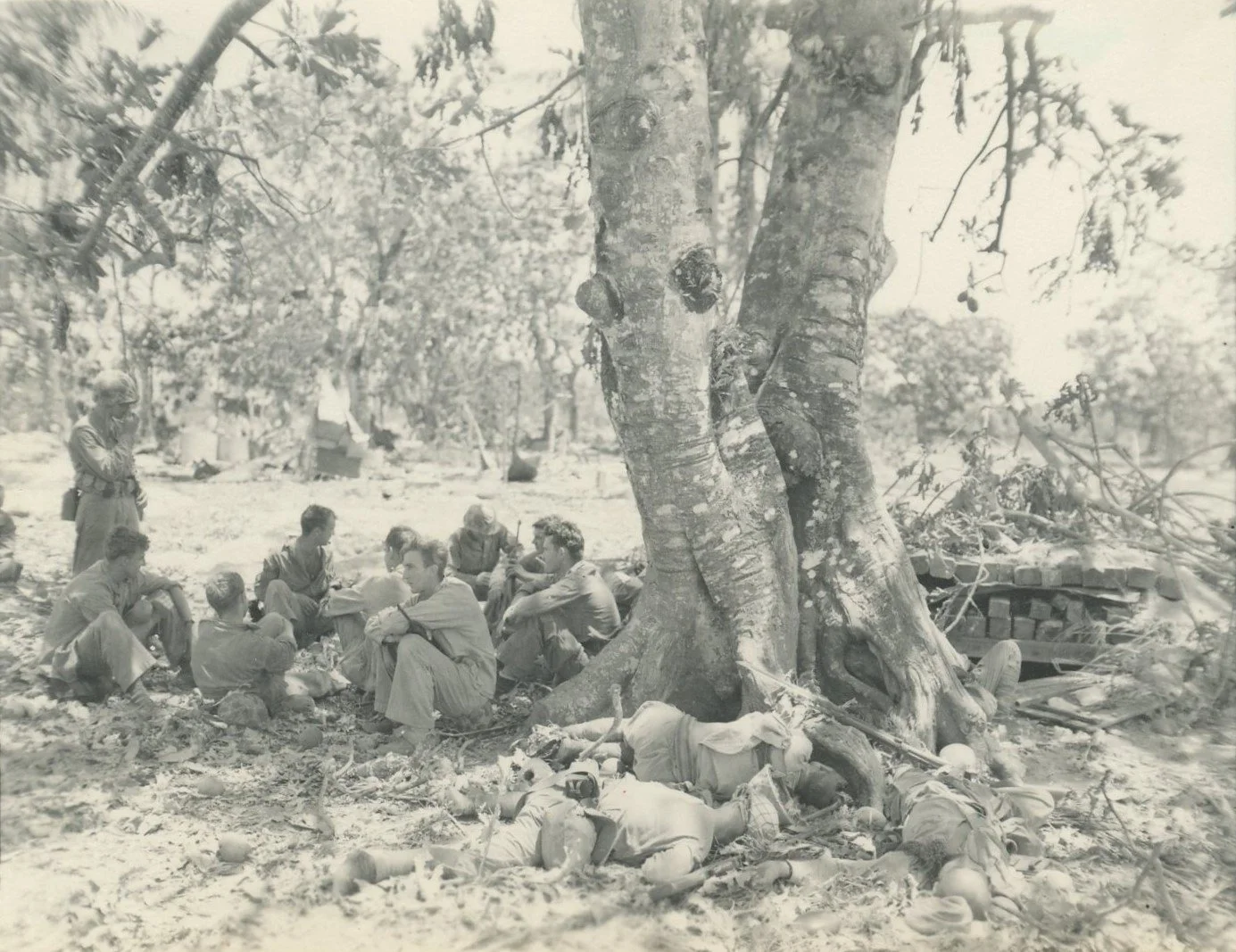
An Imperial Japanese Army soldier killed by Marines during a patrol is visible in the scene.
He wears a Showa 13 regulation cap with havelocks, white gloves, short-sleeve anti-heat jyuban, late Ko pouches, a mid-war straight-quillon Type 30 bayonet, Showa 5 regulation canteen, and trousers. To his right, an army Type 90 helmet lies on its side, fitted with a foliage net.
A Type 99 rifle leans against a tree, fitted with another straight-quillon Type 30 bayonet and a Type 38 sling. The rifle lacks a dust cover and monopod but retains the cleaning rod and anti-aircraft sights.
In the foreground, a lone Type 99 light machine gun rests without a sling, scope, or magazine.
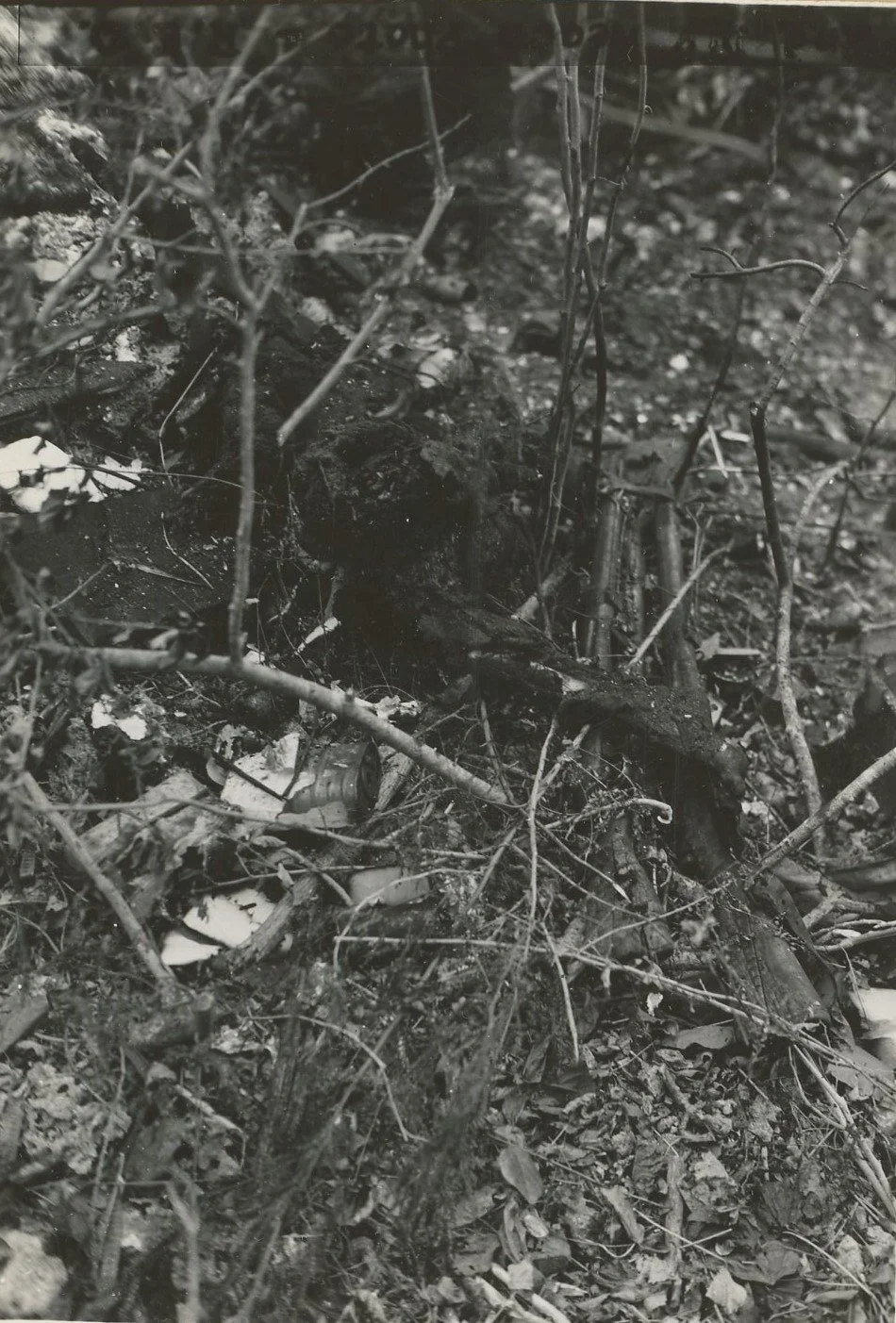
The charred remains of a Japanese soldier lie next to a pile of Type 99 rifles, all retaining their monopods and other early-war features.
In the foreground, an army-model gas mask filter is visible near the remains.
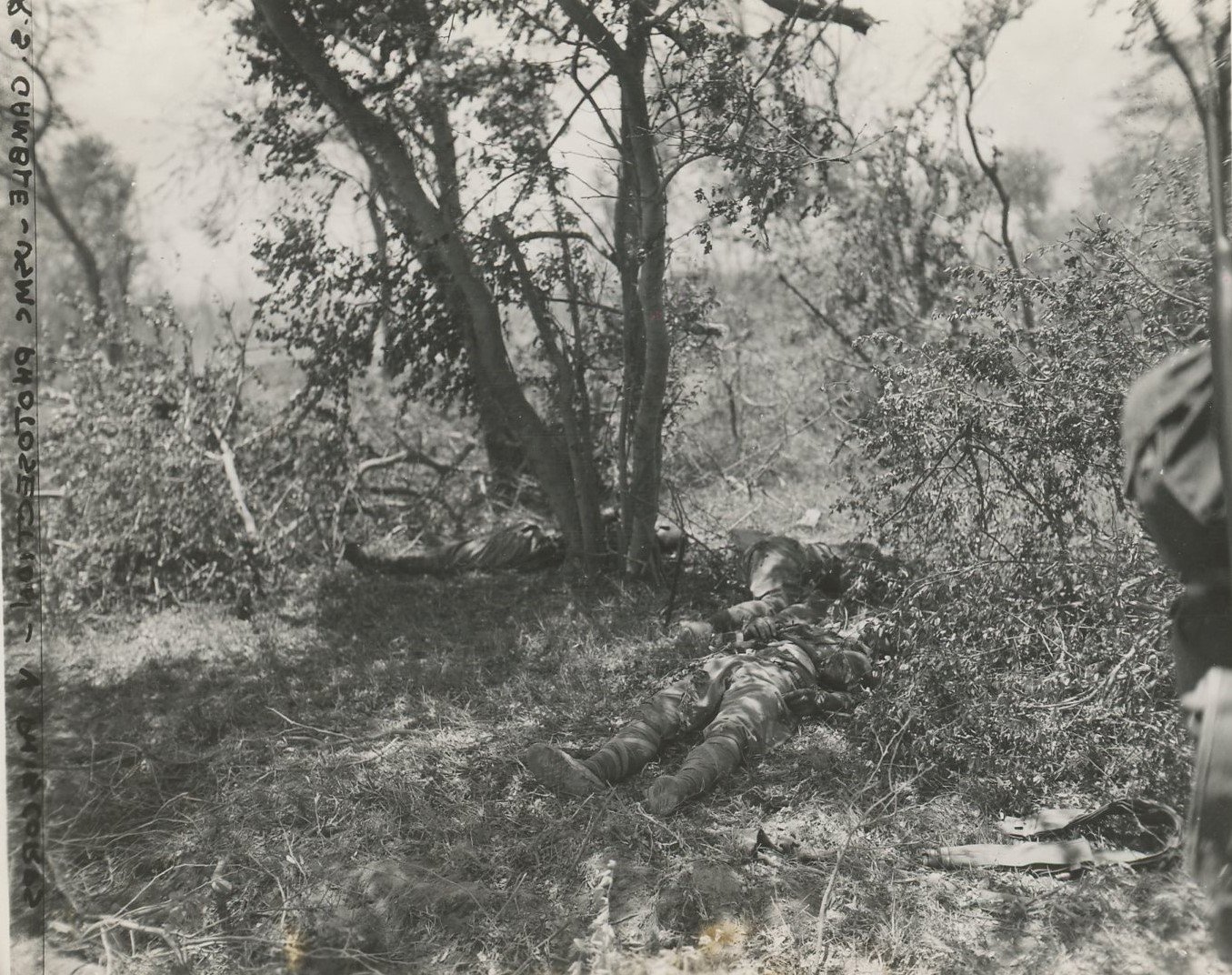
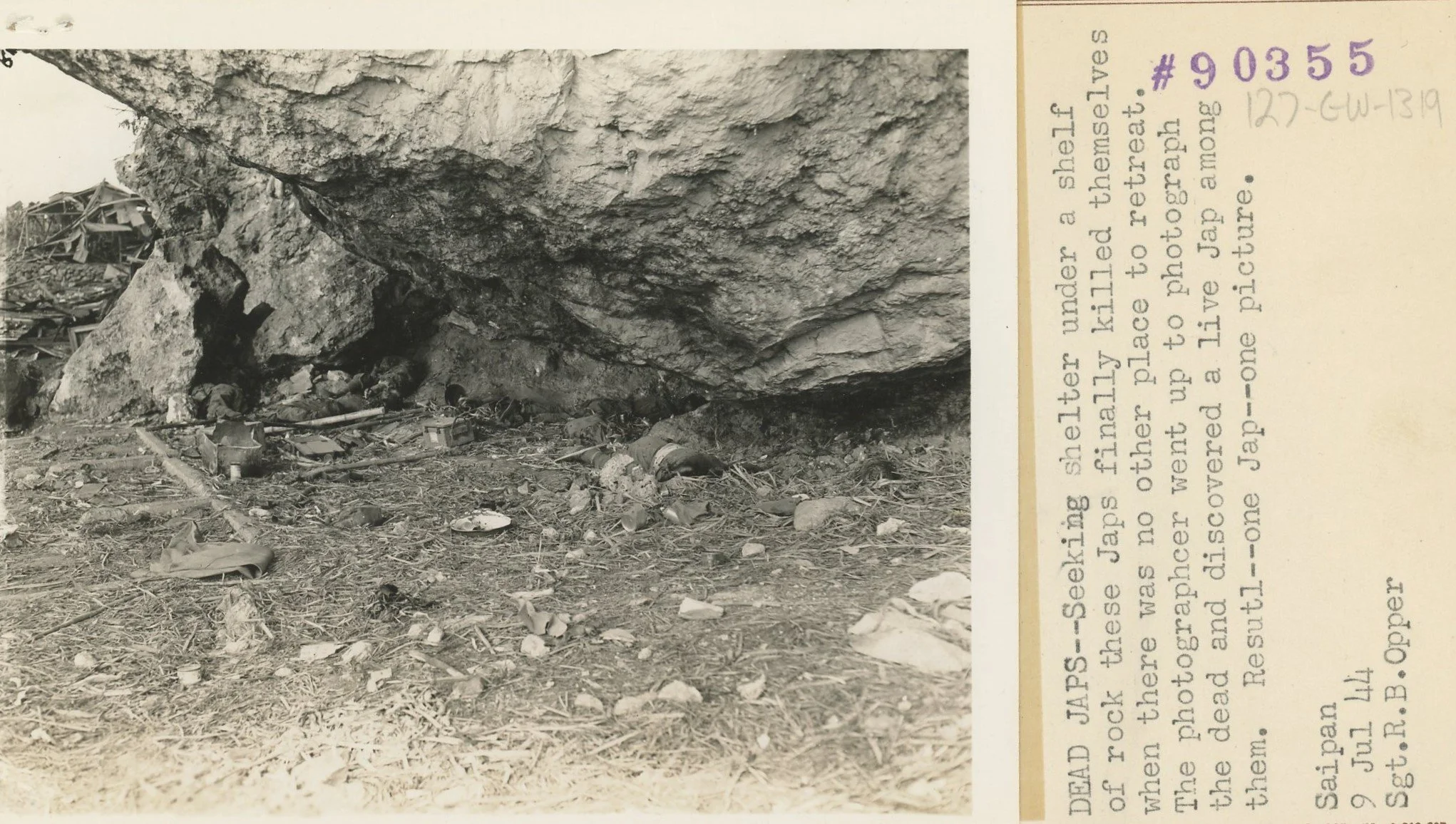
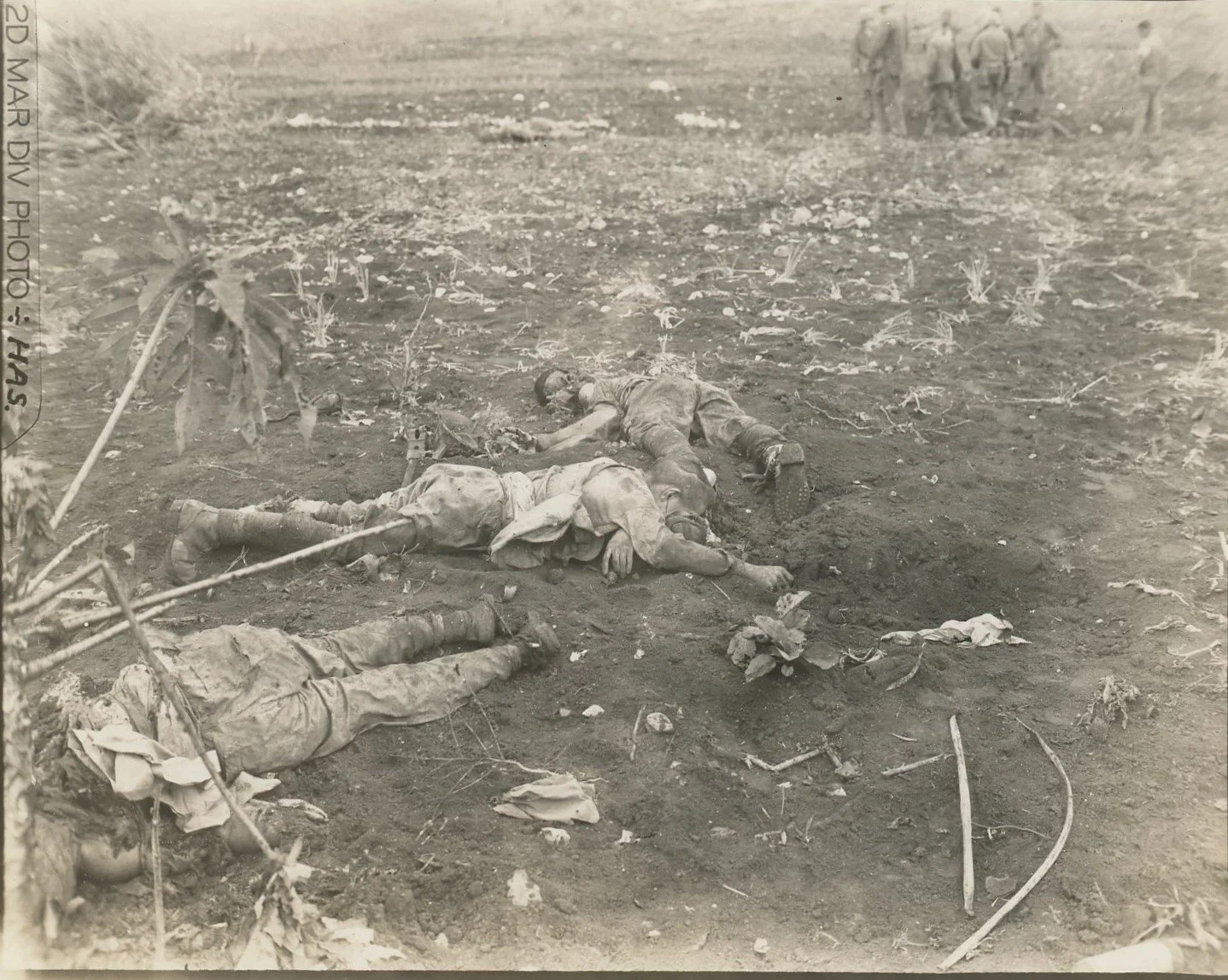
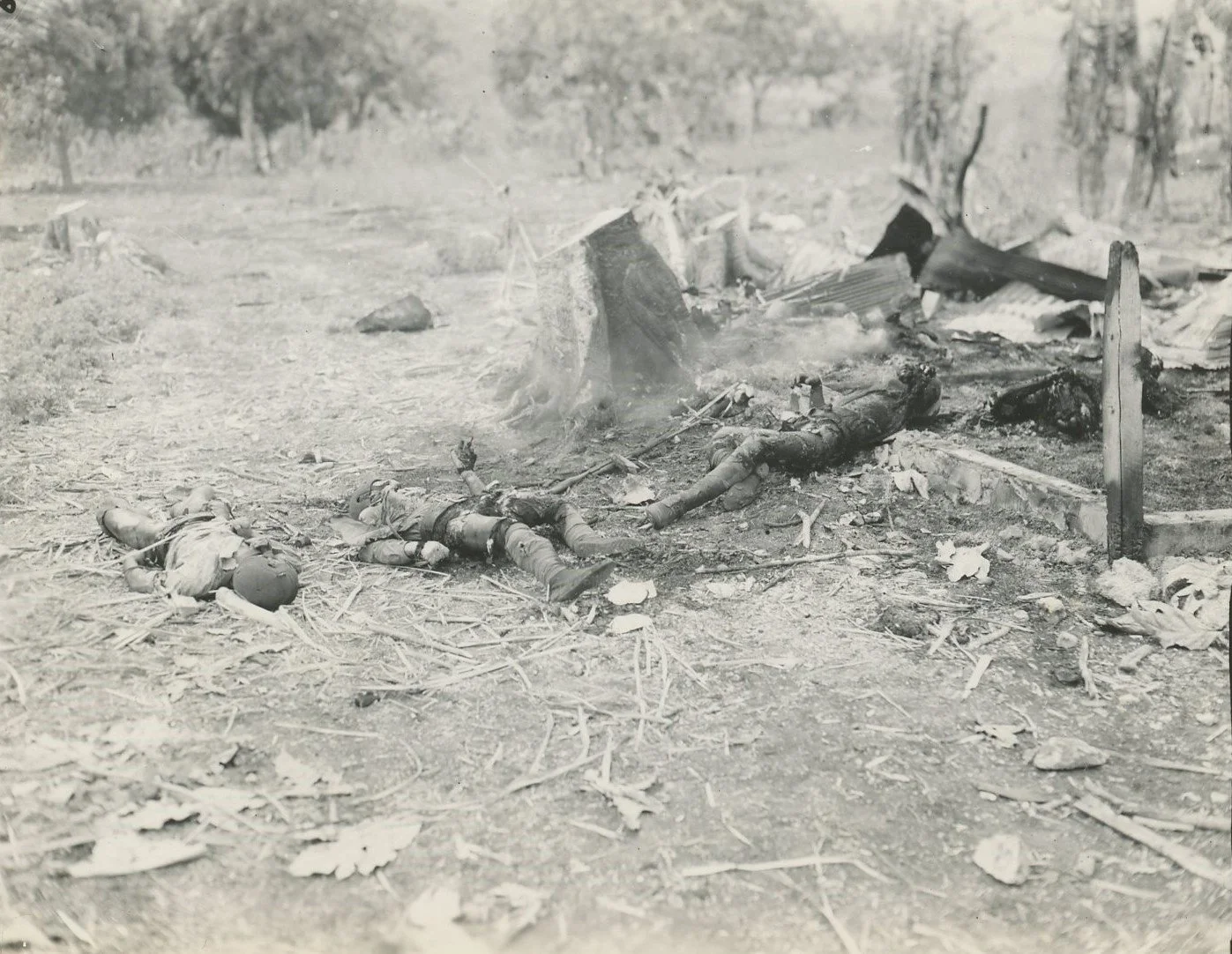
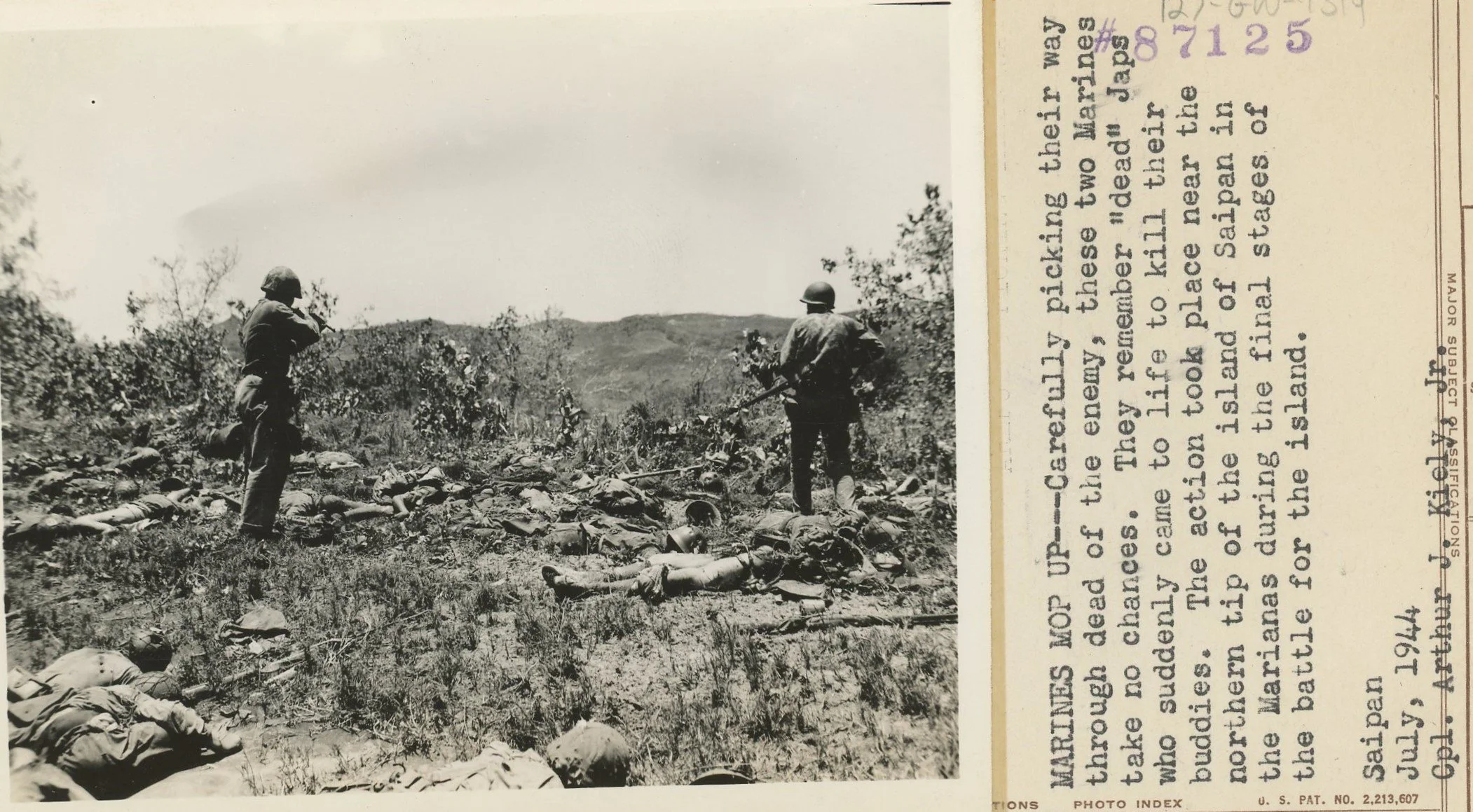
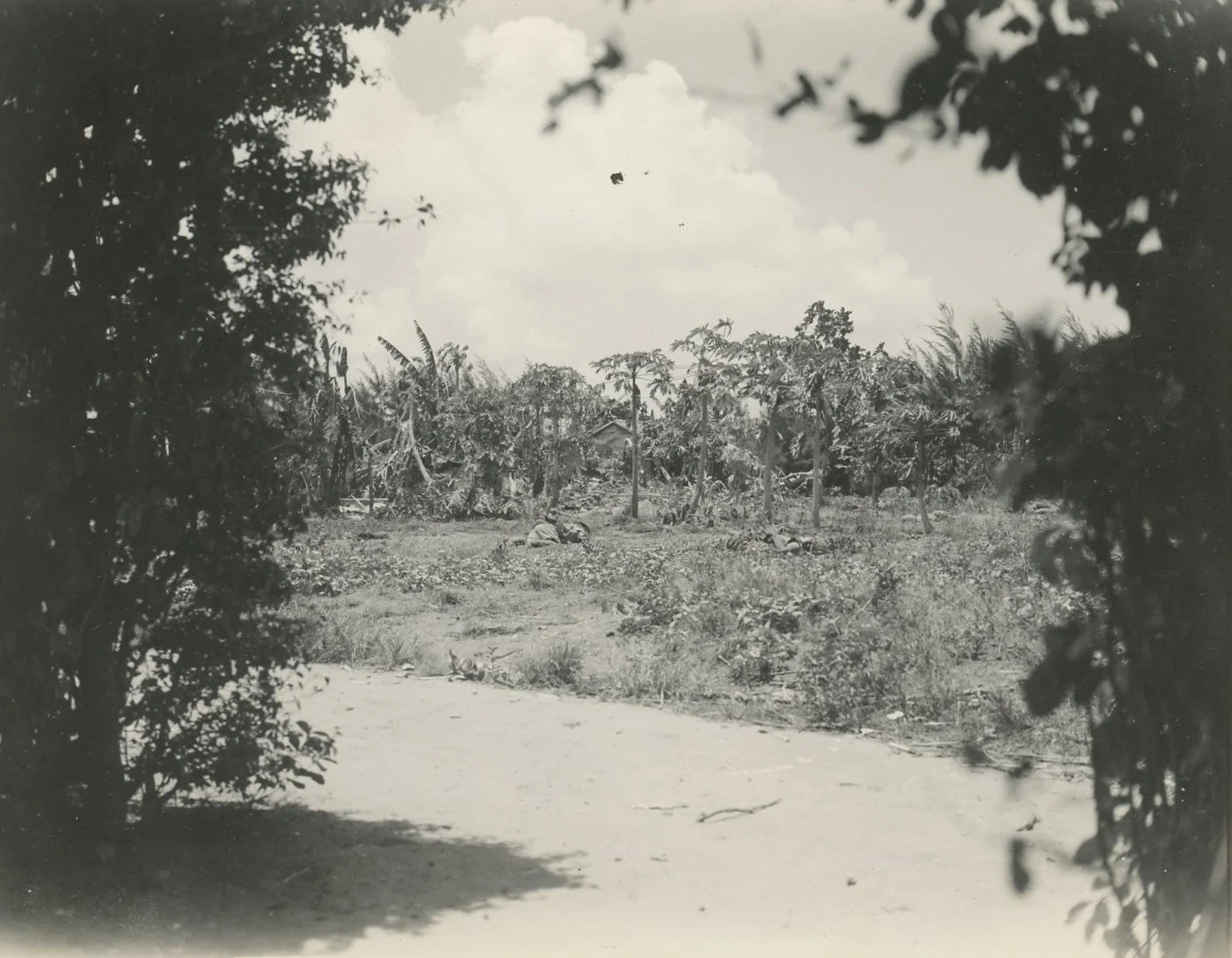
Three Imperial Japanese Army soldiers lie where they were killed.
The soldier in the foreground wears closed-toe tabi. Also in the foreground is the carrying case for a tripod used with a sighting device.
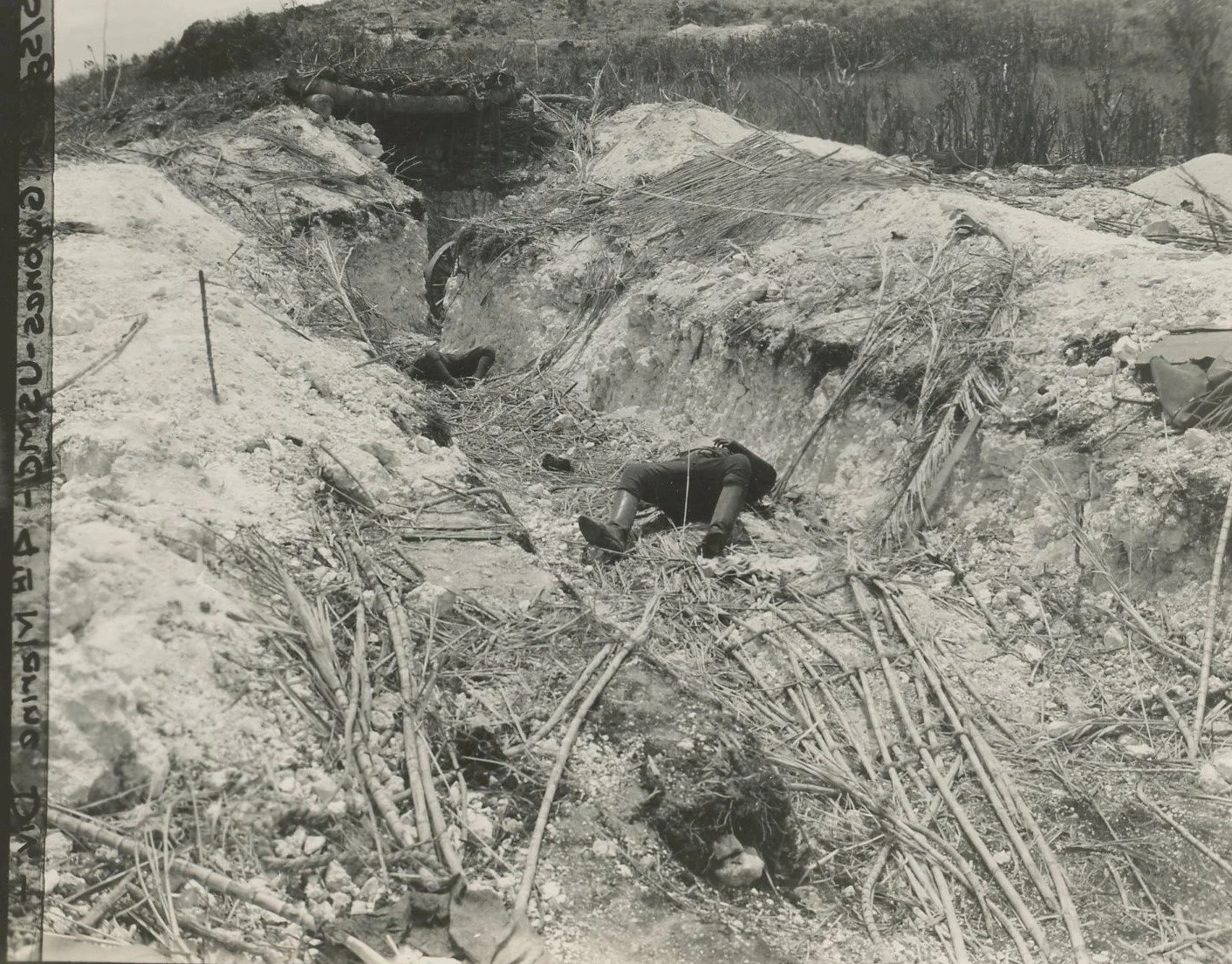
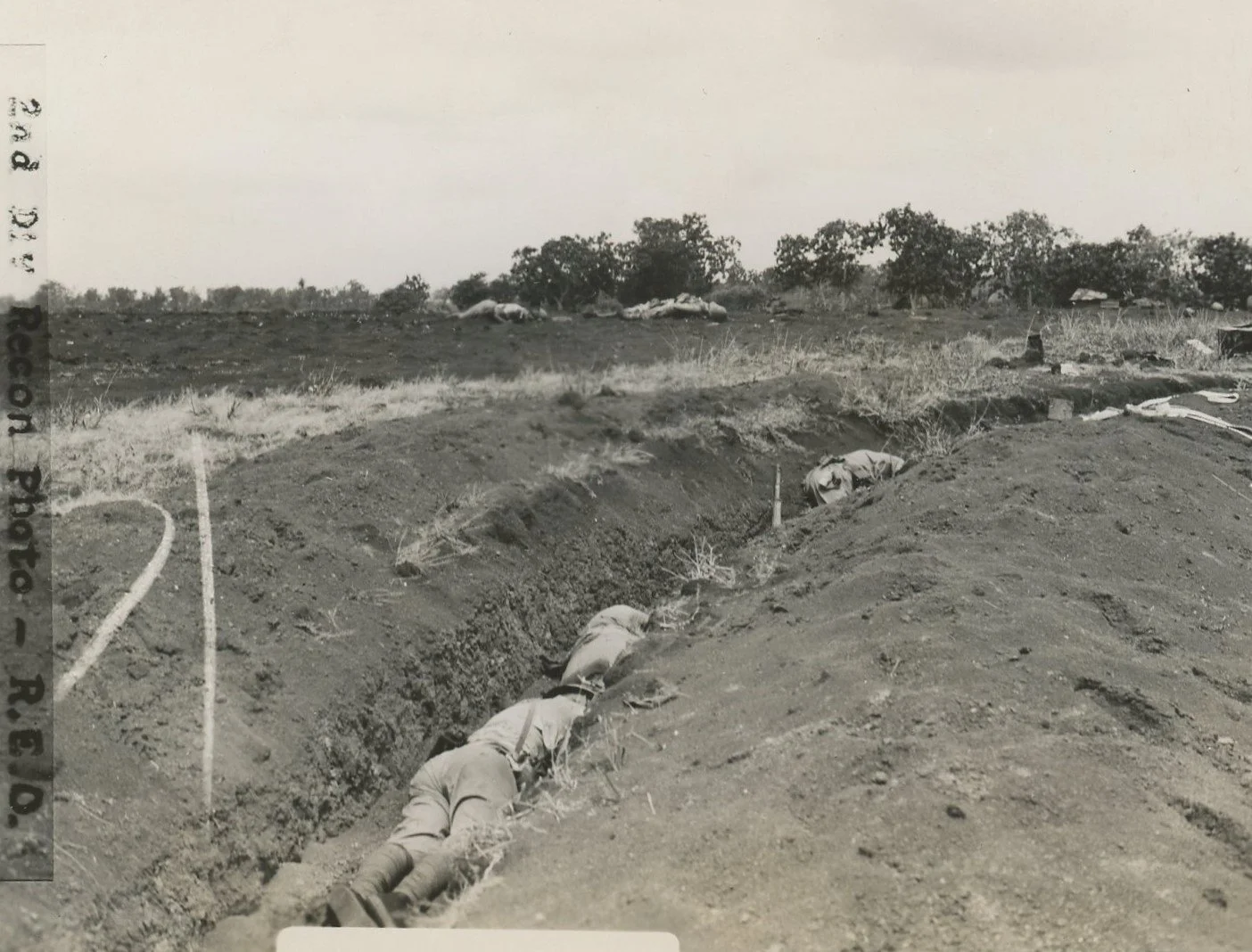
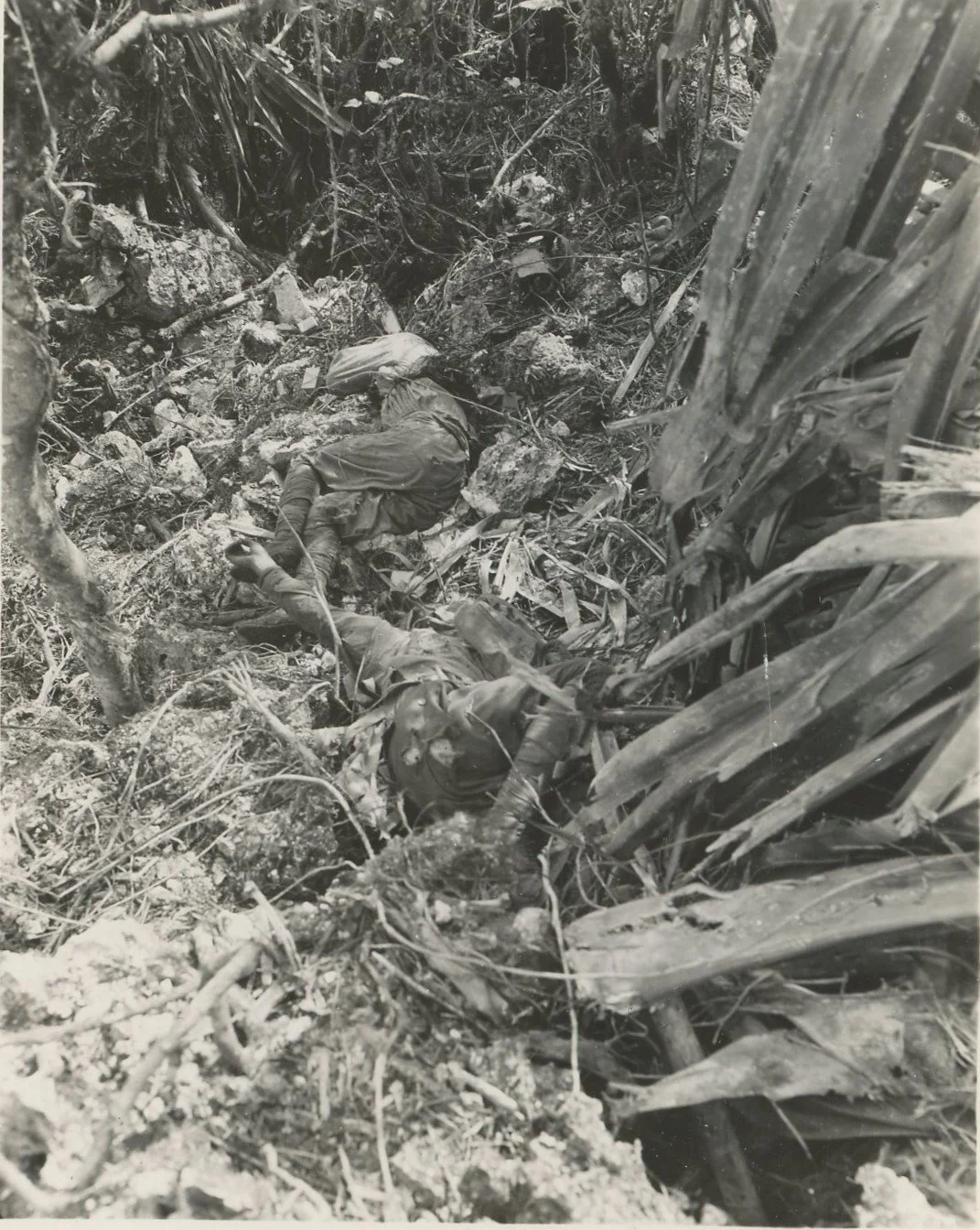
An Imperial Japanese Army officer and soldier lie in the trench where they were killed, which leads to a wheeled artillery piece.
The officer in the foreground wears 98 officer trousers and tall officer boots. The soldier in the background wears trousers, anti-heart short sleeve jyuban, Type 90 helmet with cover and foliage net, puttees, and tabi.
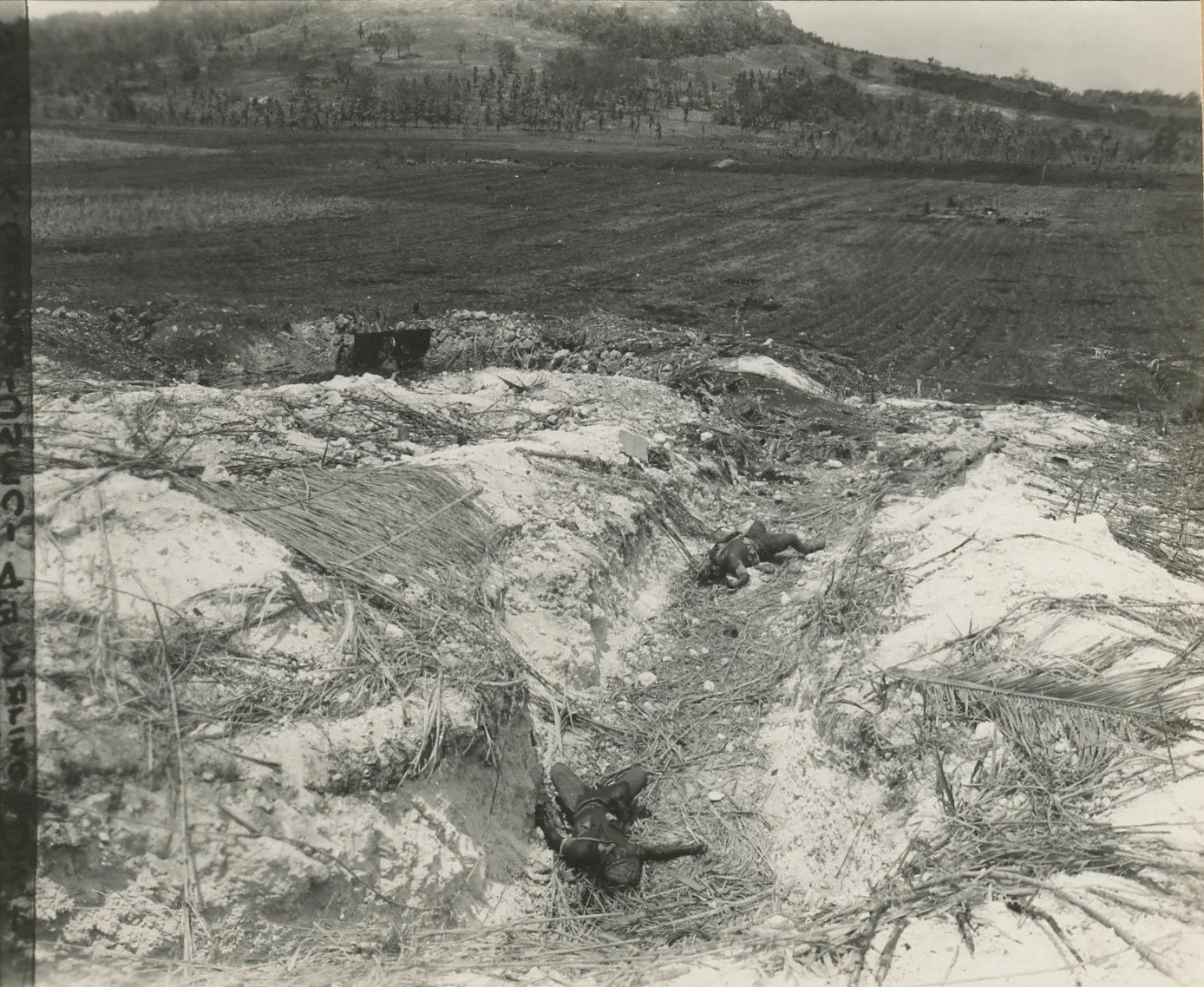
An Imperial Japanese Army officer and soldier lie in the trench where they were killed, which leads to a wheeled artillery piece.
The officer in the background wears 98 officer trousers and tall officer boots. The soldier in the foreground wears trousers, anti-heart short sleeve jyuban, Type 90 helmet with cover and foliage net, puttees, and tabi.
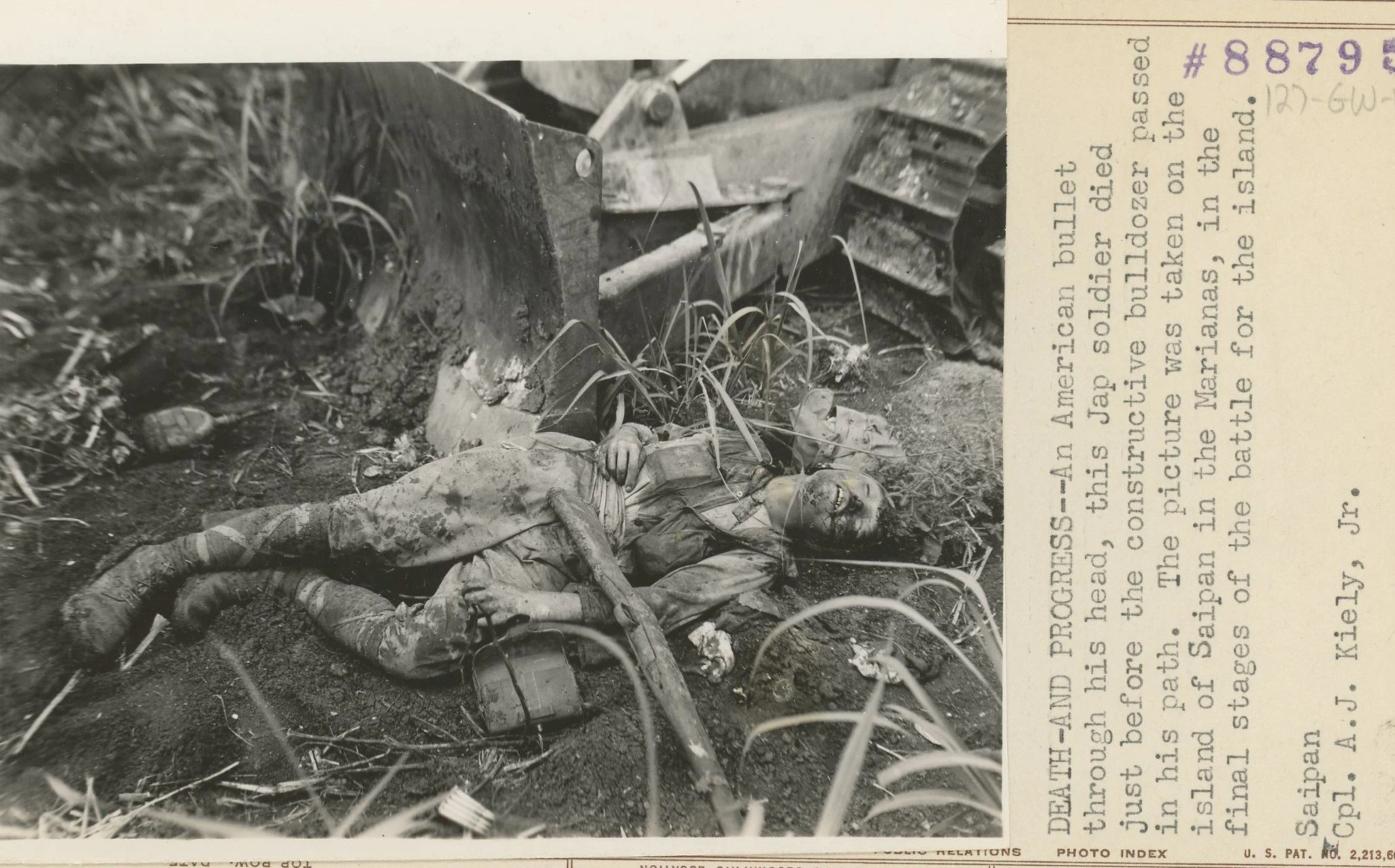
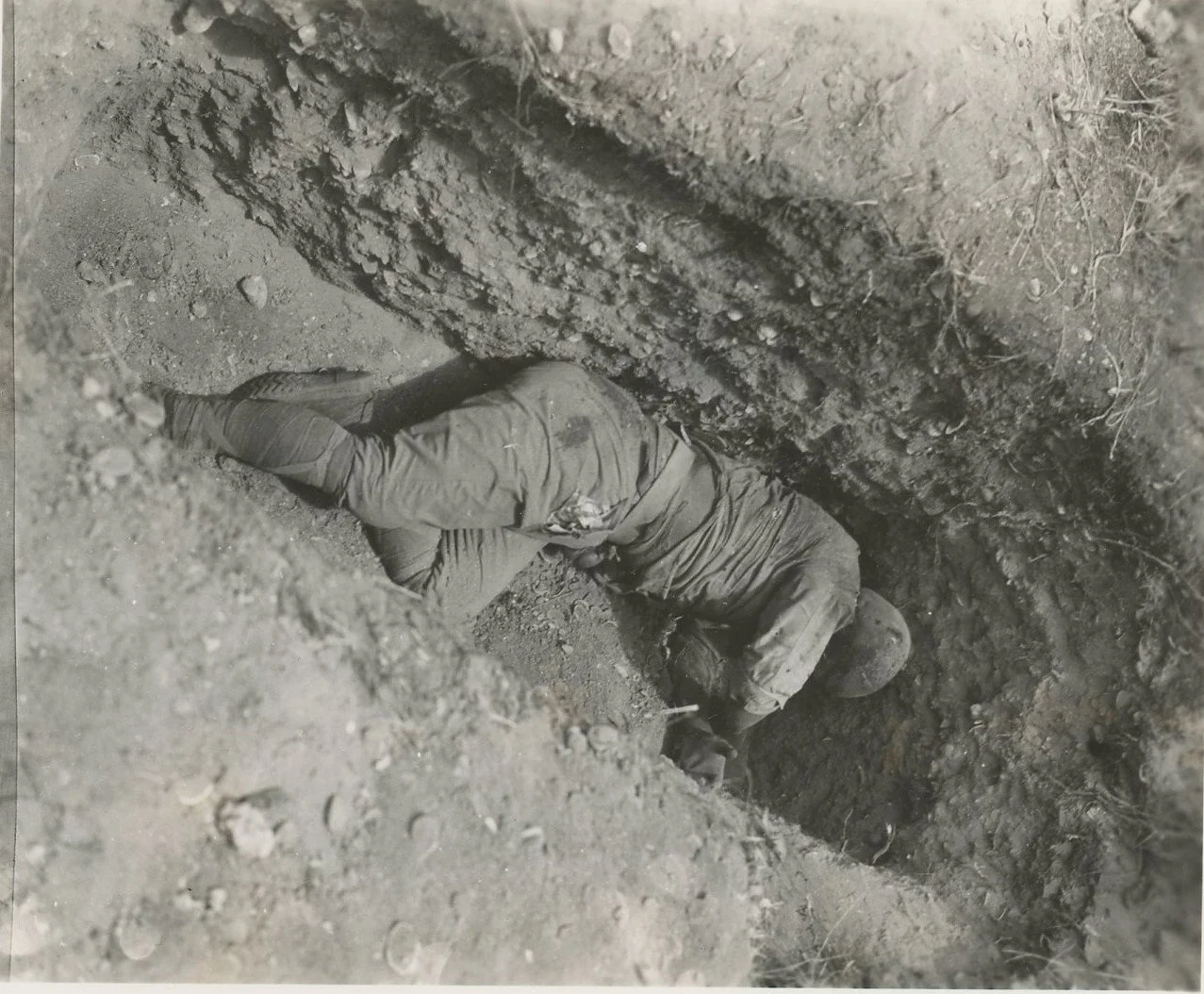
A Japanese soldier lies next to an American bulldozer.
He wears Showa 5 regulation boots, puttees, Type 98 trousers, and a round-neck jyuban. His haversack rests behind him, and his Showa 5 regulation canteen lies further back.
In the foreground, a mid-war Type 99 rifle is visible, lacking a monopod. An engineer rifle pouch is also present.
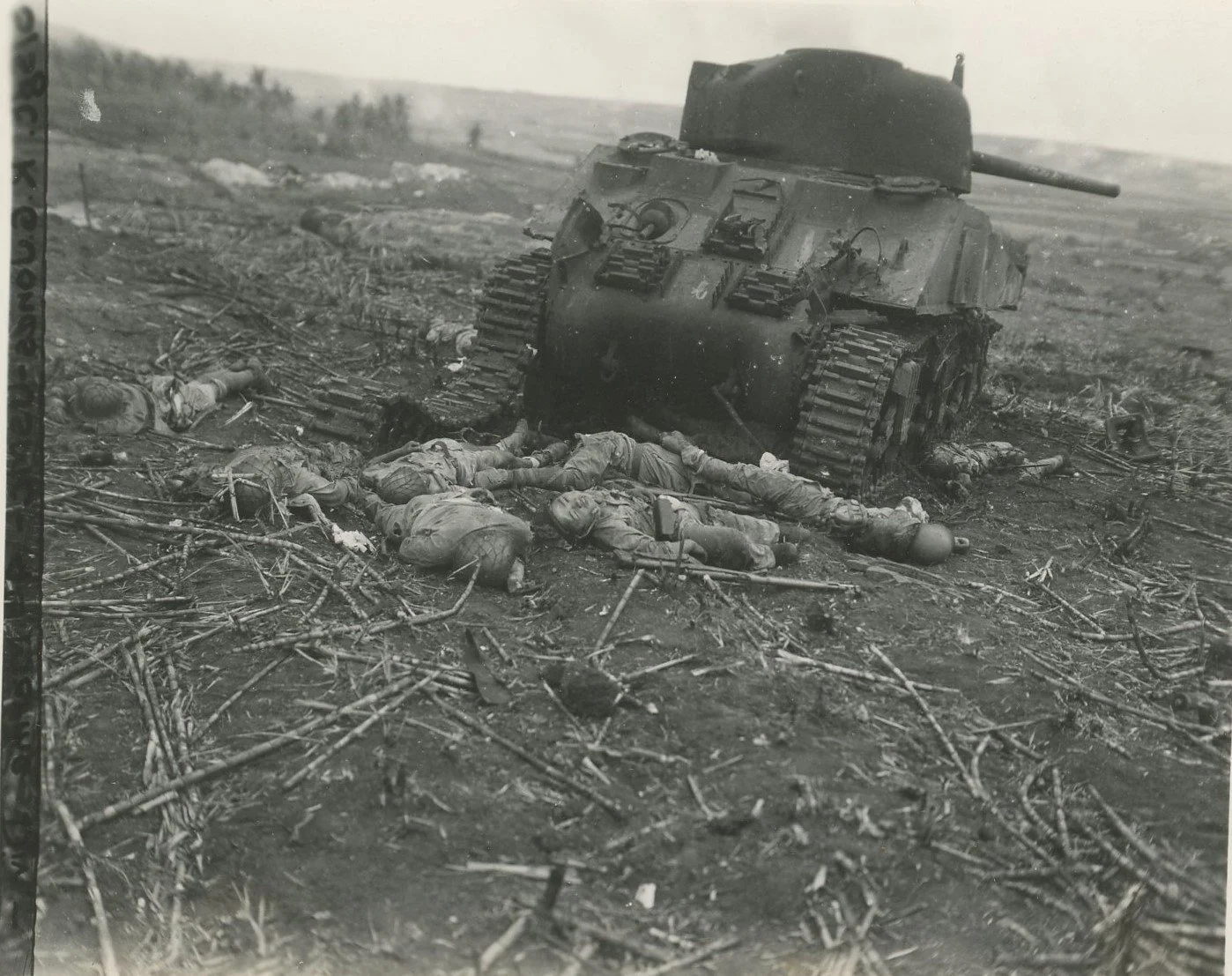
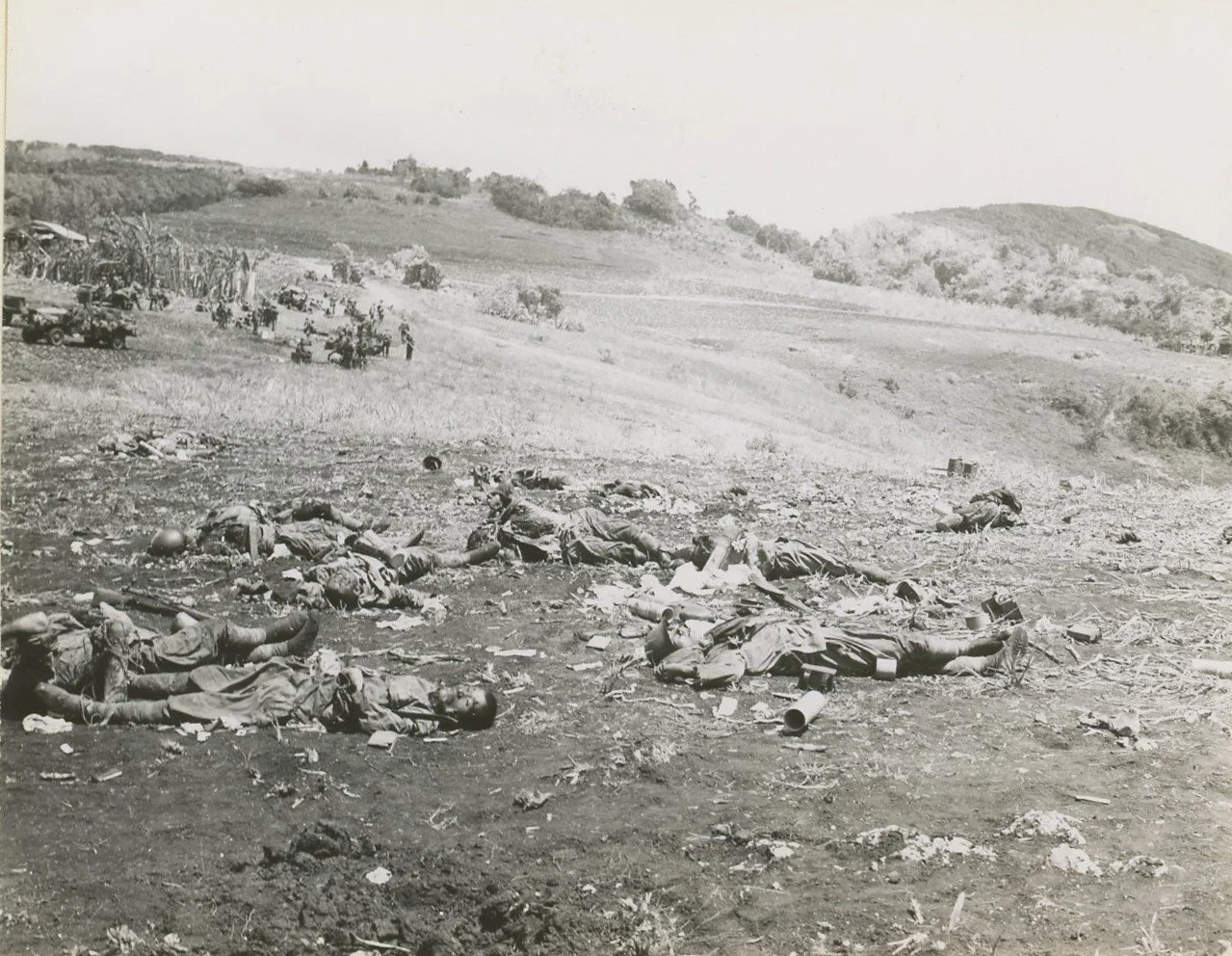
A group of Imperial Japanese Army soldiers killed during an attack on an M4 Sherman are visible in the scene.
The soldiers appear to be wearing variations of jyuban, with some wearing puttees, but all wear Showa 5 regulation boots. They are equipped with engineer rifle pouches and early Type 99 rifles, retaining their dust covers. Their helmets have no covers but retain foliage nets.
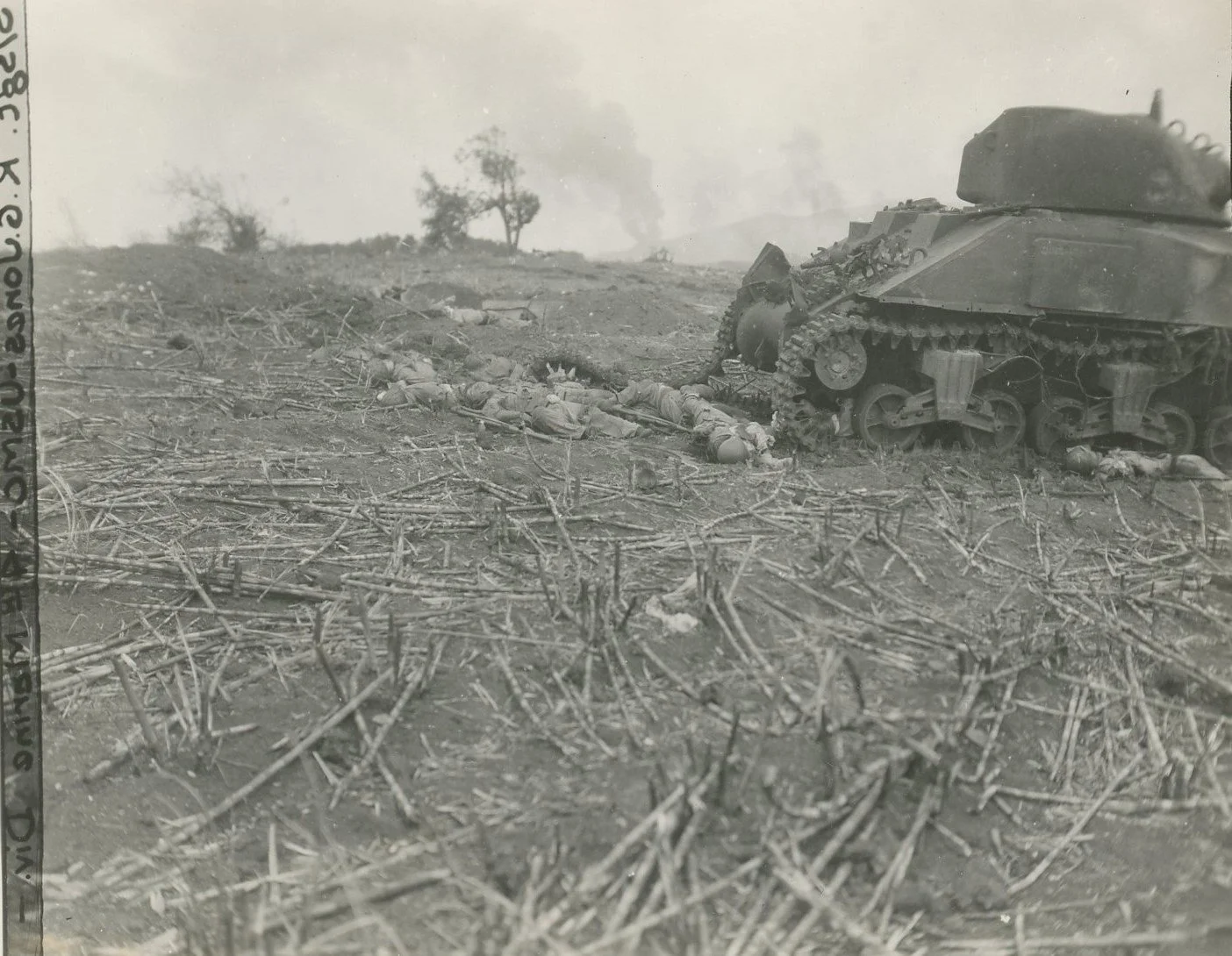
A group of Imperial Japanese Army soldiers killed during an attack on an M4 Sherman are visible in the scene.
The soldiers appear to be wearing variations of jyuban, with some wearing puttees, but all wear Showa 5 regulation boots. They are equipped with engineer rifle pouches and early Type 99 rifles, retaining their dust covers. Their helmets have no covers but retain foliage nets.
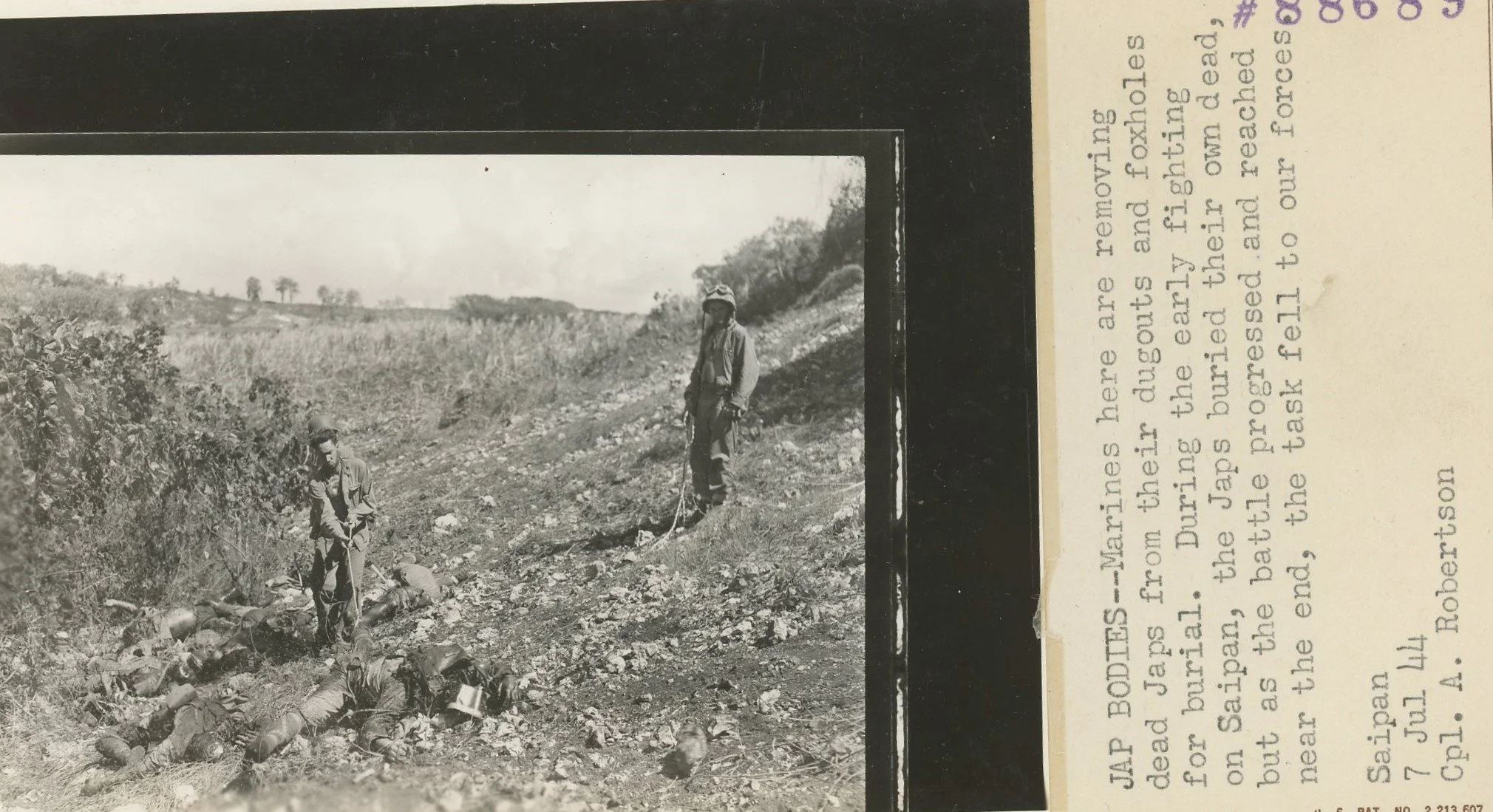
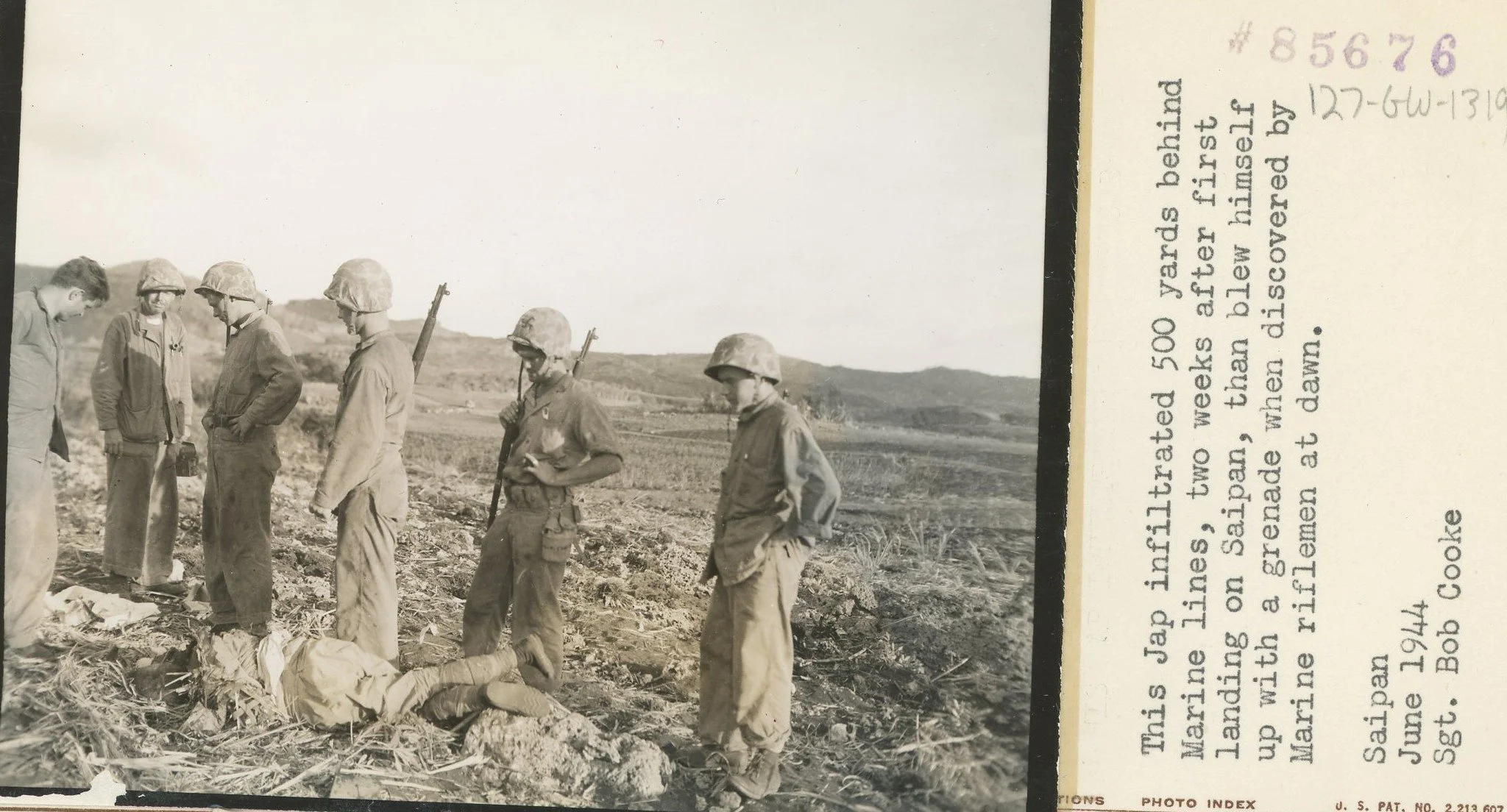
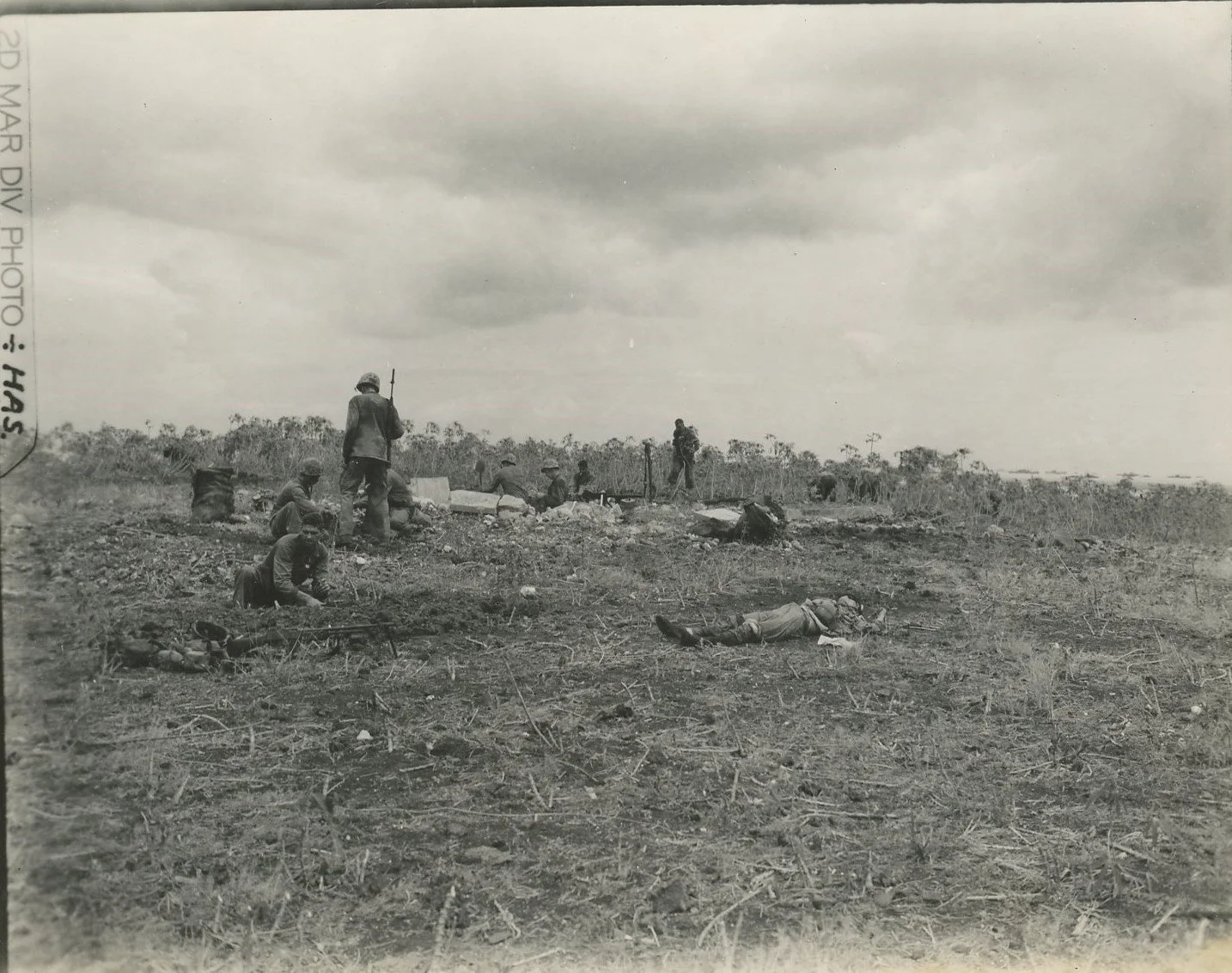
Multiple Japanese soldiers are visible being moved to burial areas.
Notable equipment includes the soldier in the foreground, who still wears a Type 99 tako pack with a mess kit attached. The soldier at the front left carries a map case.
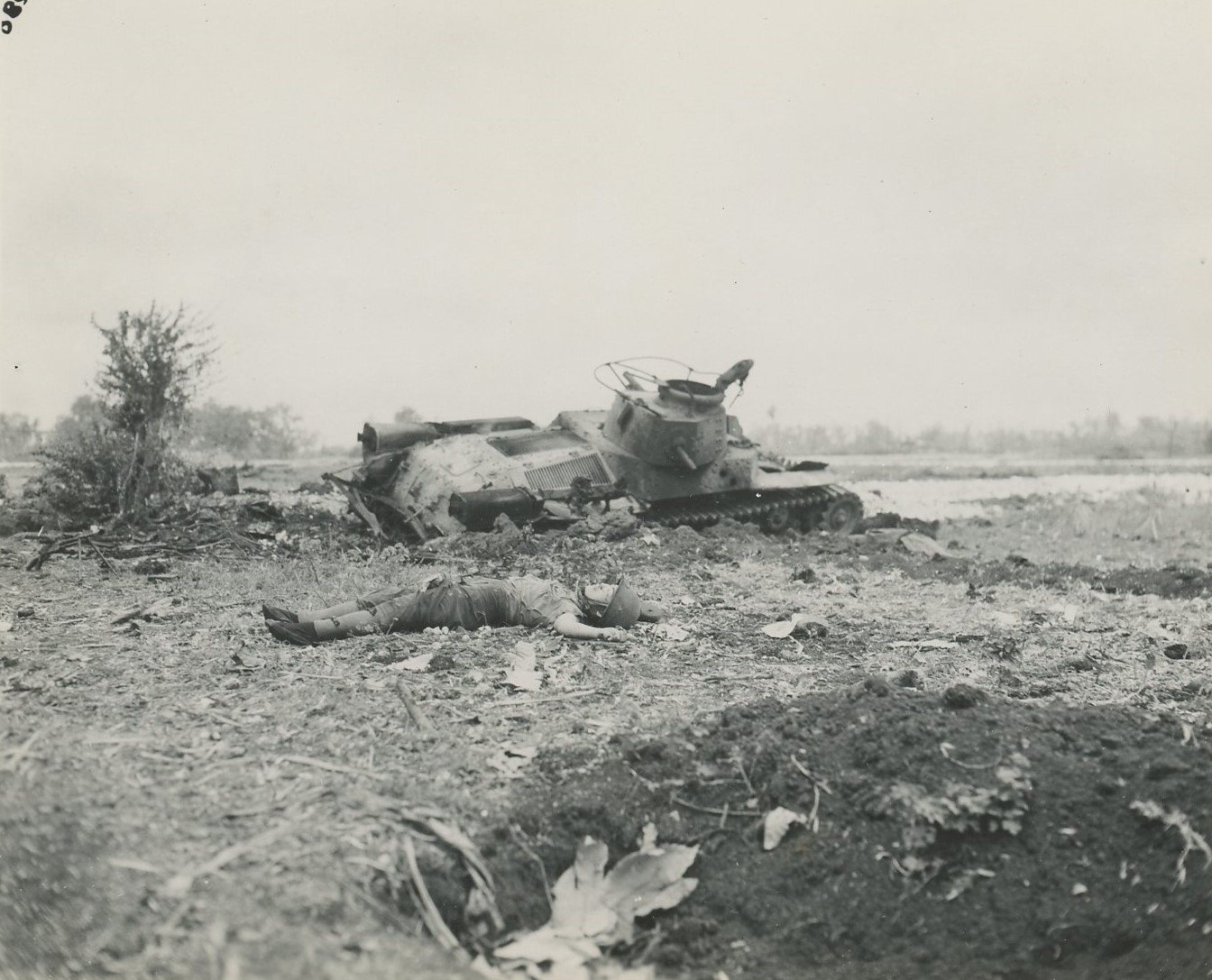
An officer of the Imperial Japanese Army lies in the foreground of a Type 97 Chi-Ha medium tank of the 9th Tank Regiment, possibly of the 3rd Company.
He wears a Type 90 helmet, short-sleeve anti-heat jyuban, officer Type 98 trousers, officer two-buckle gaiters, and closed-toe tabi. His canteen rests behind him.
Reference: Jarae.co 9TR, 9TR-XX-01
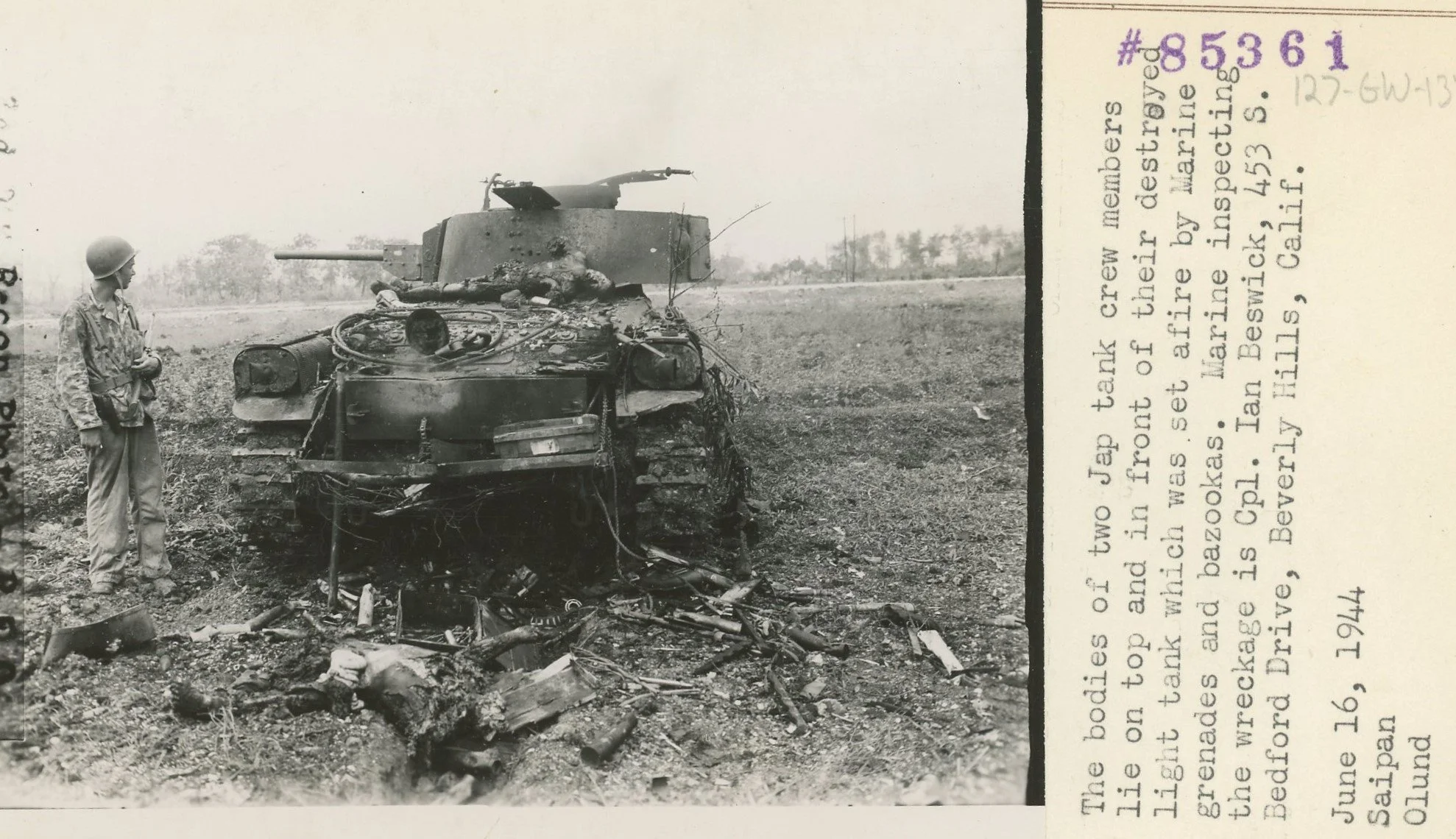
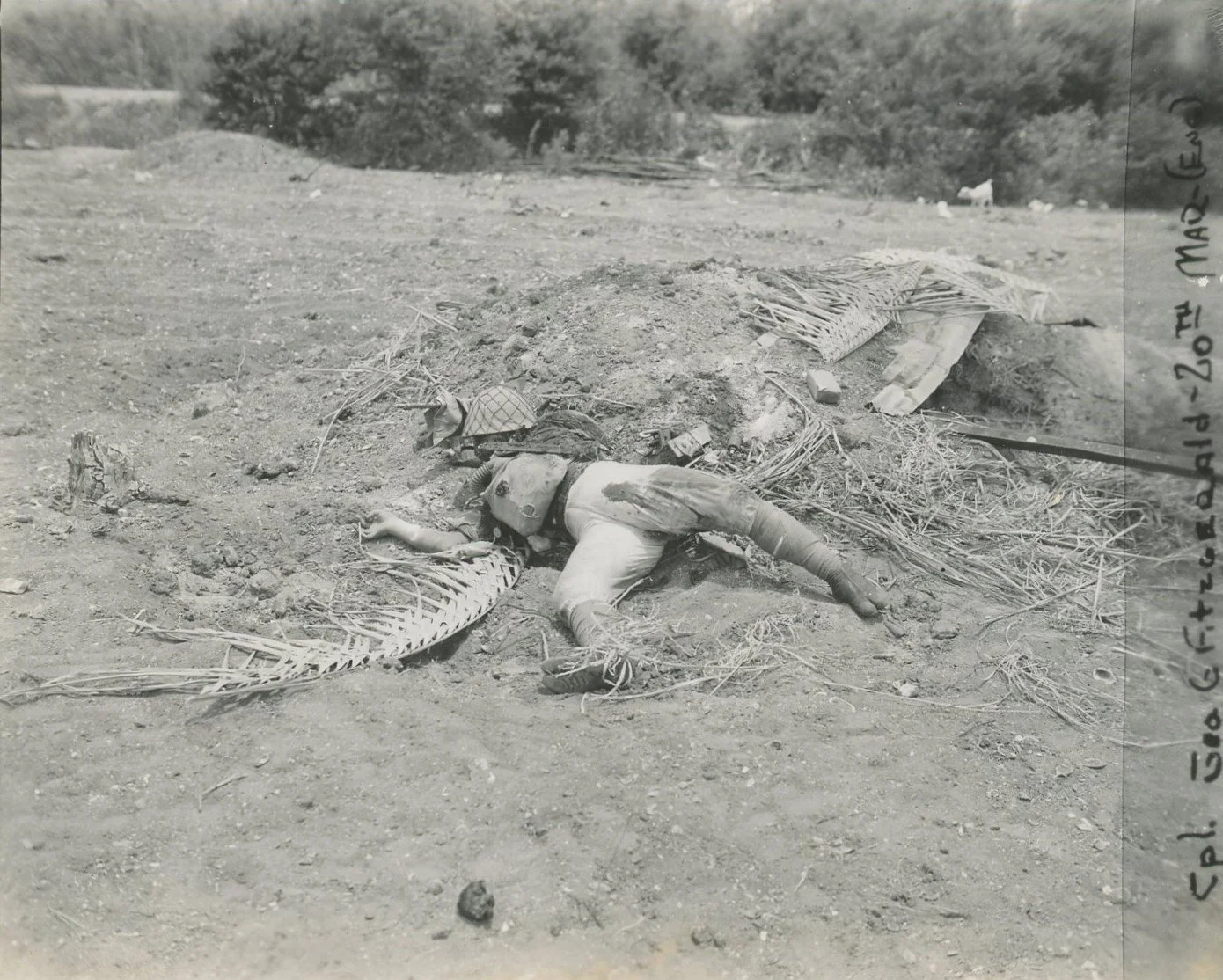
The scorched remains of a Japanese Army soldier lie atop a Type 97 Shinhoto medium tank, the “Donriu,” the command tank of the Imperial Japanese Army’s 9th Tank Regiment, 4th Company.
Next to the remains is a Japanese Army gas mask. To the left of the soldier lies a mid-war Type 99 rifle, lacking a dust cover or monopod but retaining the cleaning rod and anti-aircraft sights, with a straight-quillon Type 30 bayonet attached. A Type 90 helmet rests beside the rifle.
Below the tank, additional Japanese Army personnel are visible.
Reference: Jarae.co 9TR, 9TR-04-01
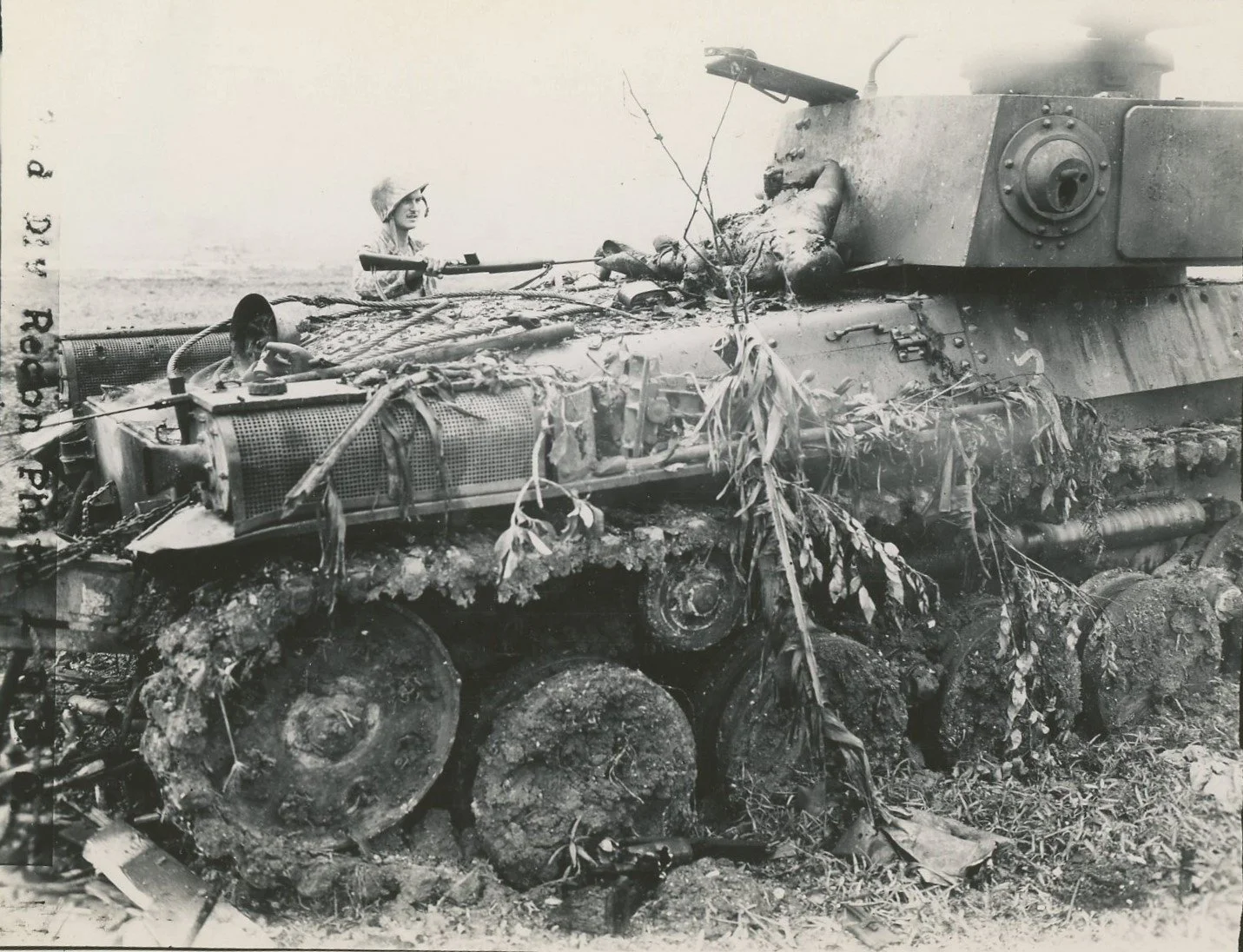
The scorched remains of a Japanese Army soldier lie atop a Type 97 Shinhoto medium tank, the “Donriu,” the command tank of the Imperial Japanese Army’s 9th Tank Regiment, 4th Company.
Next to the remains is a Japanese Army gas mask. To the left of the soldier lies a mid-war Type 99 rifle, lacking a dust cover or monopod but retaining the cleaning rod and anti-aircraft sights, with a straight-quillon Type 30 bayonet attached.
A Type 90 helmet rests beside the rifle.
Reference: Jarae.co 9TR, 9TR-04-01
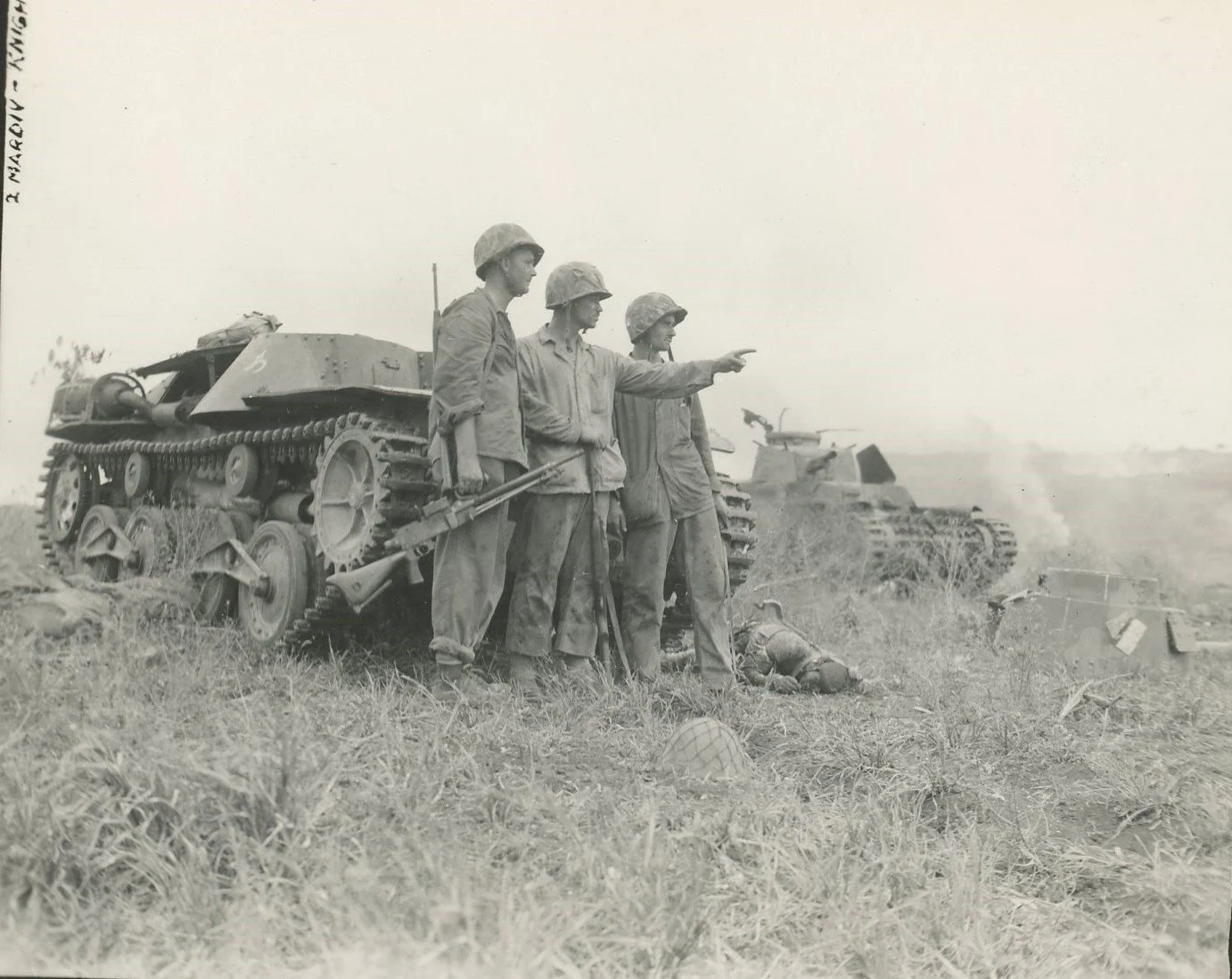
A disabled Type 95 Ha-Go light tank lies in the foreground, with its turret displaced. The destroyed markings make identification difficult; it is possibly part of the 3rd Company.
In the background, a Type 97 Chi-Ha belongs to the Imperial Japanese Army’s 9th Tank Regiment.
Near the Type 95 Ha-Go, a tanker is visible, slumped in the grass, wearing a tanker helmet and goggles, with an unidentified regulation uniform. In the foreground, a Type 90 helmet fitted with a foliage net is also visible.
Reference: Jarae.co 9TR, 9TR-XX-10/11
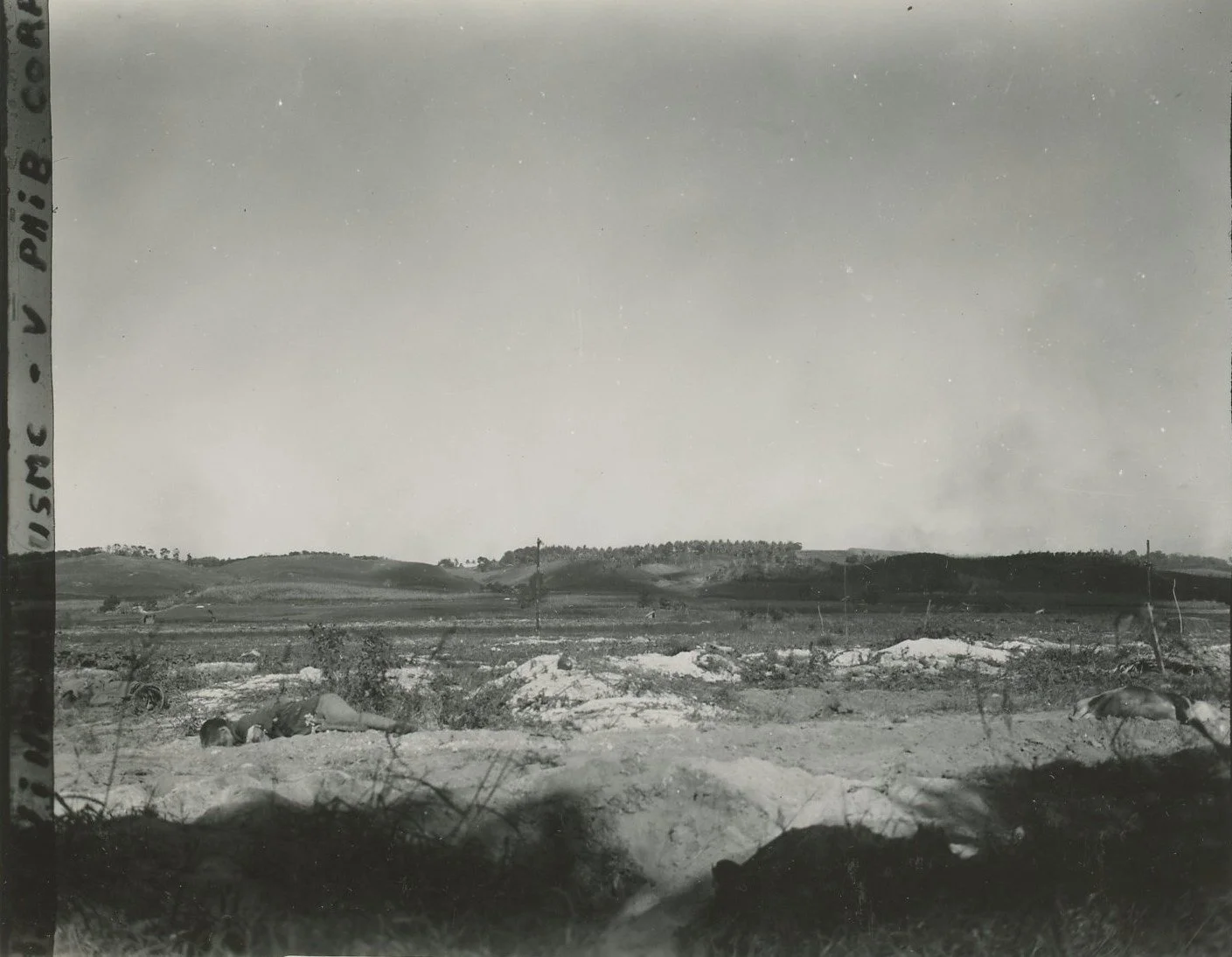
A Japanese soldier can be seen on the left of the photo, a type 90 helmet with a foliage net and cover can be seen behind him.
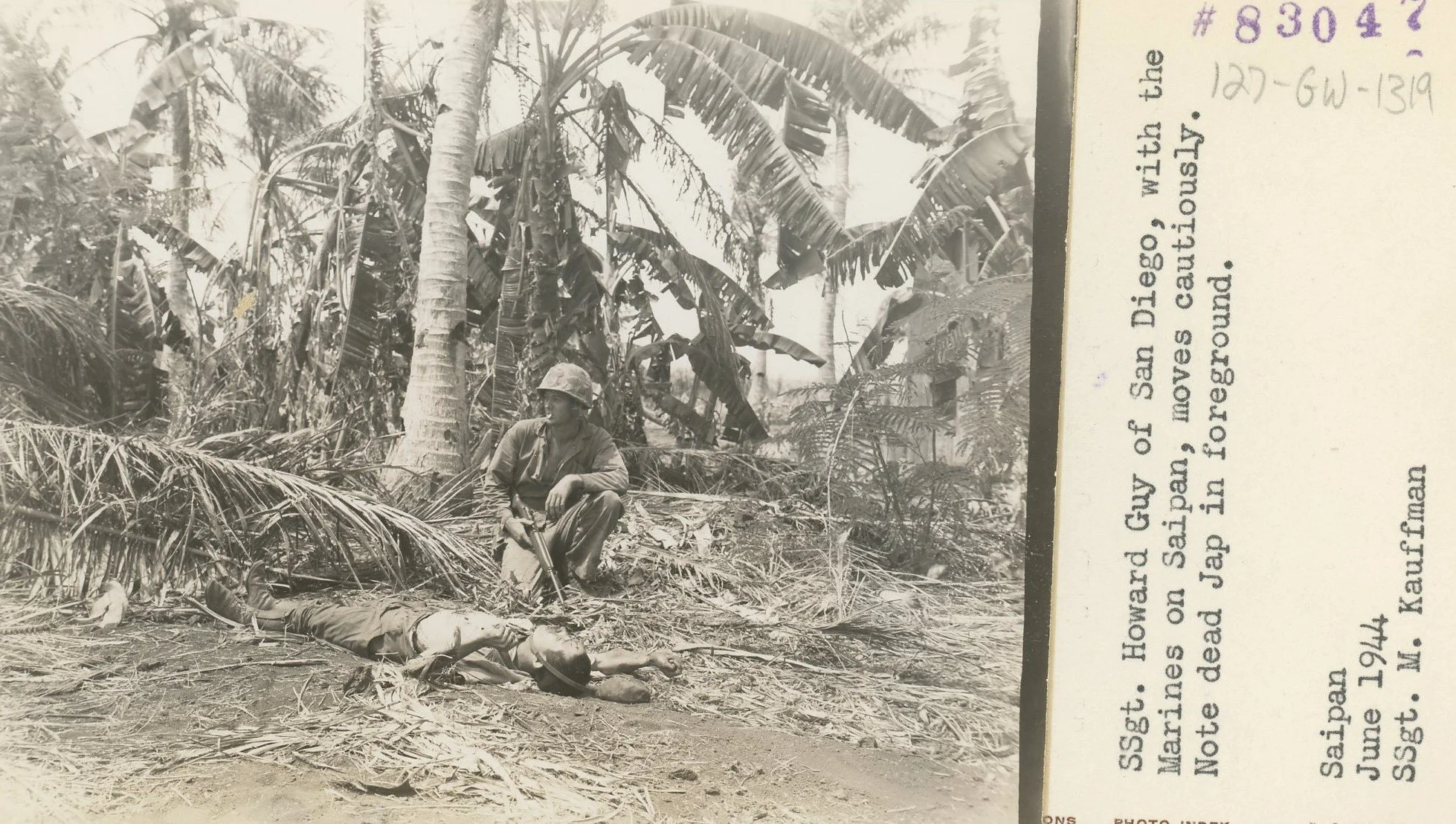
An Imperial Japanese officer lies in the foreground.
He wears a short-sleeve anti-heat jyuban, officer Type 98 trousers, officer two-buckle gaiters, and Showa 5 regulation boots. His canteen rests to his right.
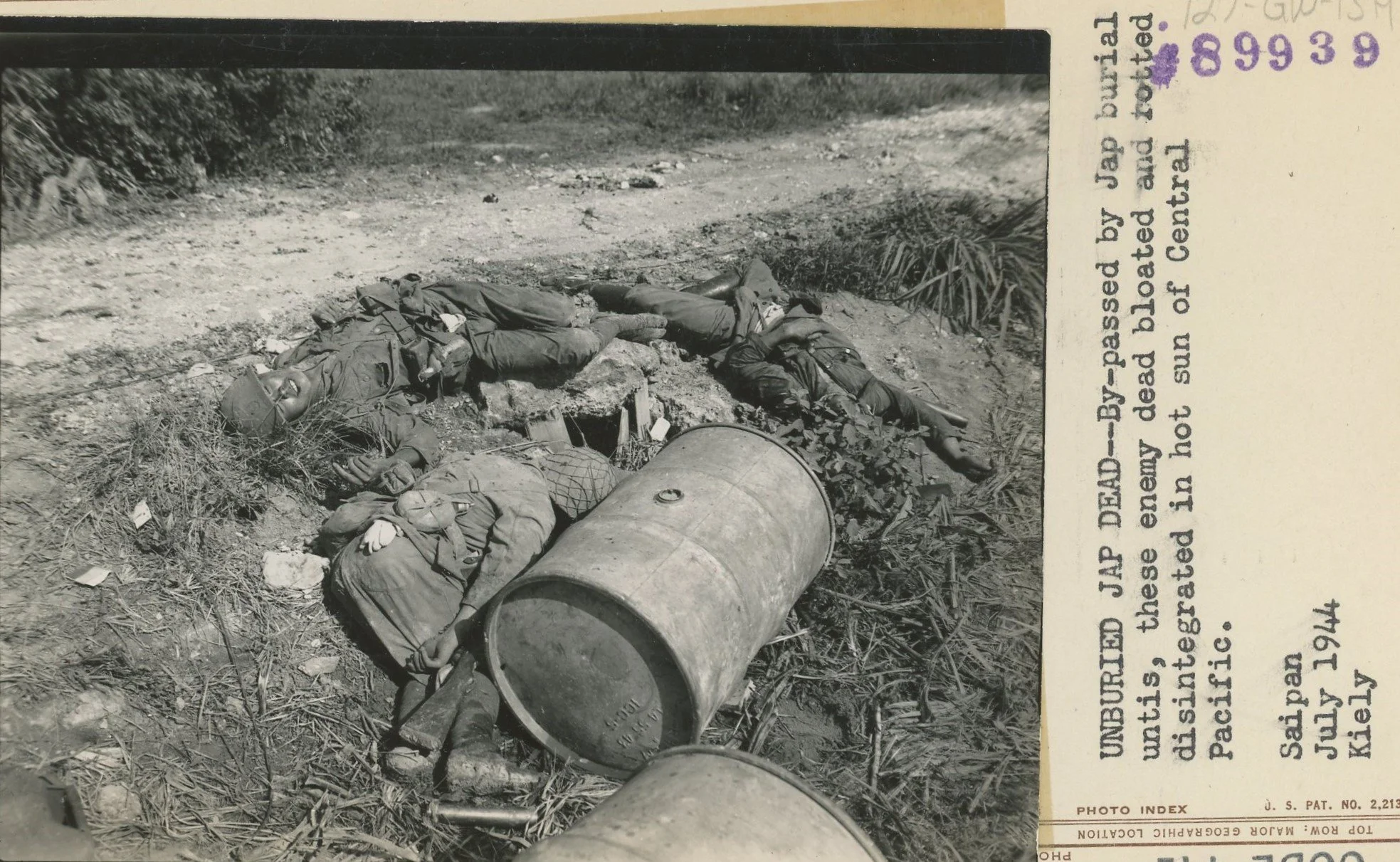
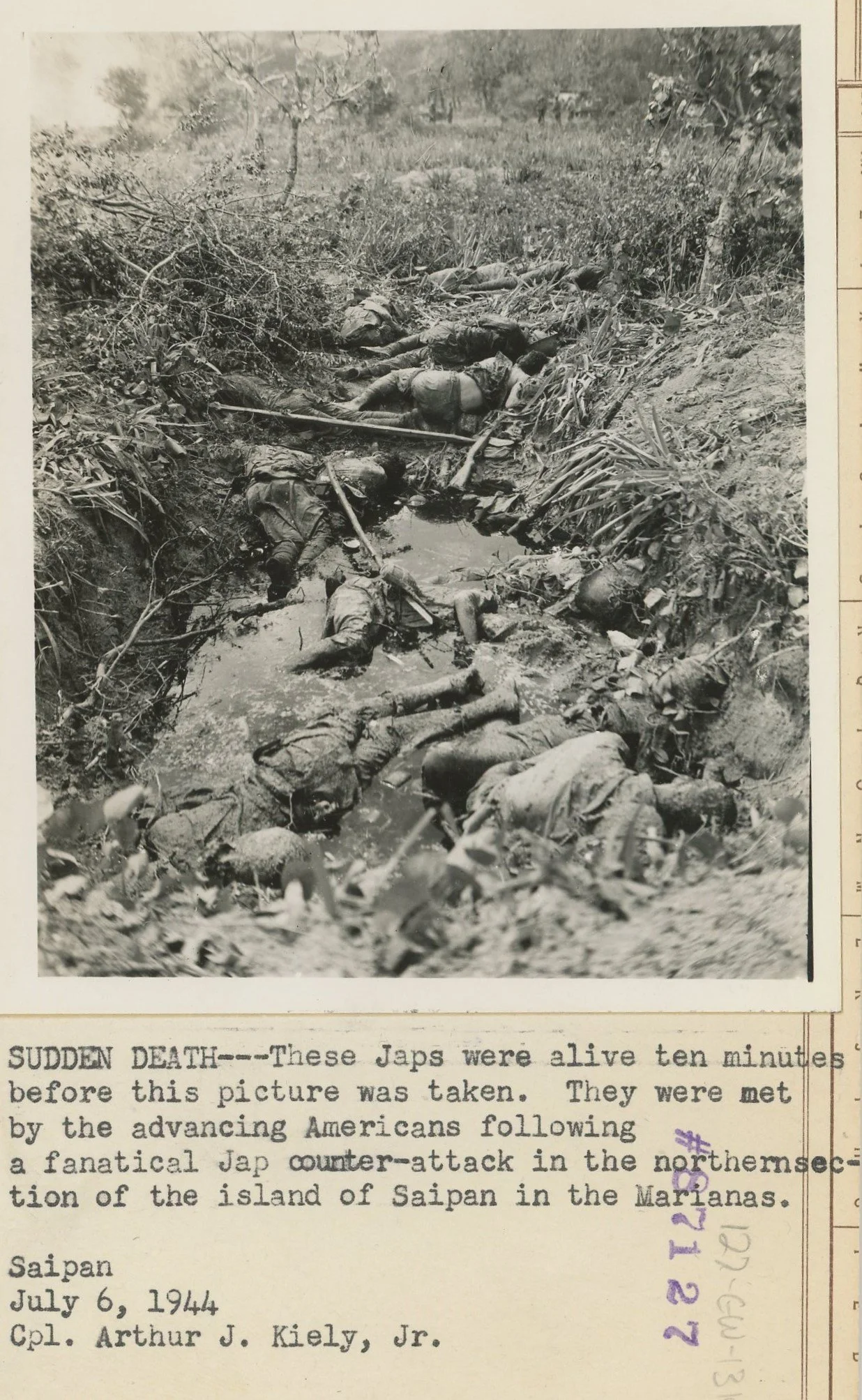
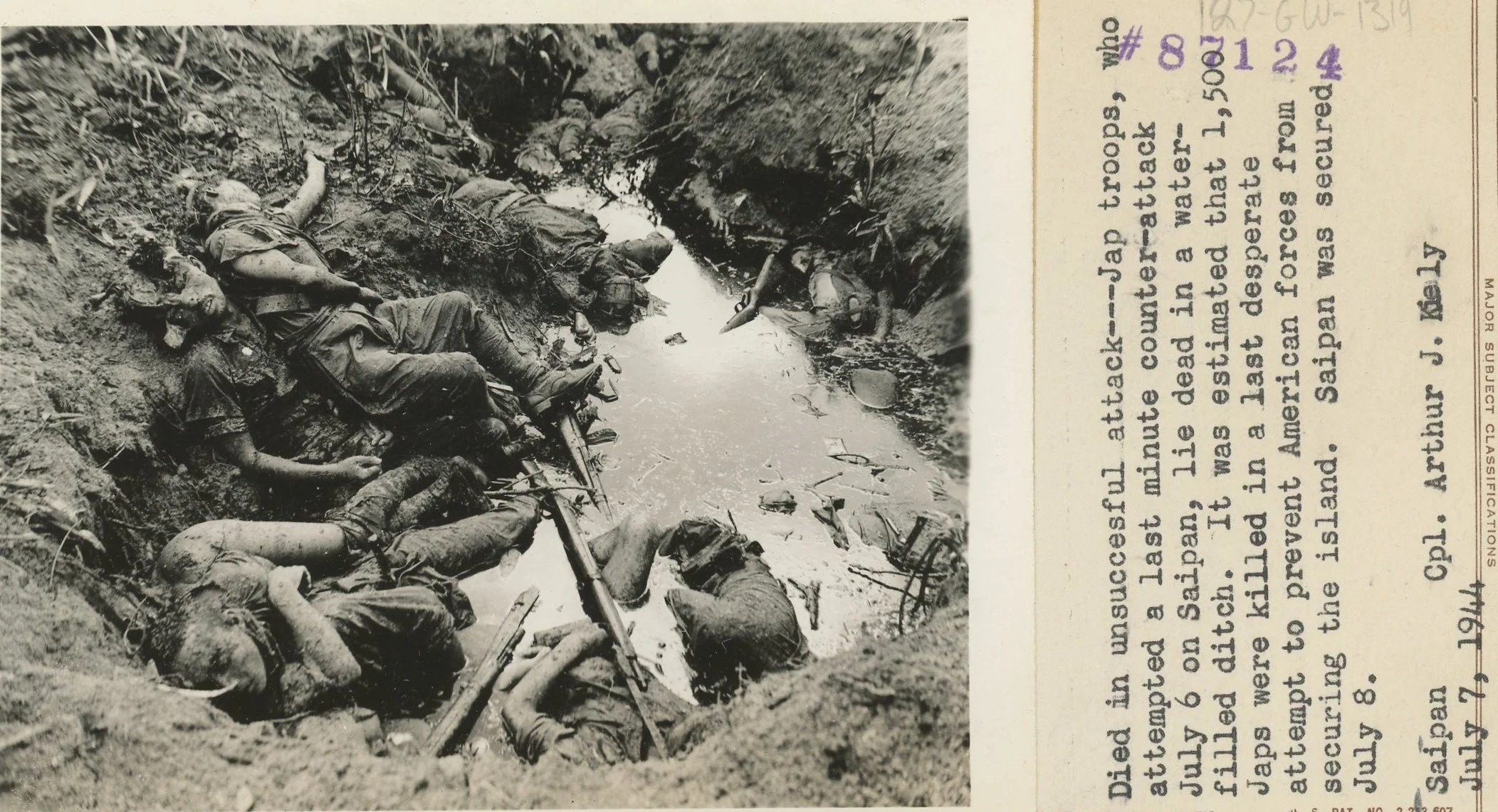
Three Imperial Japanese Navy personnel lie in a ditch.
The sailor in the foreground wears an earlier-model IJN canteen, rubberized belt set, IJN haversack, an unidentified IJN uniform, puttees, tabi, and an IJN helmet retaining its cover and foliage net.
The left-most sailor wears an IJN helmet with cover, three-button rikusenfuku, rubberized belt set, an additional civilian canteen strapped to the front of his pouches, IJN canteen, IJN haversack, puttees, and tabi.
The individual at the back is an IJN officer, wearing tabi, two-buckle officer gaiters, three-button rikusenfuku, and an IJN SAM belt.
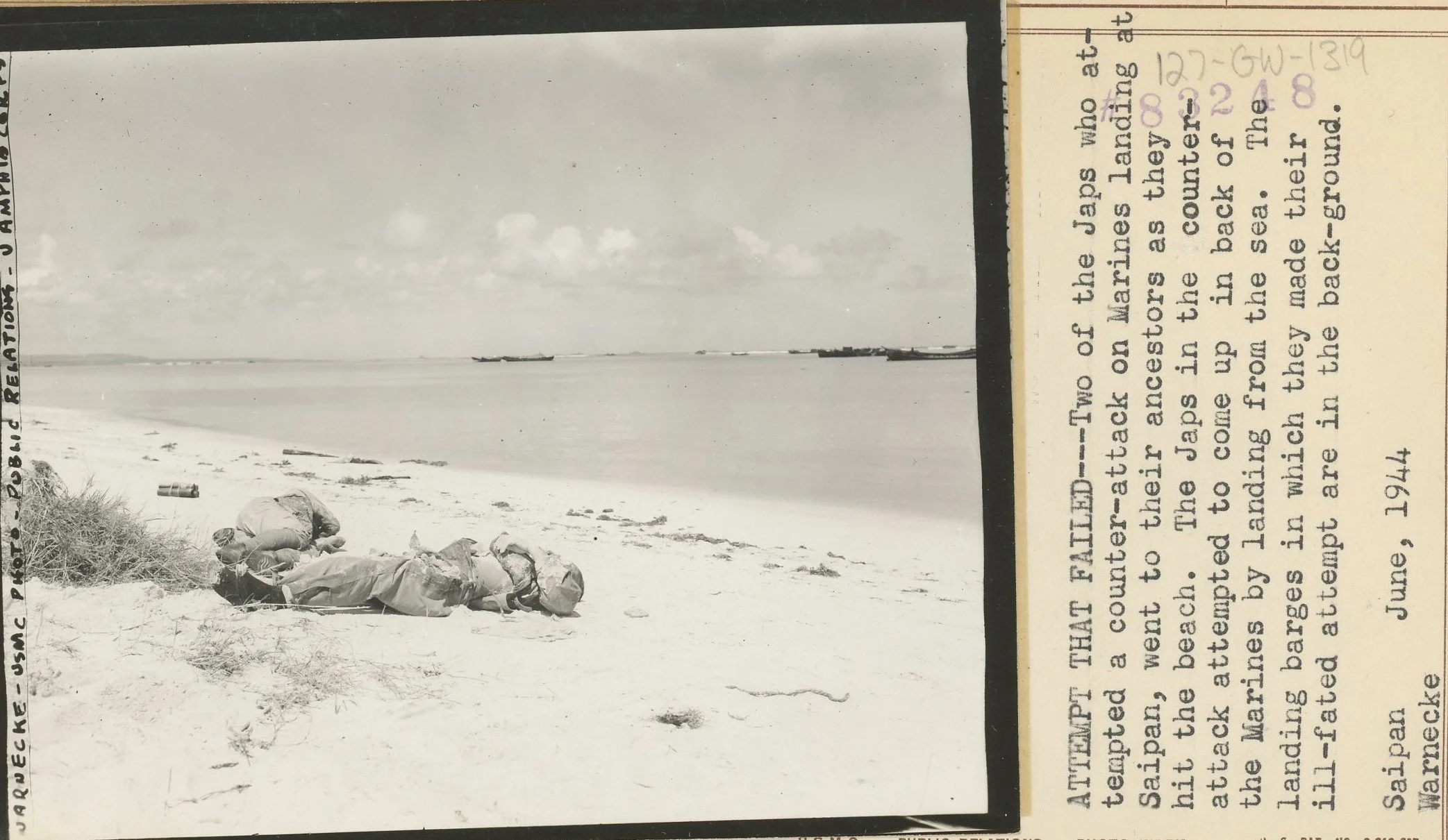
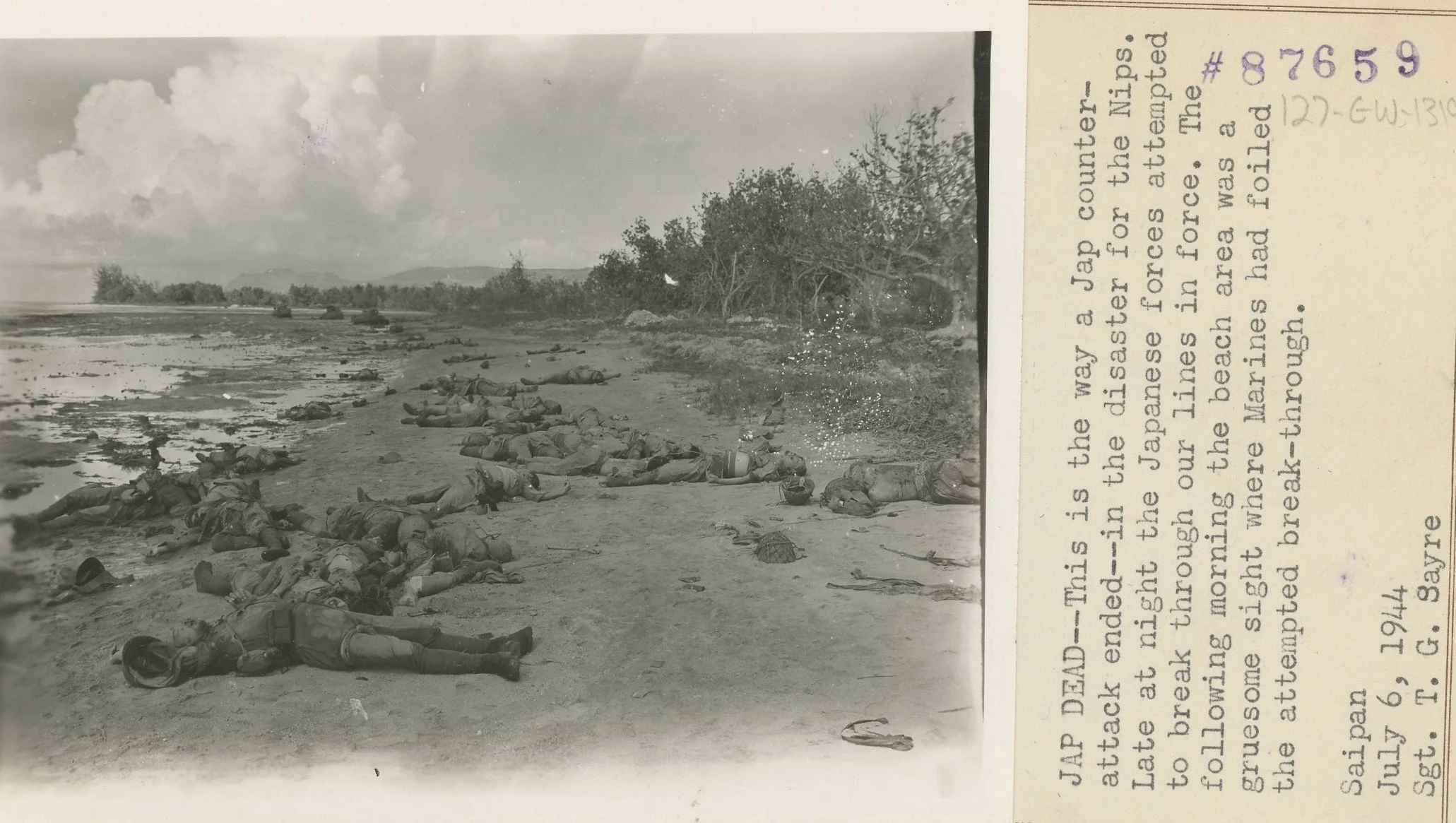
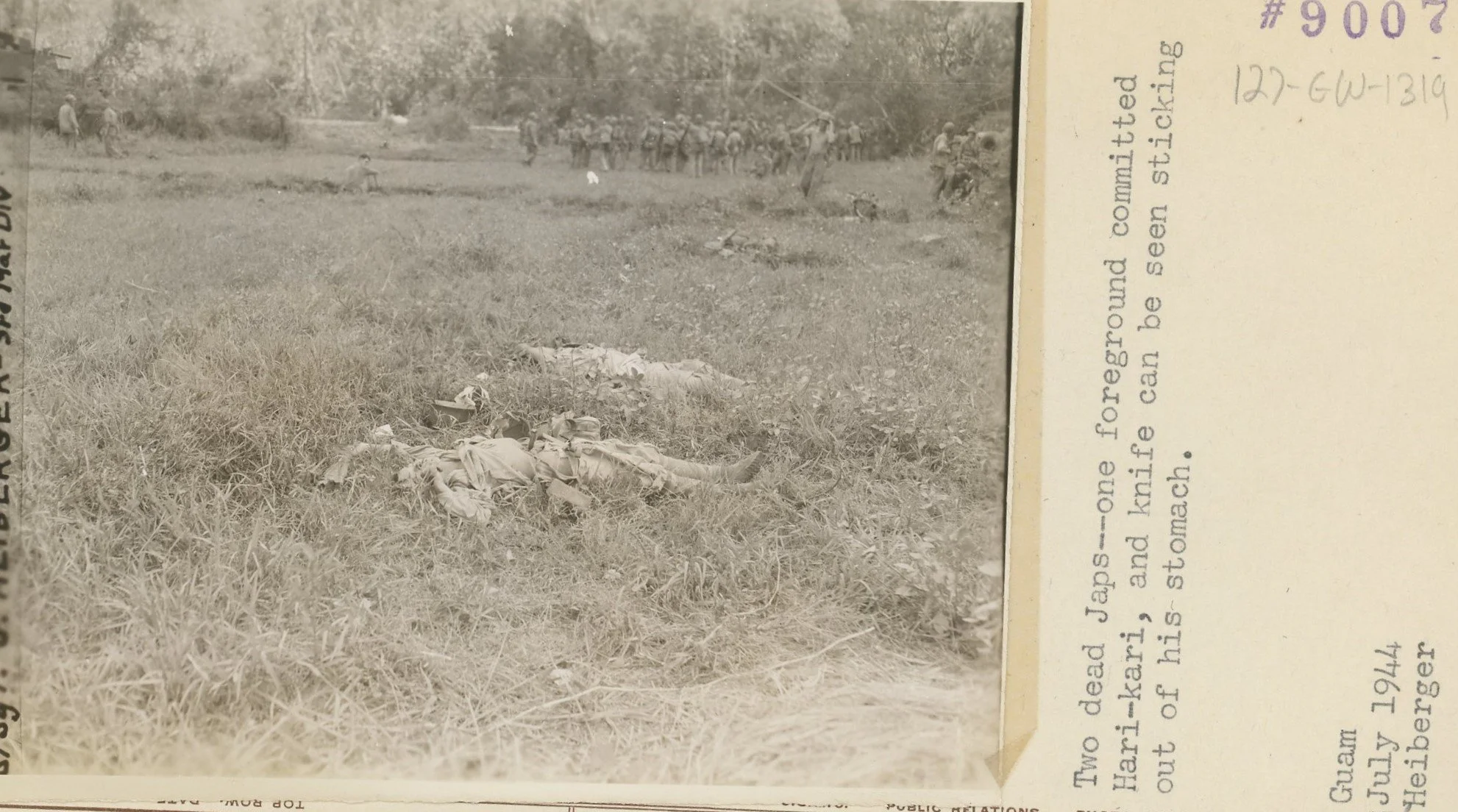
Two Imperial Japanese personnel, killed on Tanapag beach during a failed counter-attack. They are wearing unknown uniforms, but both wear closed-toe tabi.
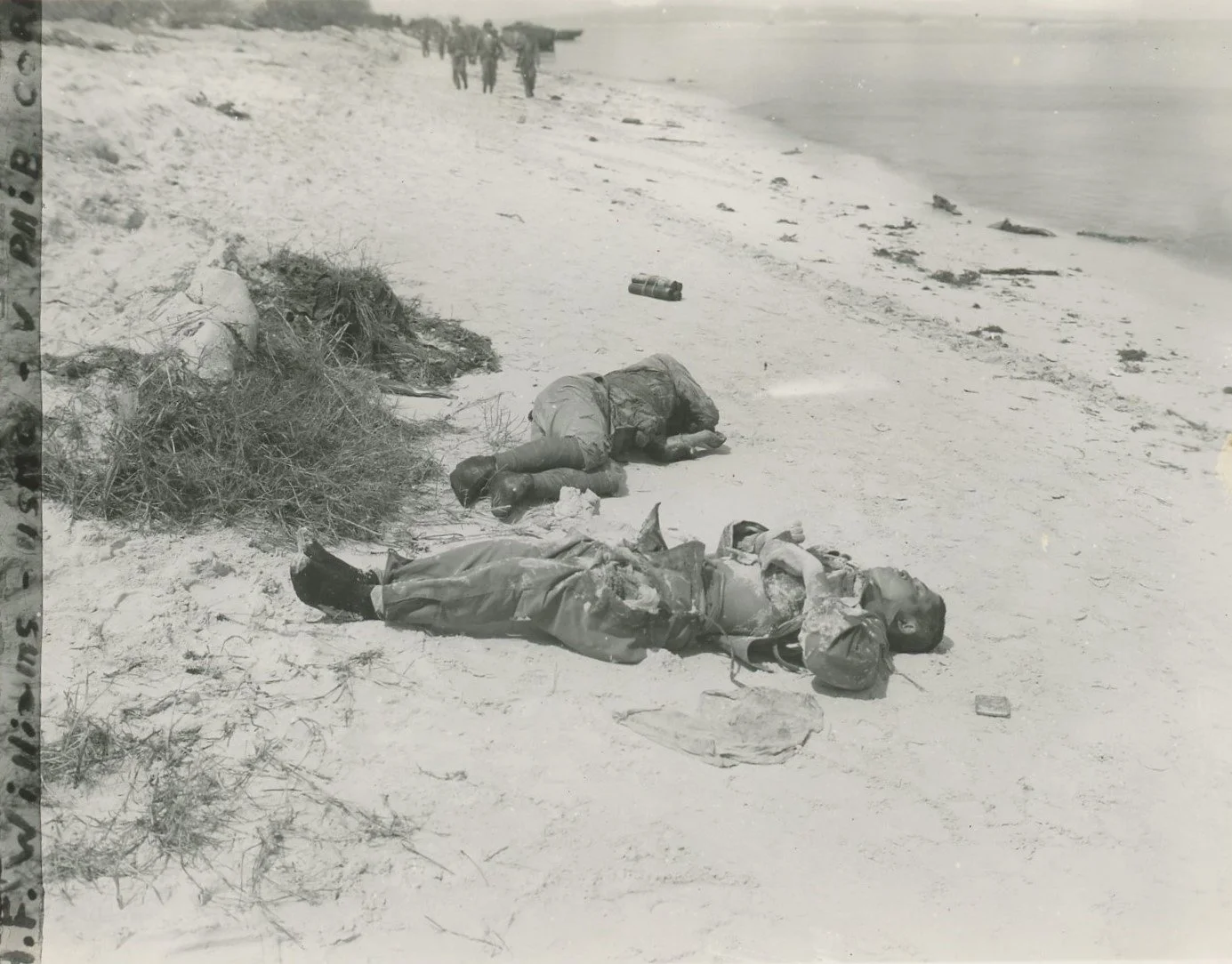
Two Imperial Japanese personnel, killed on Tanapag beach during a failed counter-attack. They are wearing unknown uniforms, but both wear closed-toe tabi.
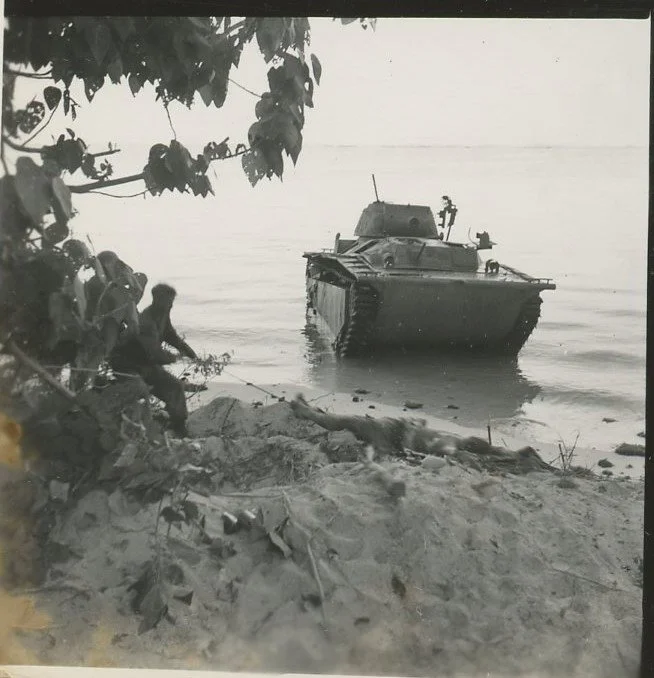
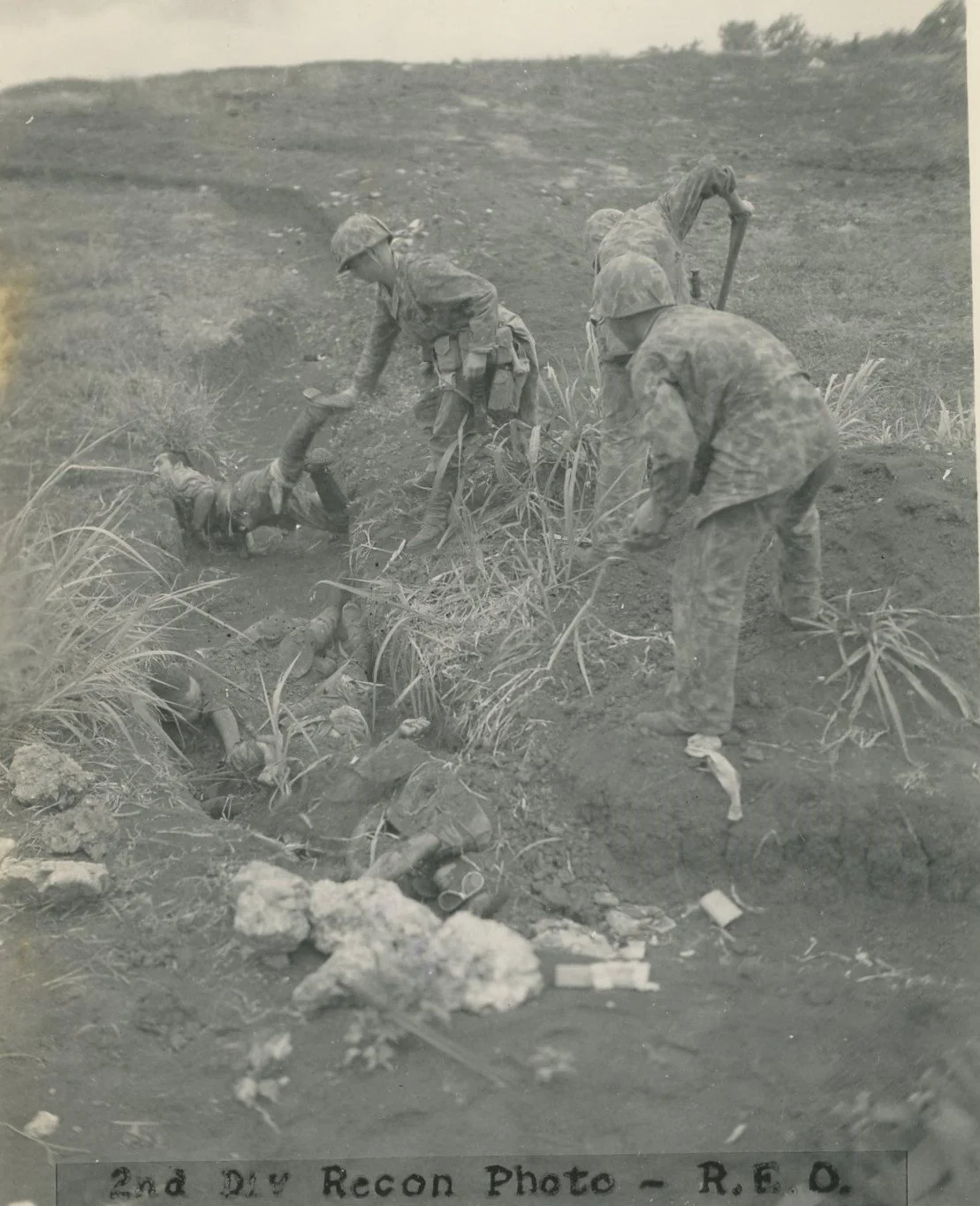
A Japanese solider is drug to an improvised burial hole, Tanapag.
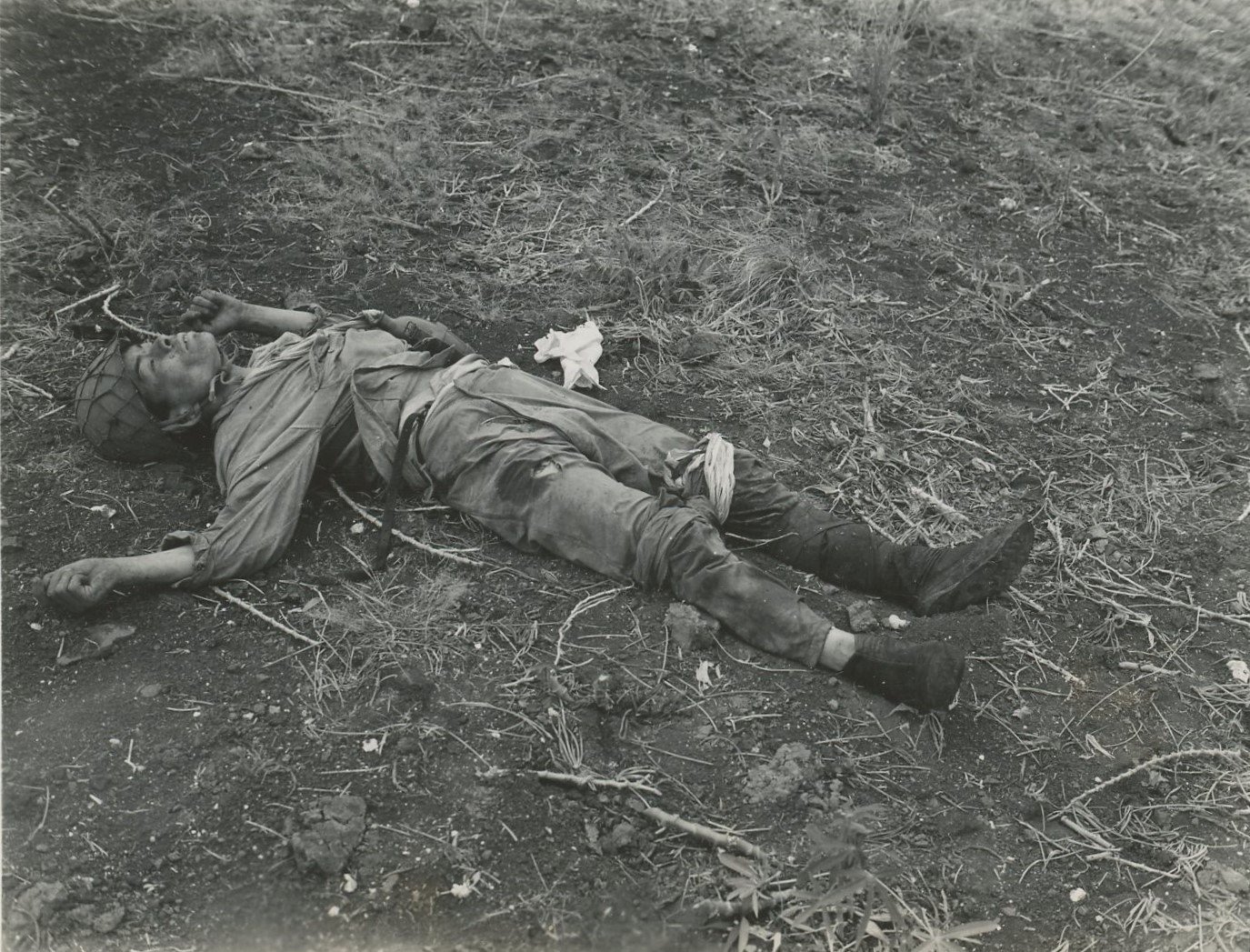
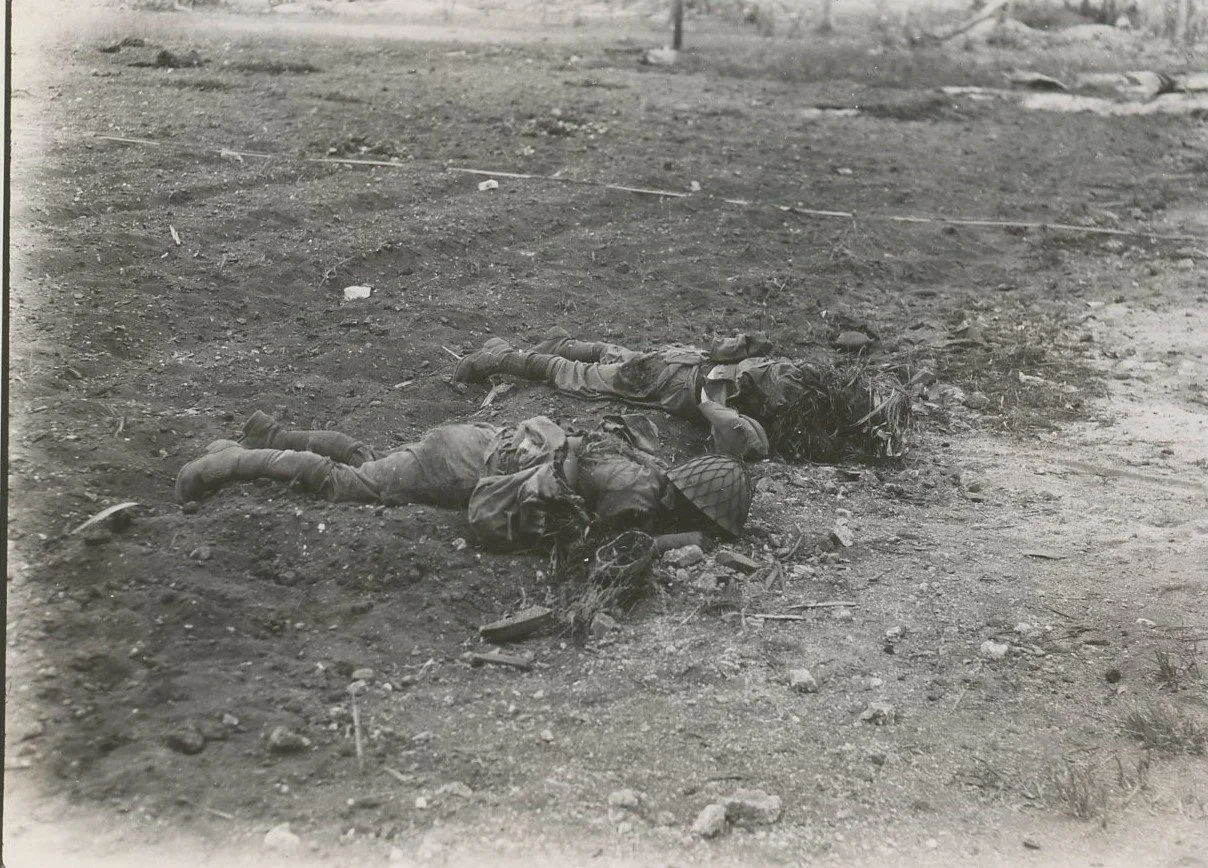
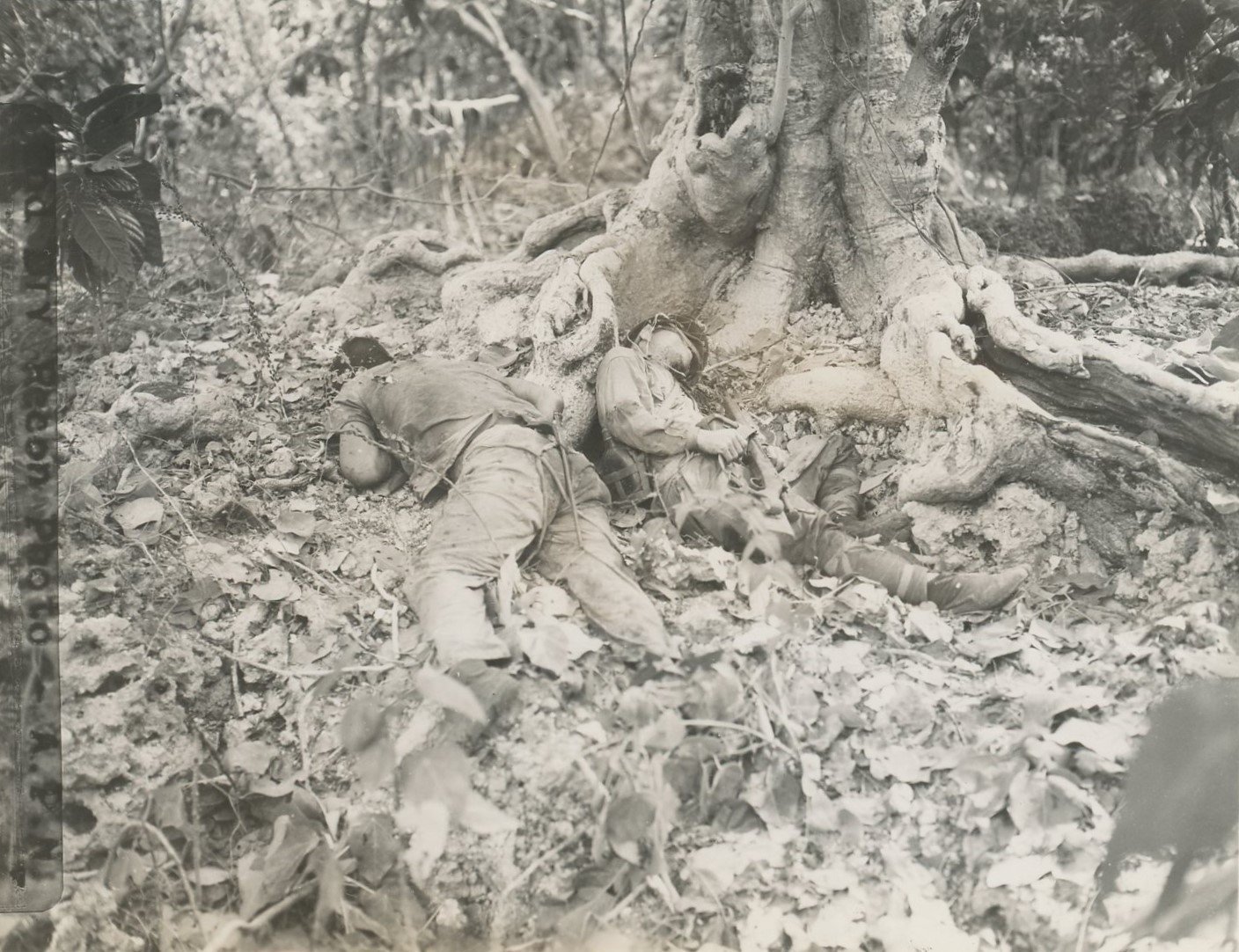
An Imperial Japanese Army Type 96/99 light machine gunner and assistant gunner lie side by side.
Both wear Showa 5 regulation boots, army trousers, army-model haversacks, Showa 5 regulation canteens, short-sleeve anti-heat jyuban, and Type 90 helmets; the helmet in the foreground retains a foliage net. Their roles are identifiable by the presence of a light machine gun spare parts case, tool case, and loading tool case carried on their backs.
Type 91 10CM Howitzer
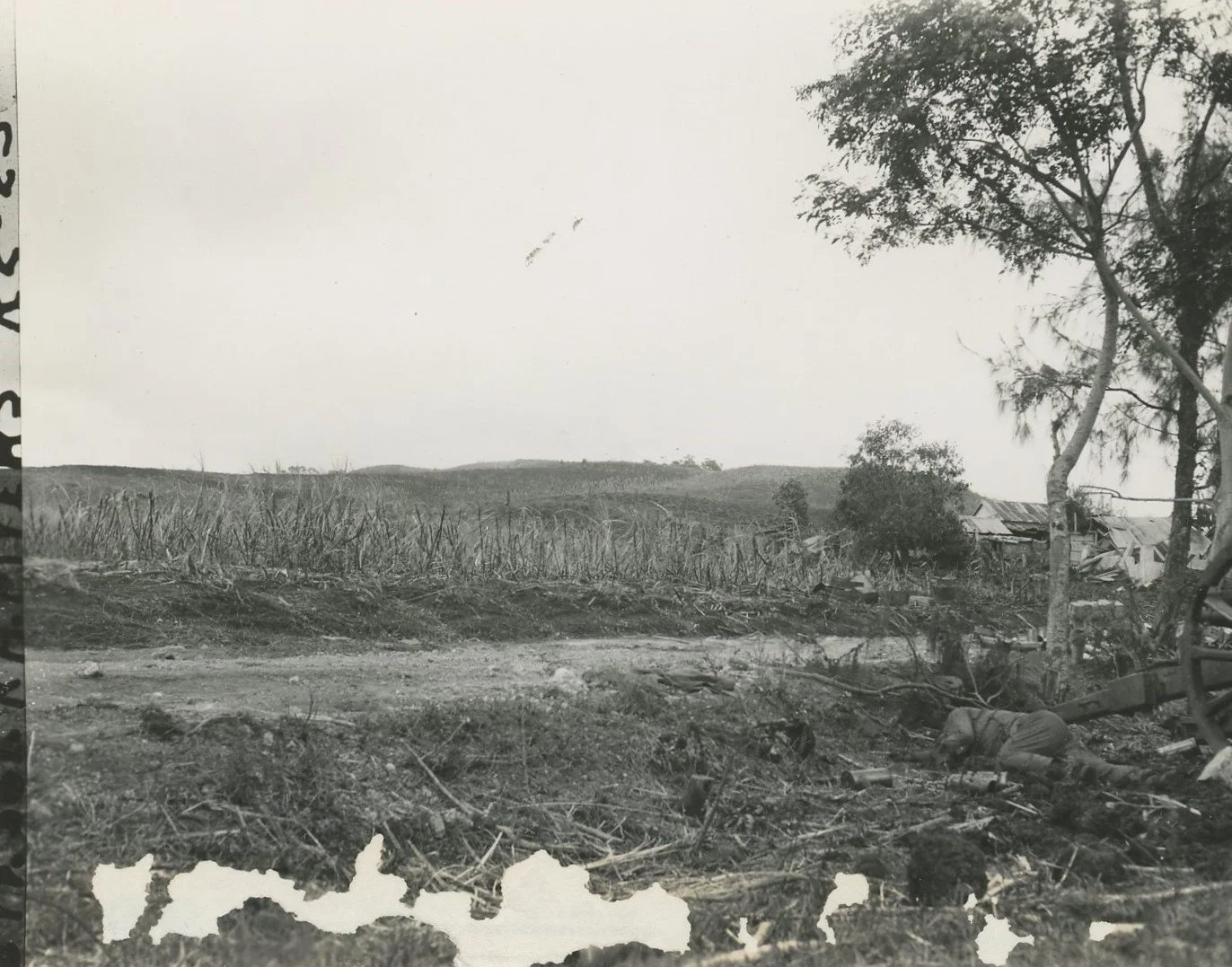
Type 91 10CM Howitzer
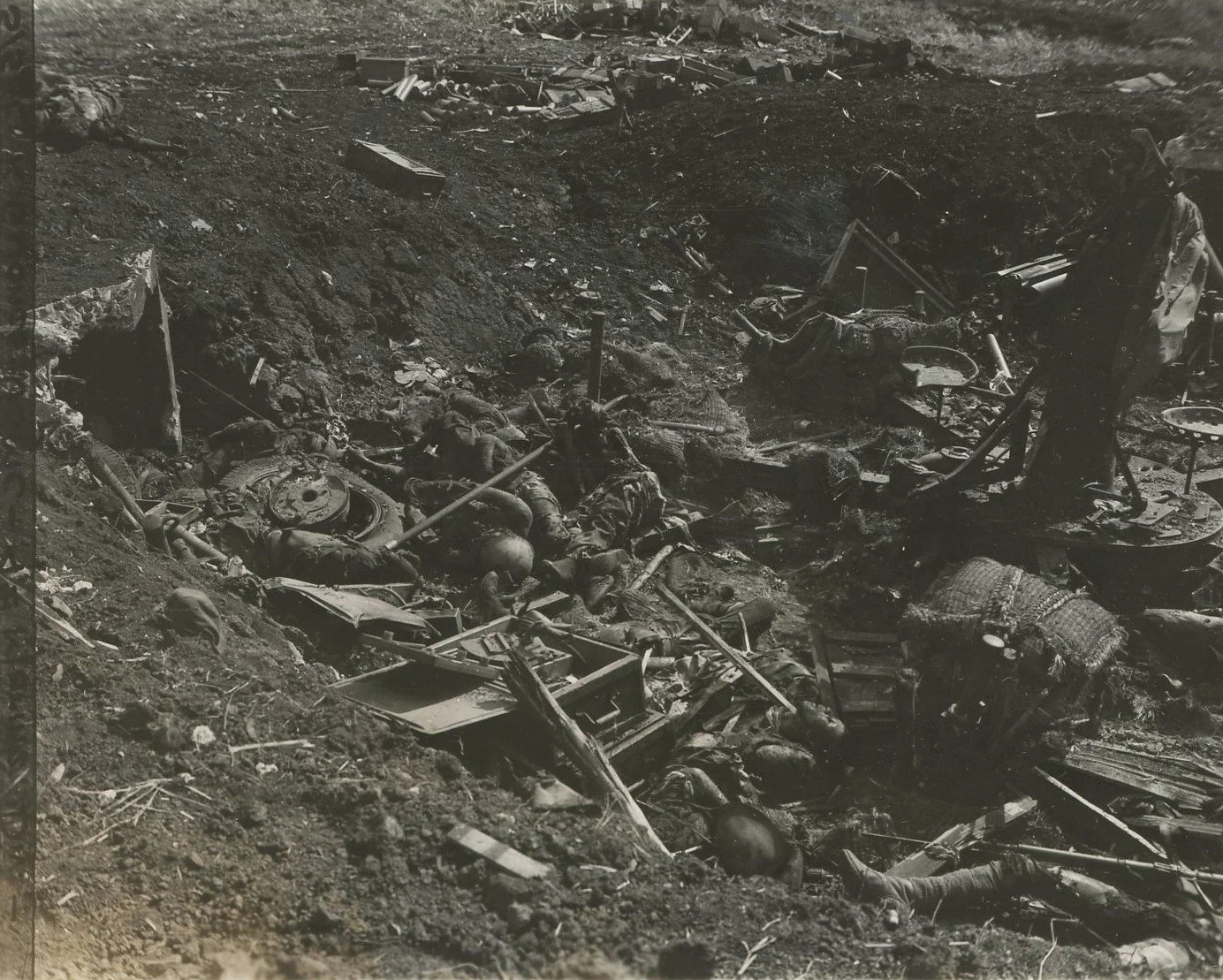
Type 88 75MM Anti-Aircraft Gun
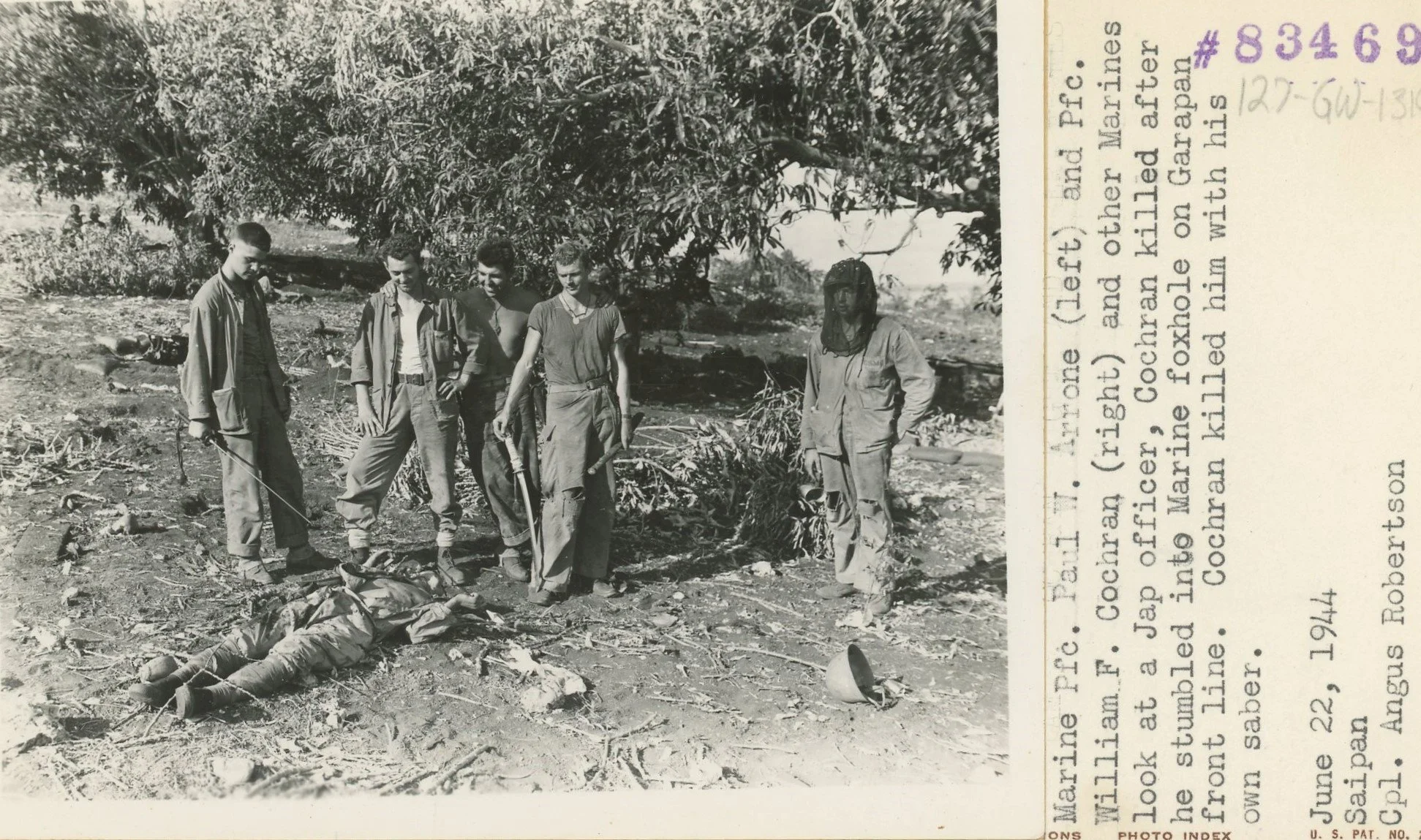
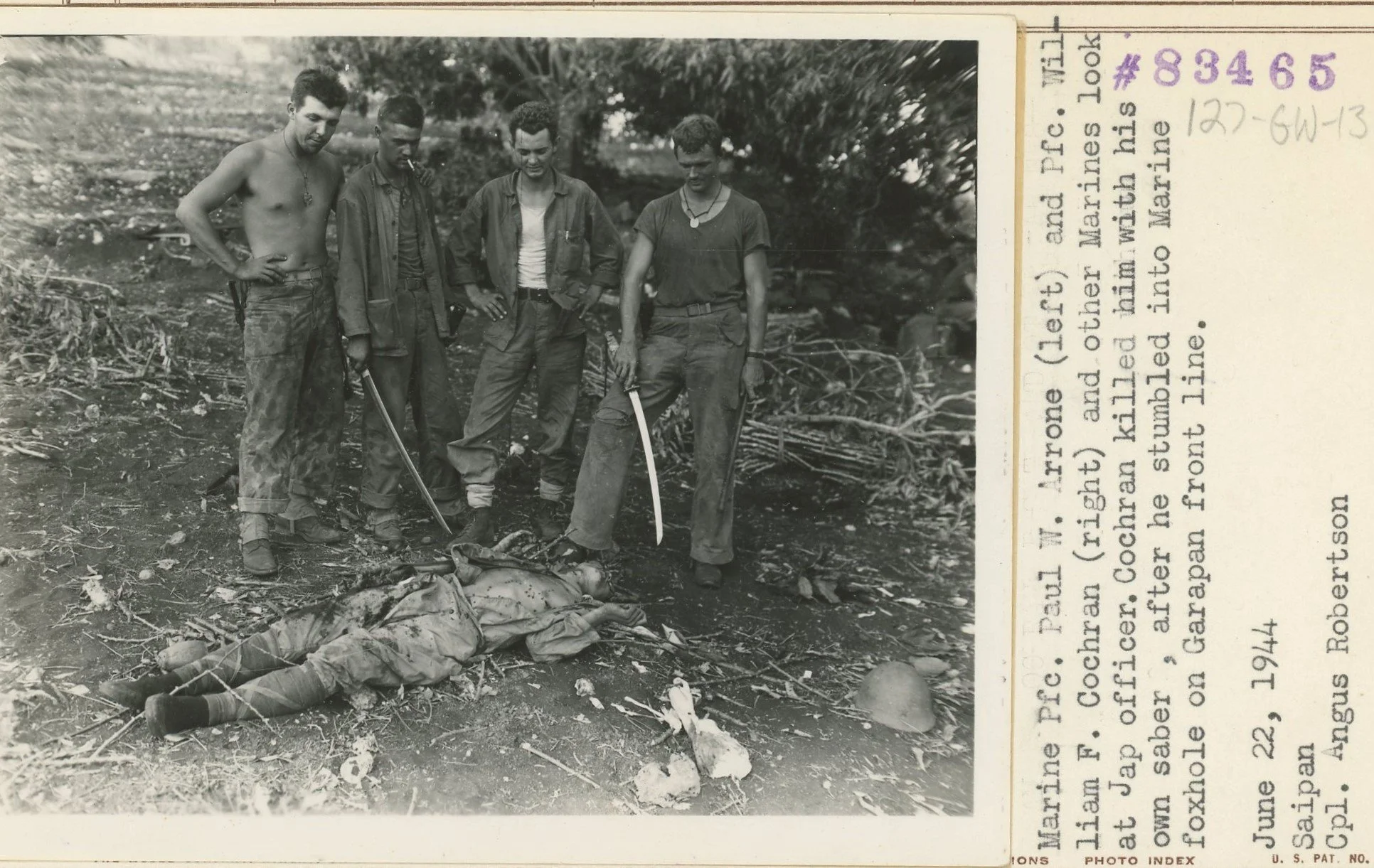
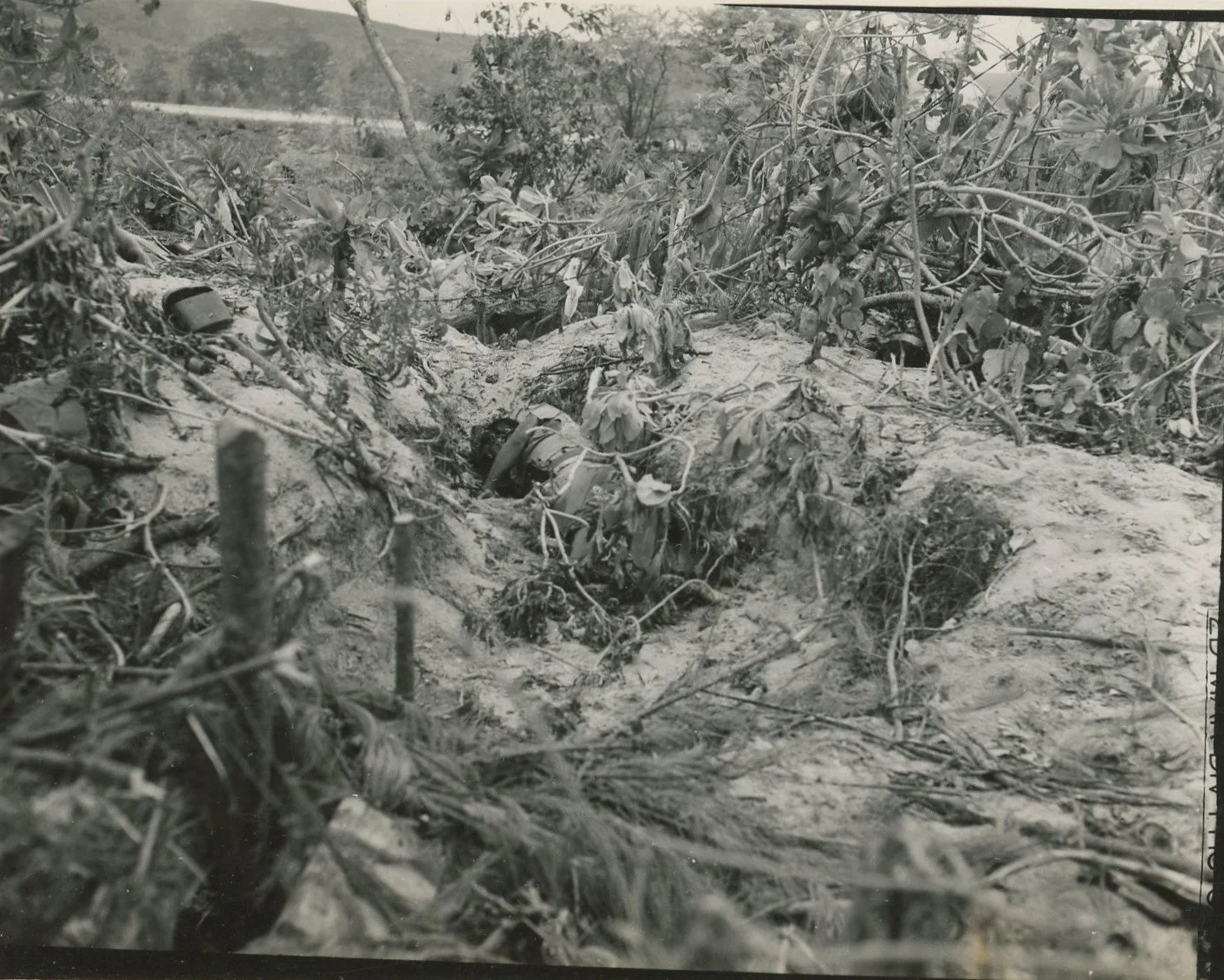
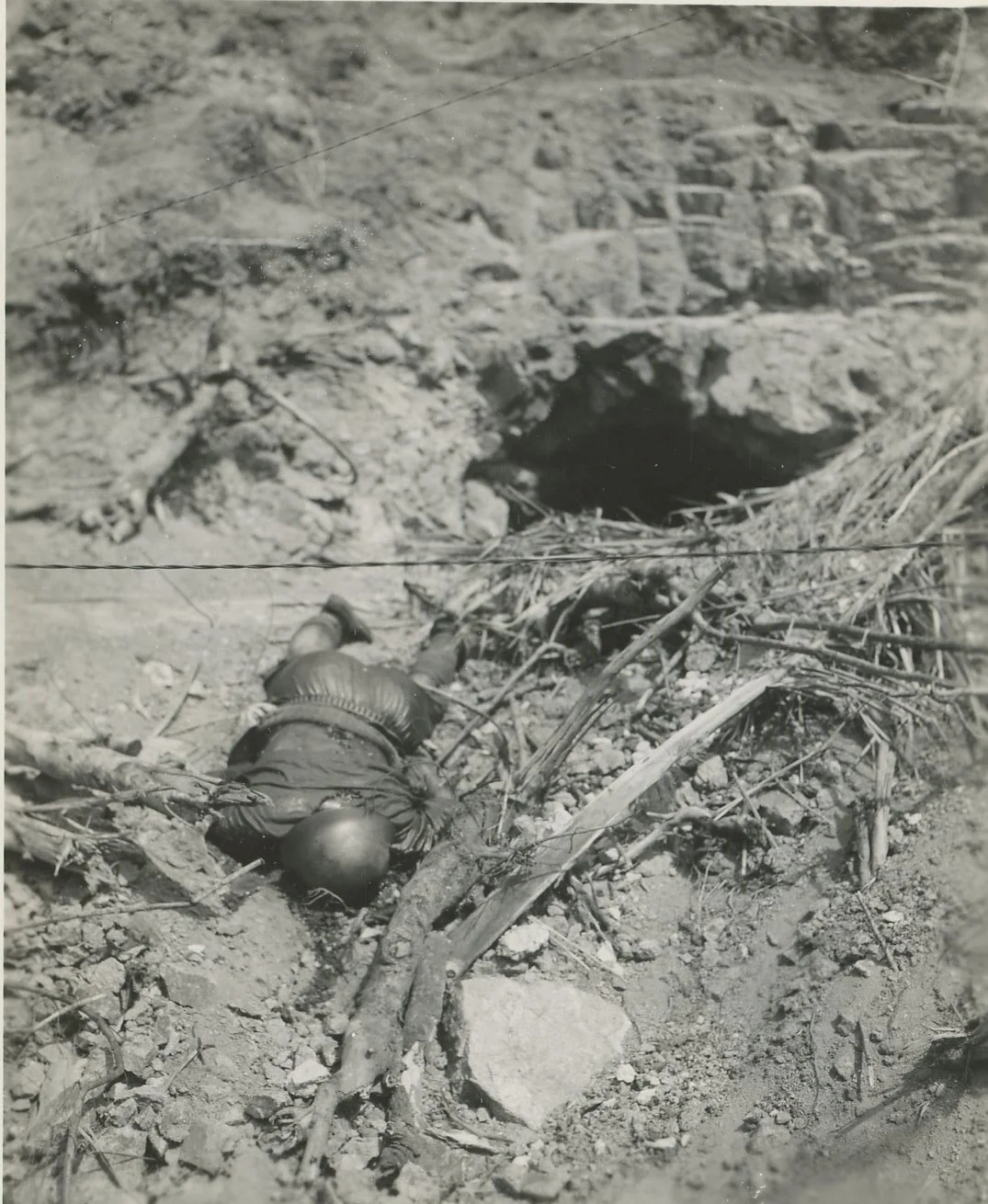
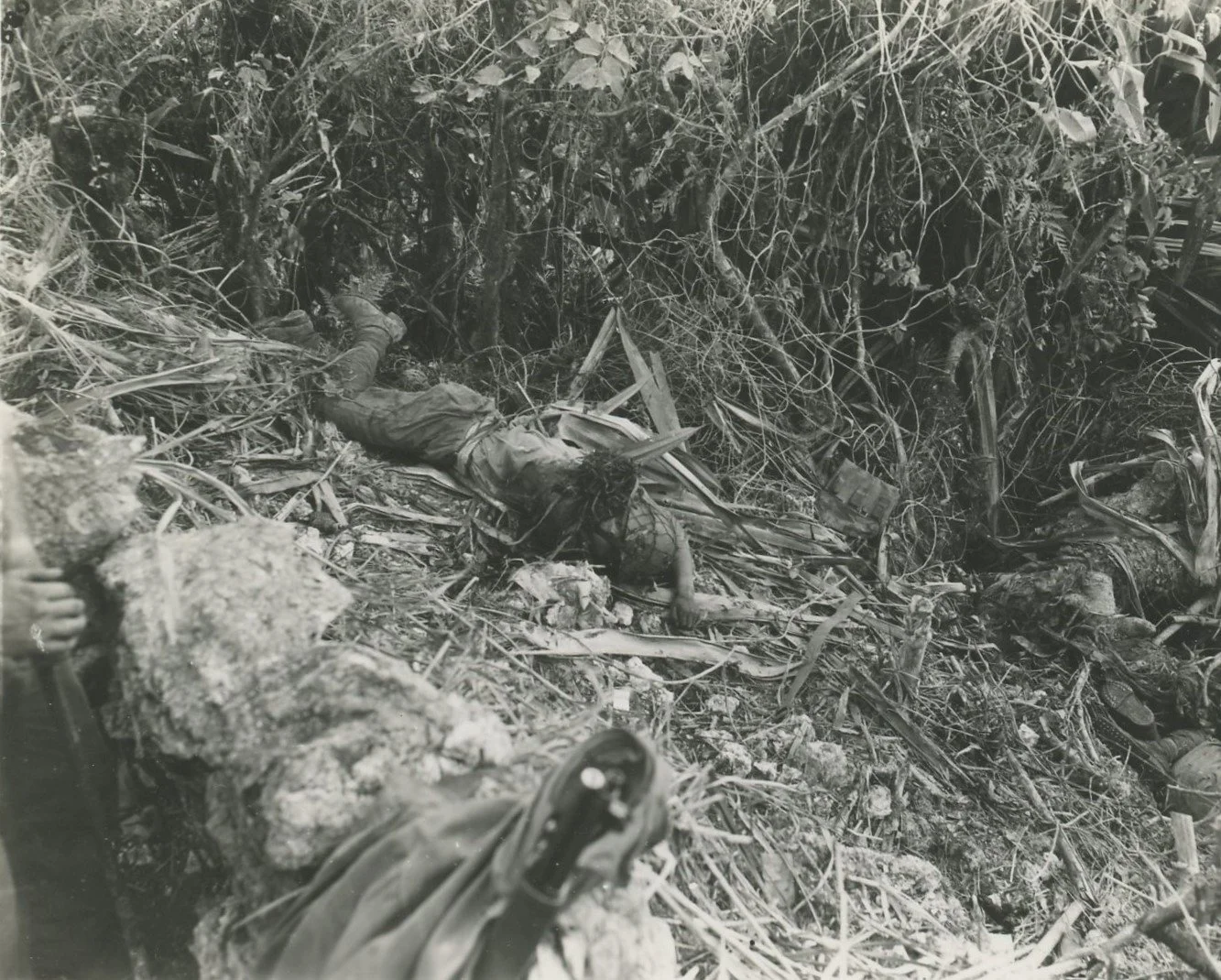
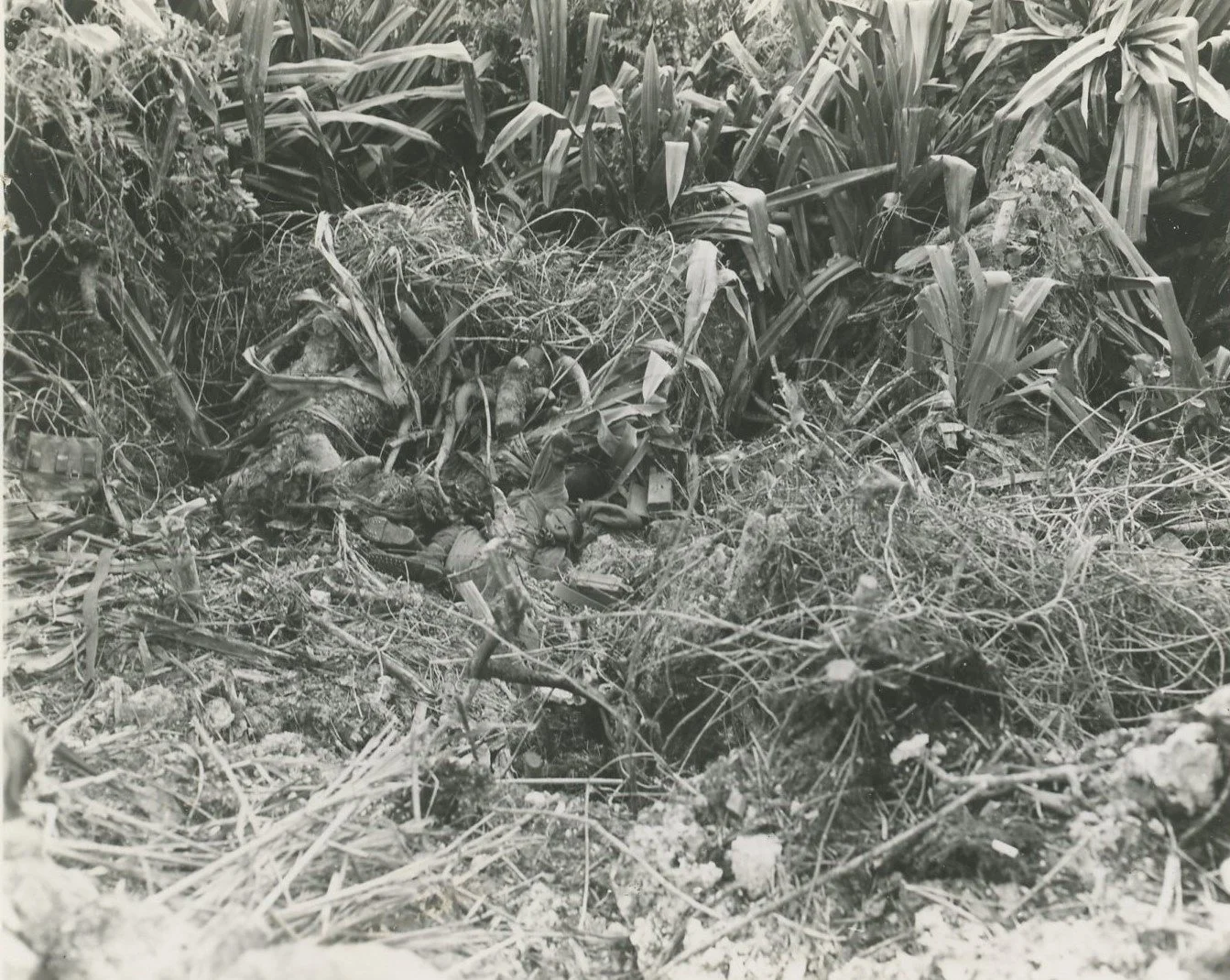
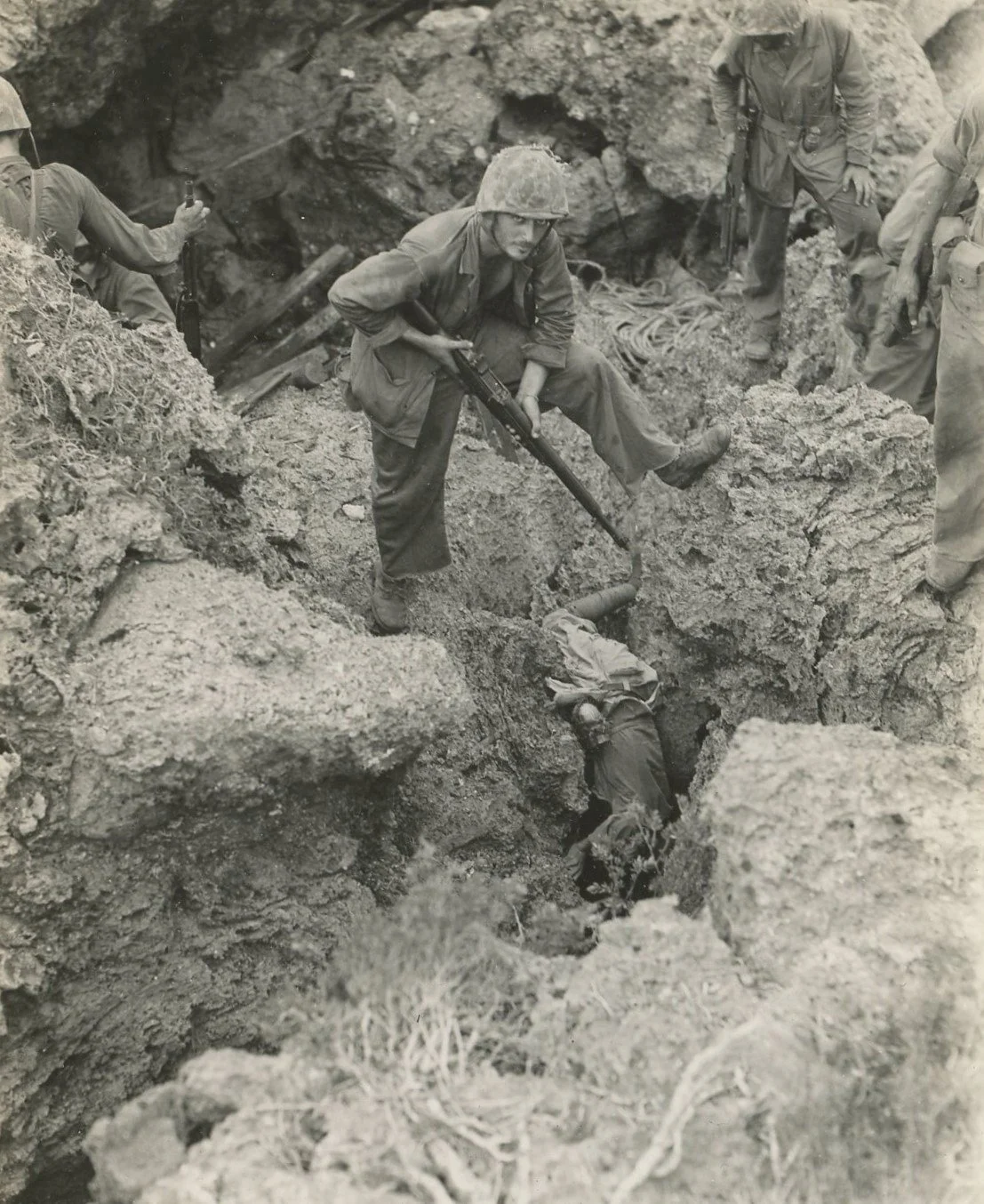
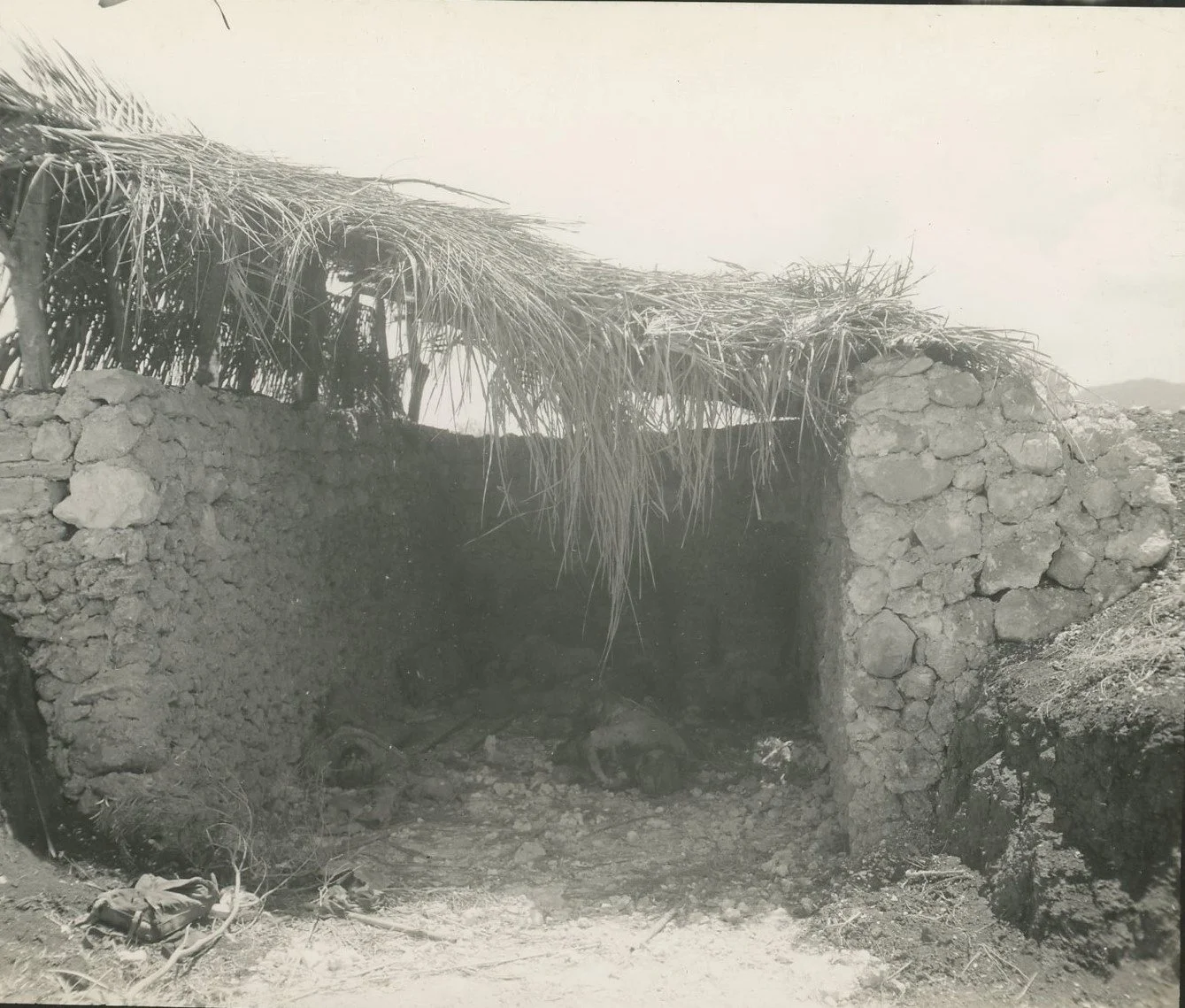
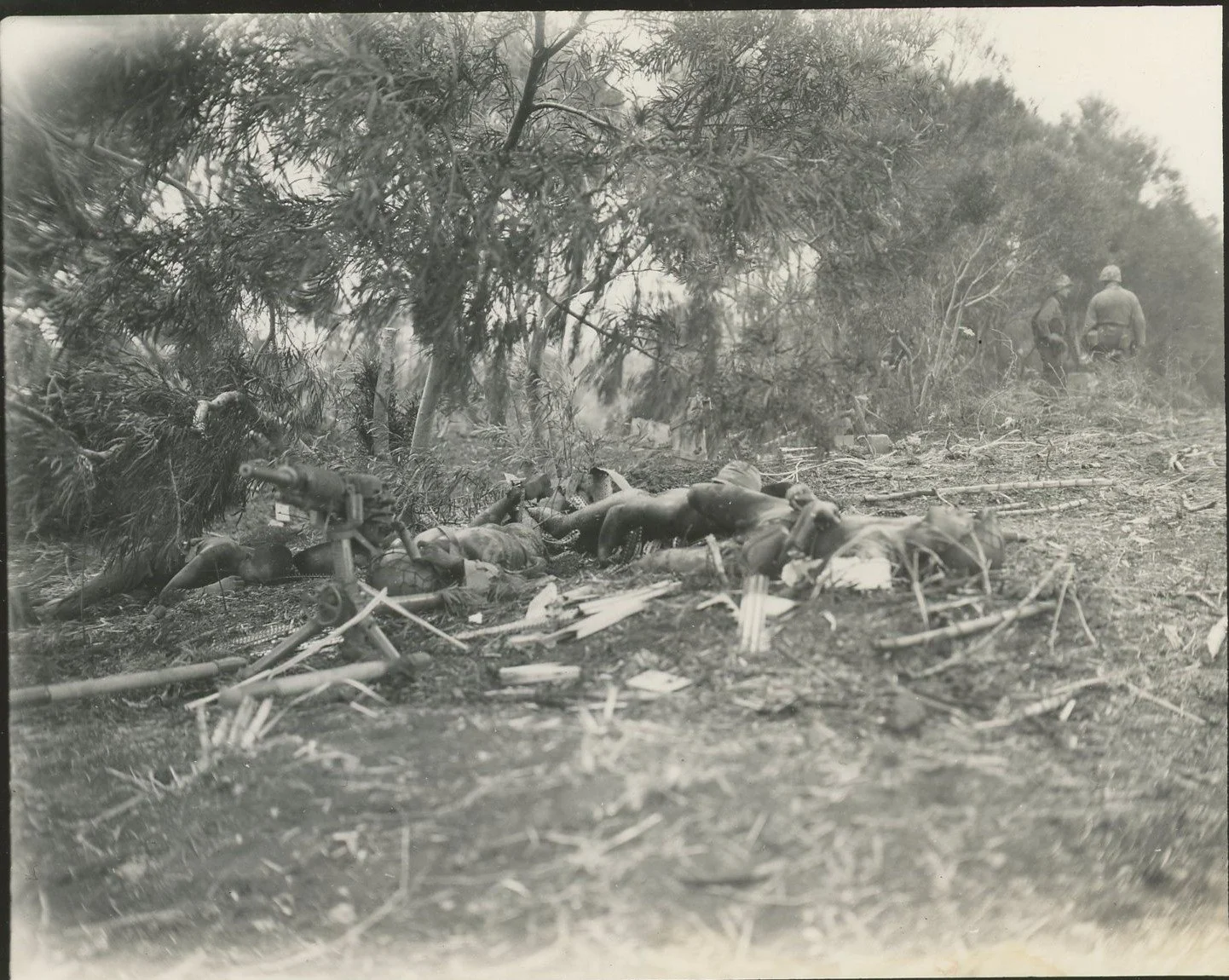
A Type 92 heavy machine gun and its crew lie disabled in position.
Numerous empty 7.7 mm ammunition clips are visible around the weapon, indicating sustained use prior to its loss. The crew wear Type 90 helmets fitted with foliage netting; their uniforms are largely unidentifiable due to damage.
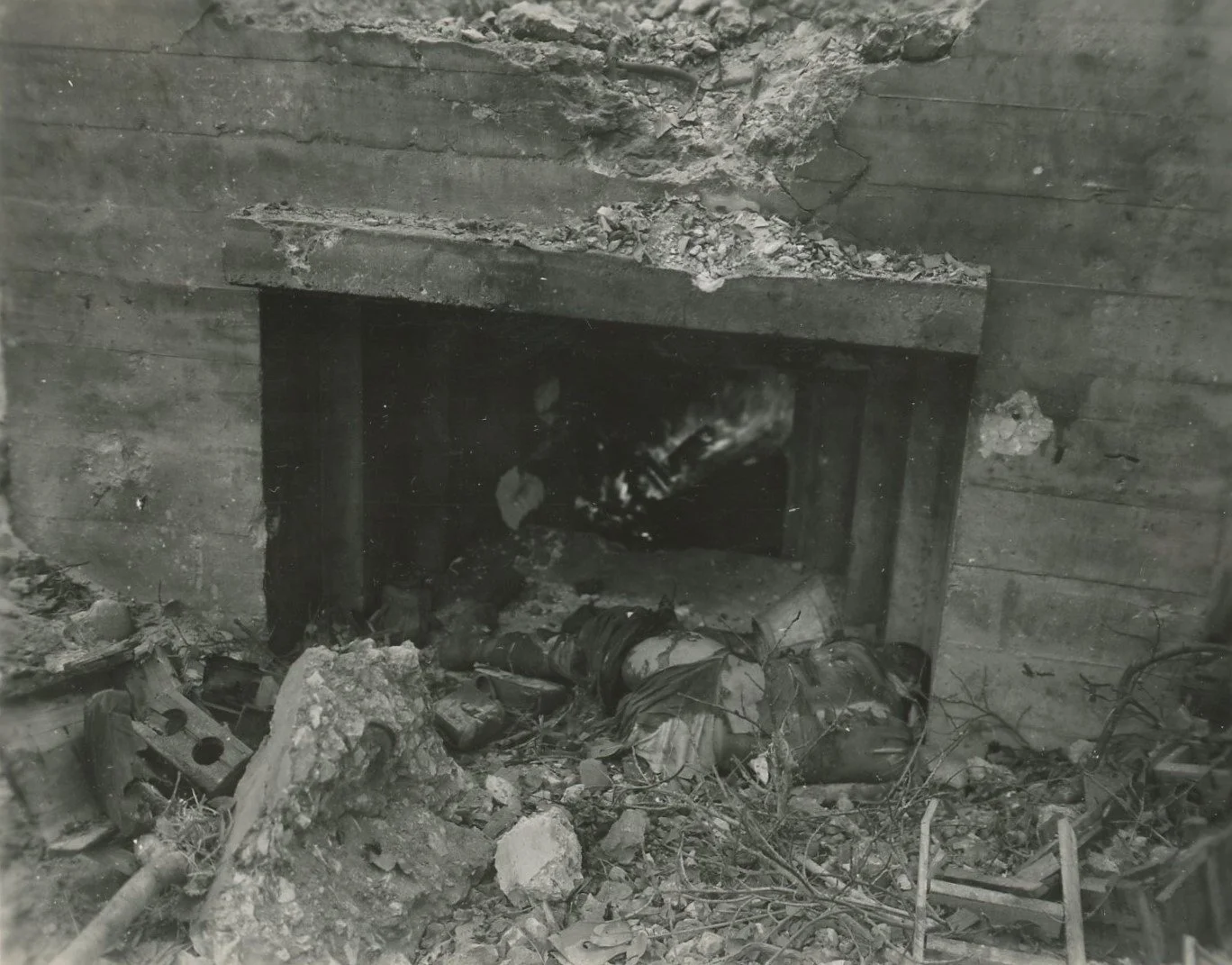
A knocked-out bunker on the beach, located at the intersection of what is today Quartermaster Road and Beach Road.
Today a Type 97 Chi-Ha medium tank of the Imperial Japanese Army’s 9th Tank Regiment has been placed atop the structure. At the mouth of the bunker lies an Imperial Japanese Army machine gunner, identifiable by a Type 96/99 light machine gun magazine pouch and loading tool pouch worn at the rear of his belt. He wears puttees with Showa 5 regulation boots.
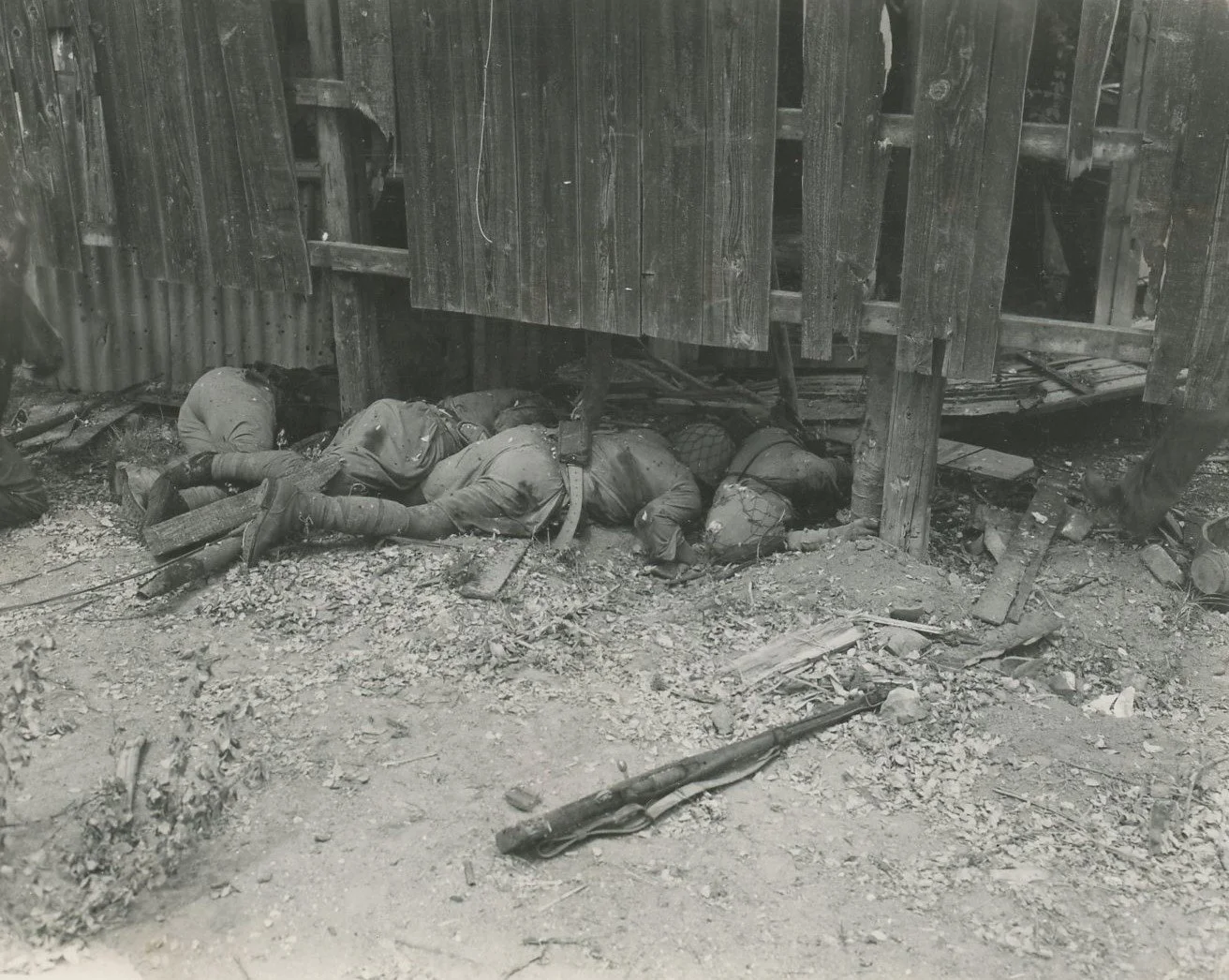
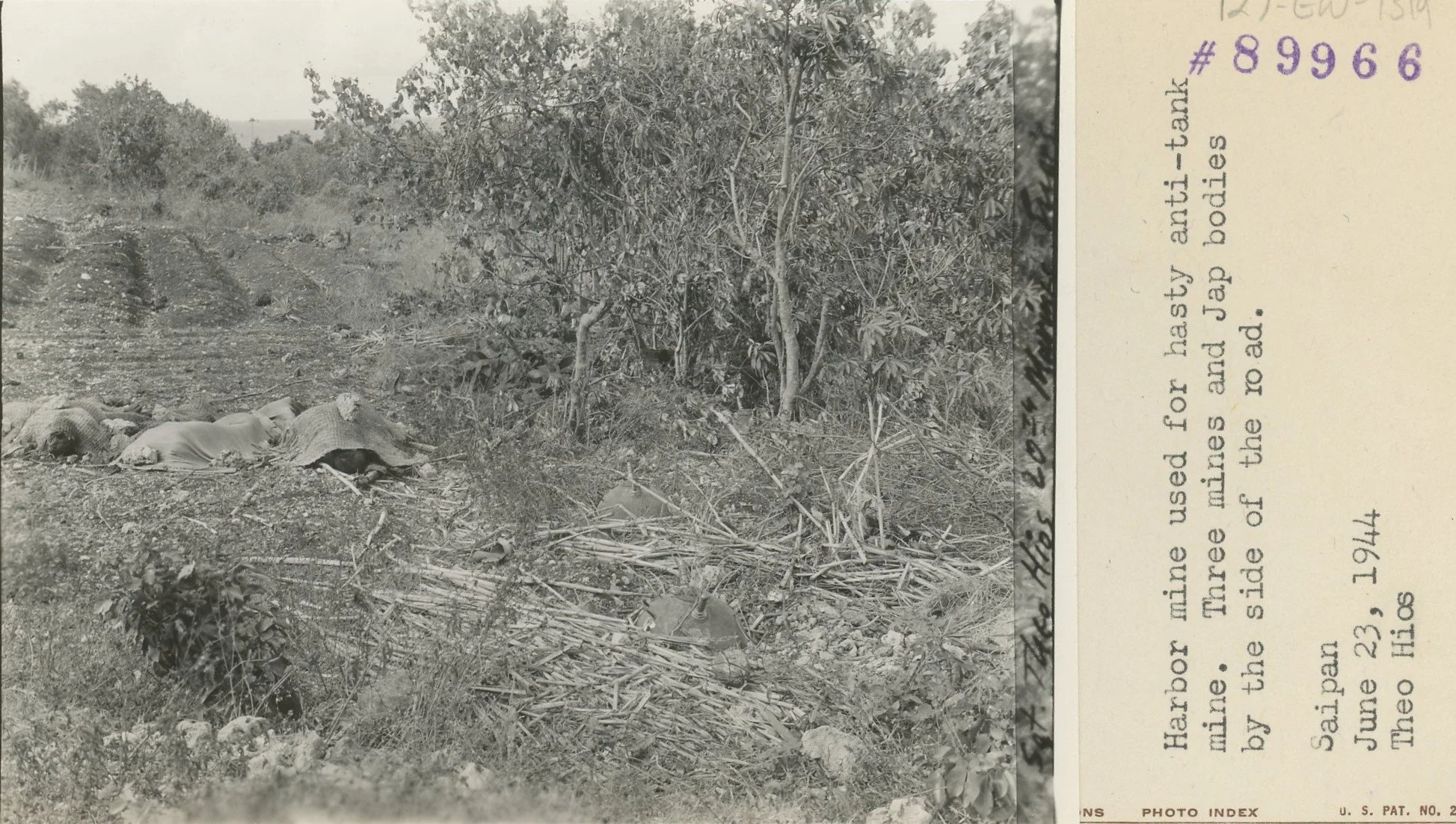
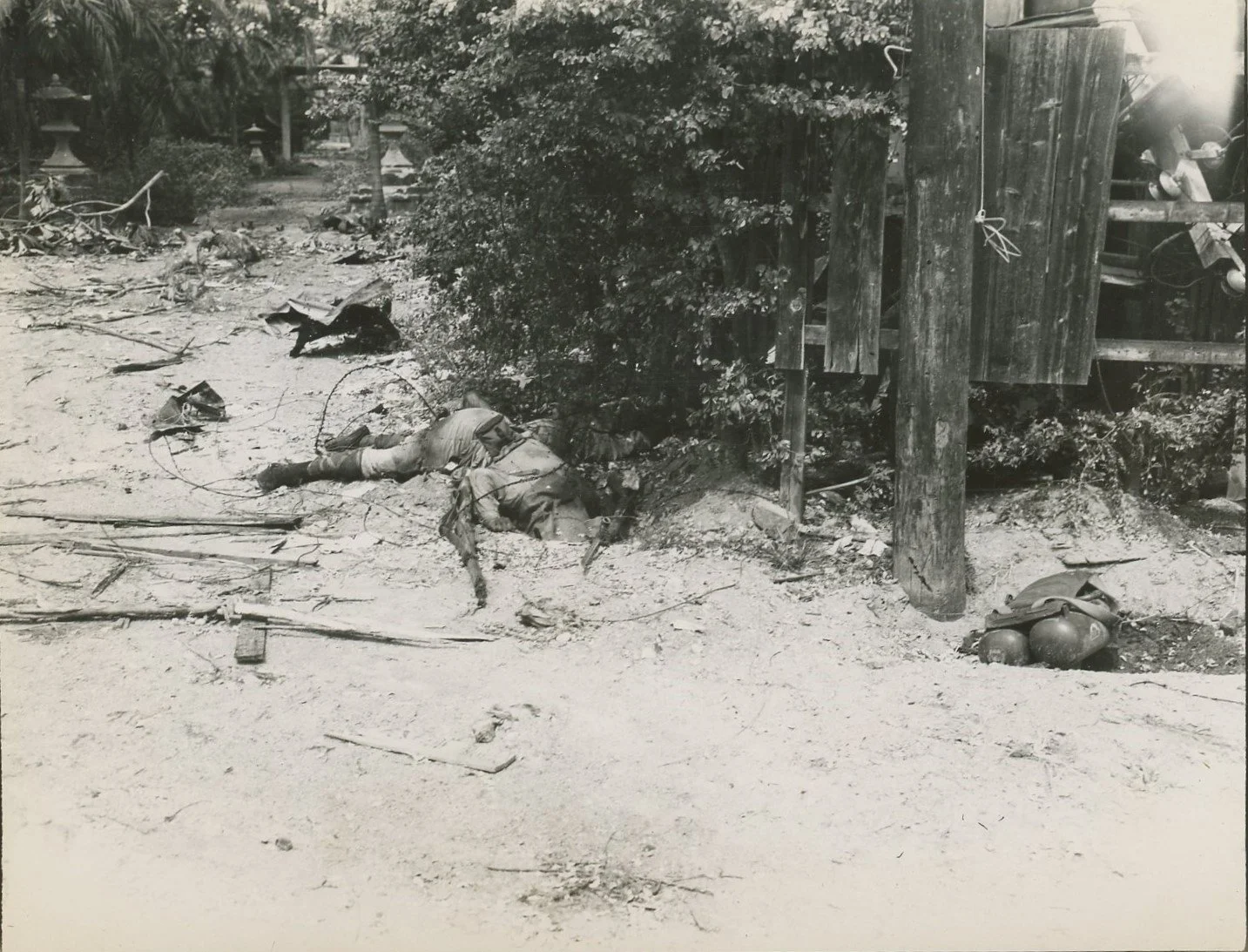
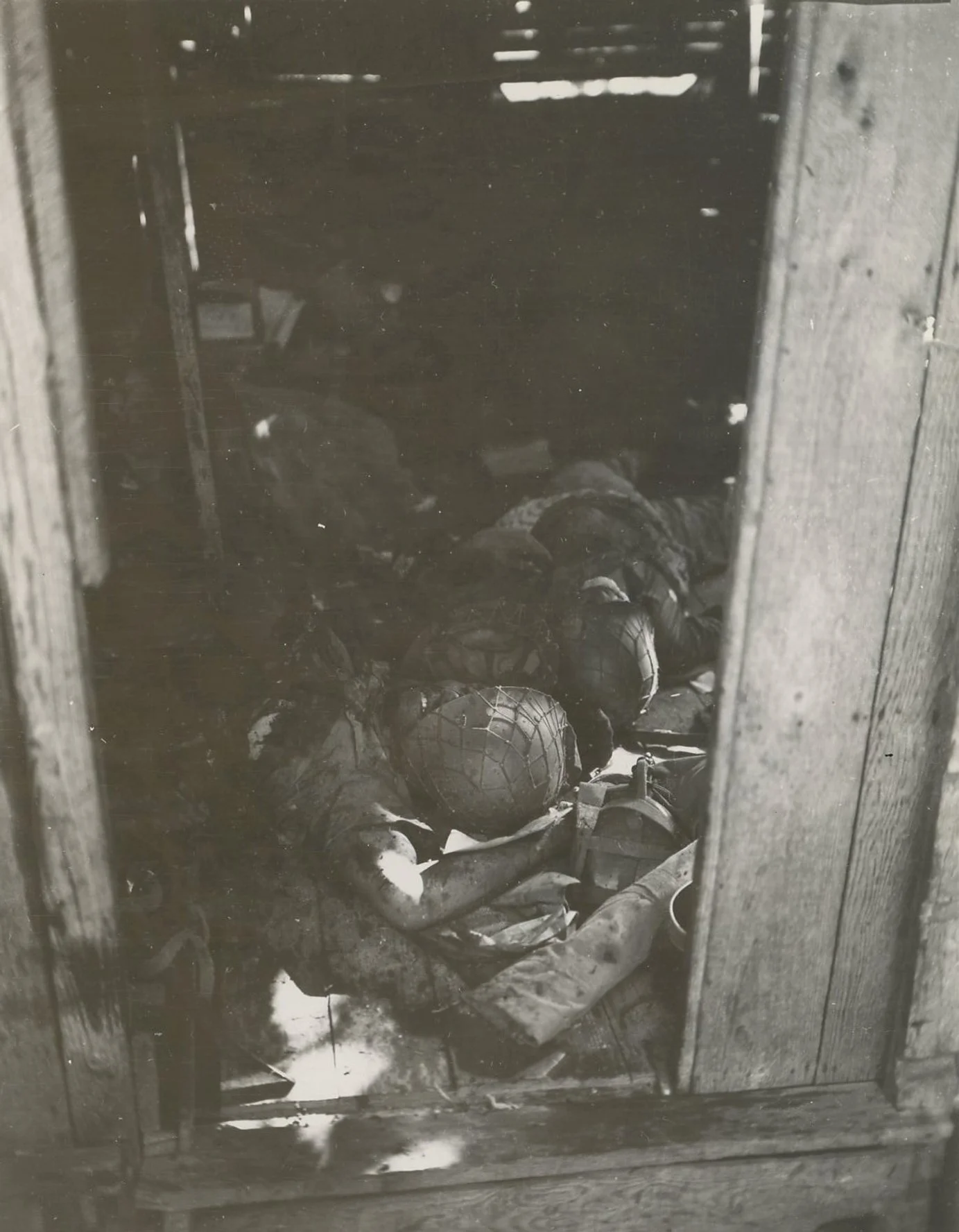
Four Imperial Japanese Army soldiers lie beneath the wall of a building, wearing what appear to be Type 98 uniform sets.
They are equipped with Showa 5 regulation canteens and wear a mix of Showa 5 regulation boots and closed-toe tabi. Their belt equipment consists of a combination of rubberized canvas belts and leather late Ko rifle pouches. All four wear Type 90 helmets fitted with covers and foliage netting.
In the foreground, a Type 99 rifle is visible, retaining its monopod and other early-war features.
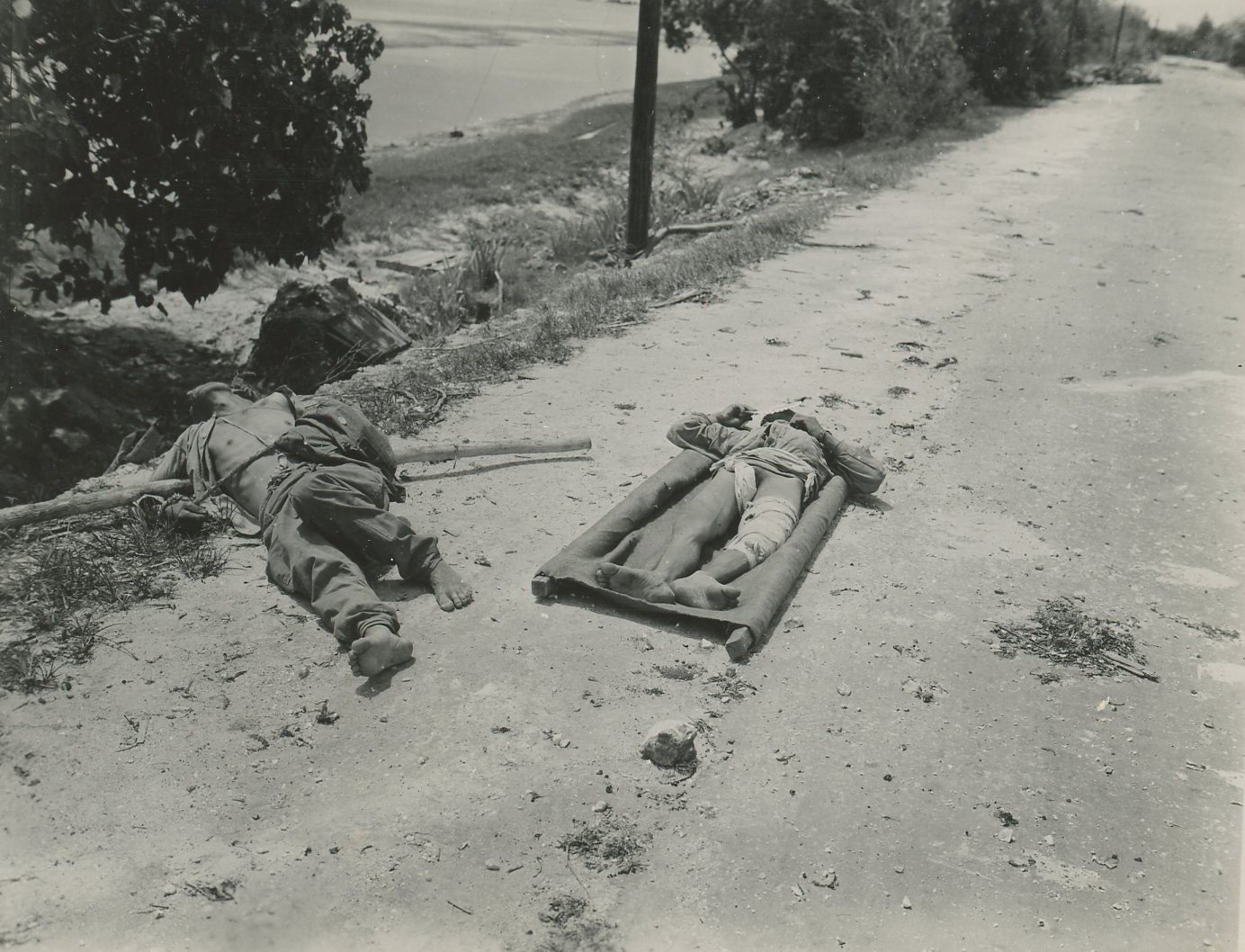
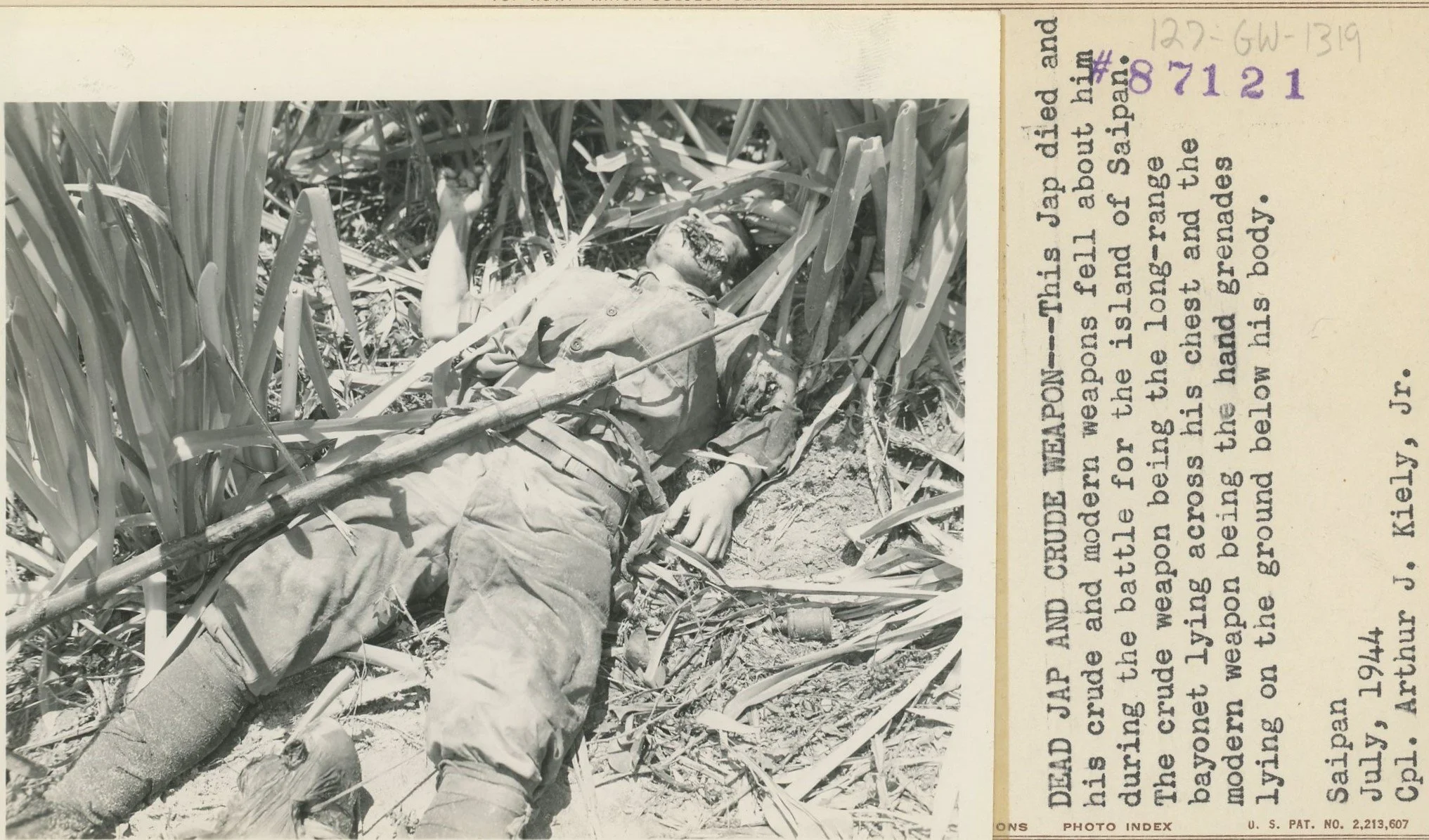
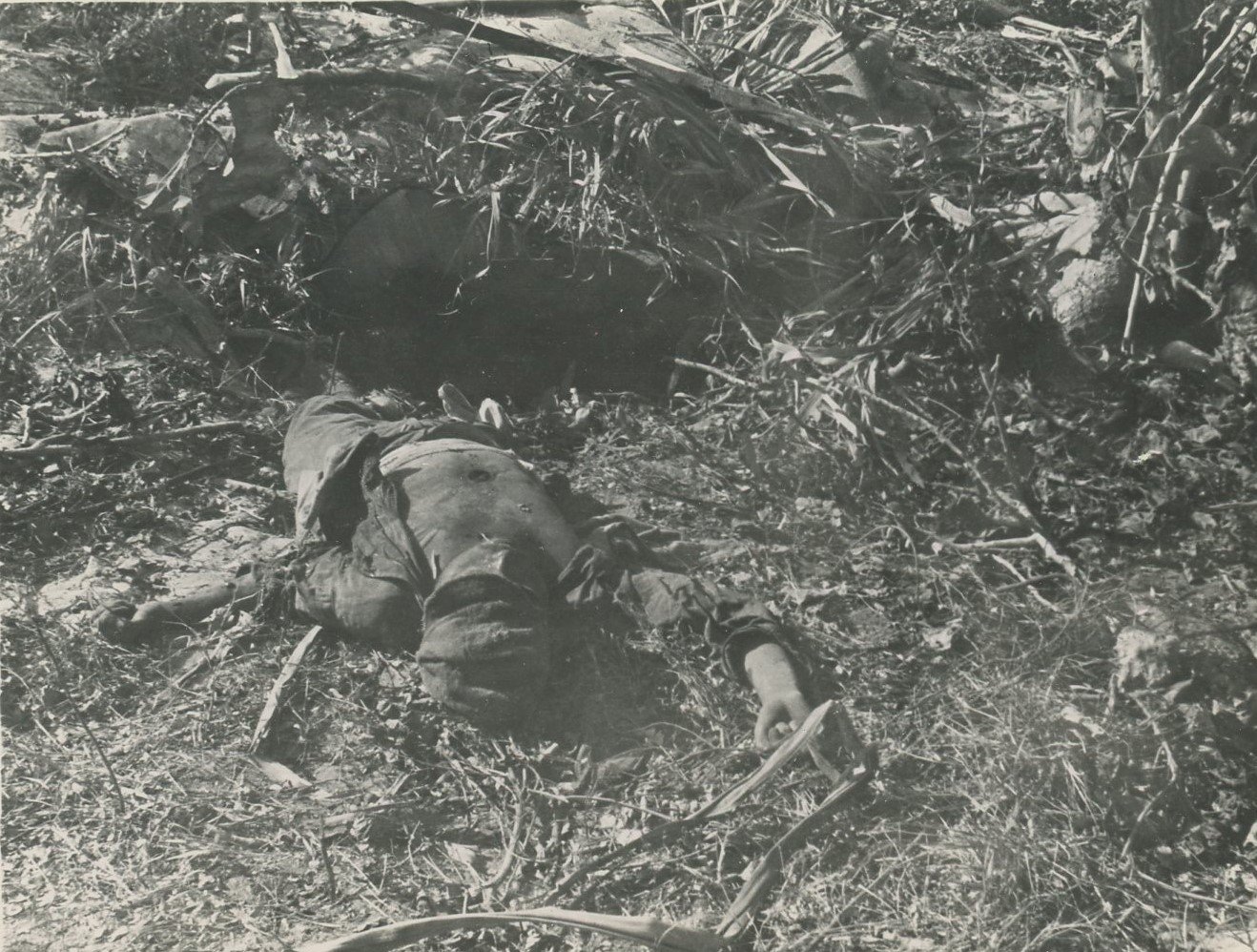
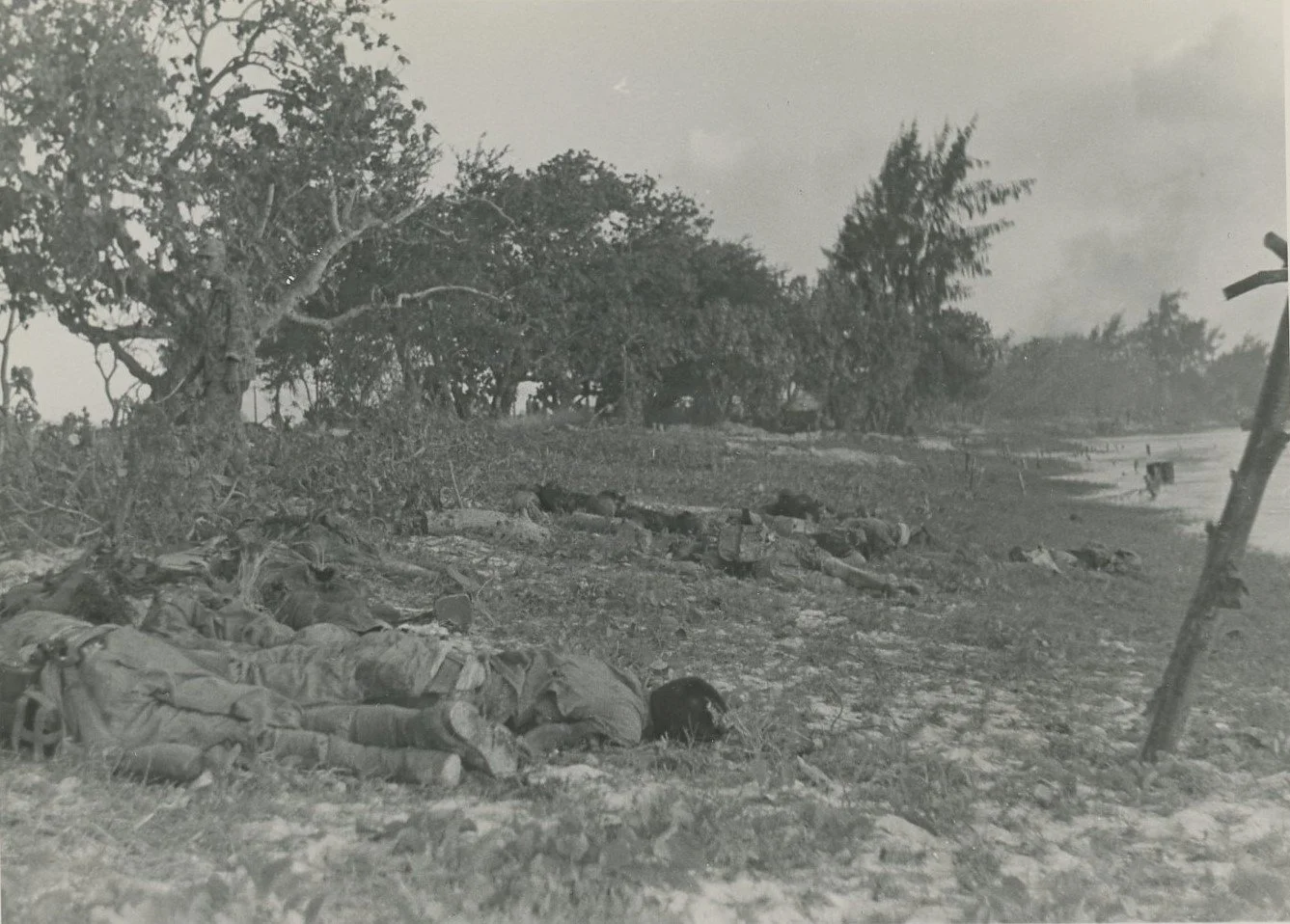
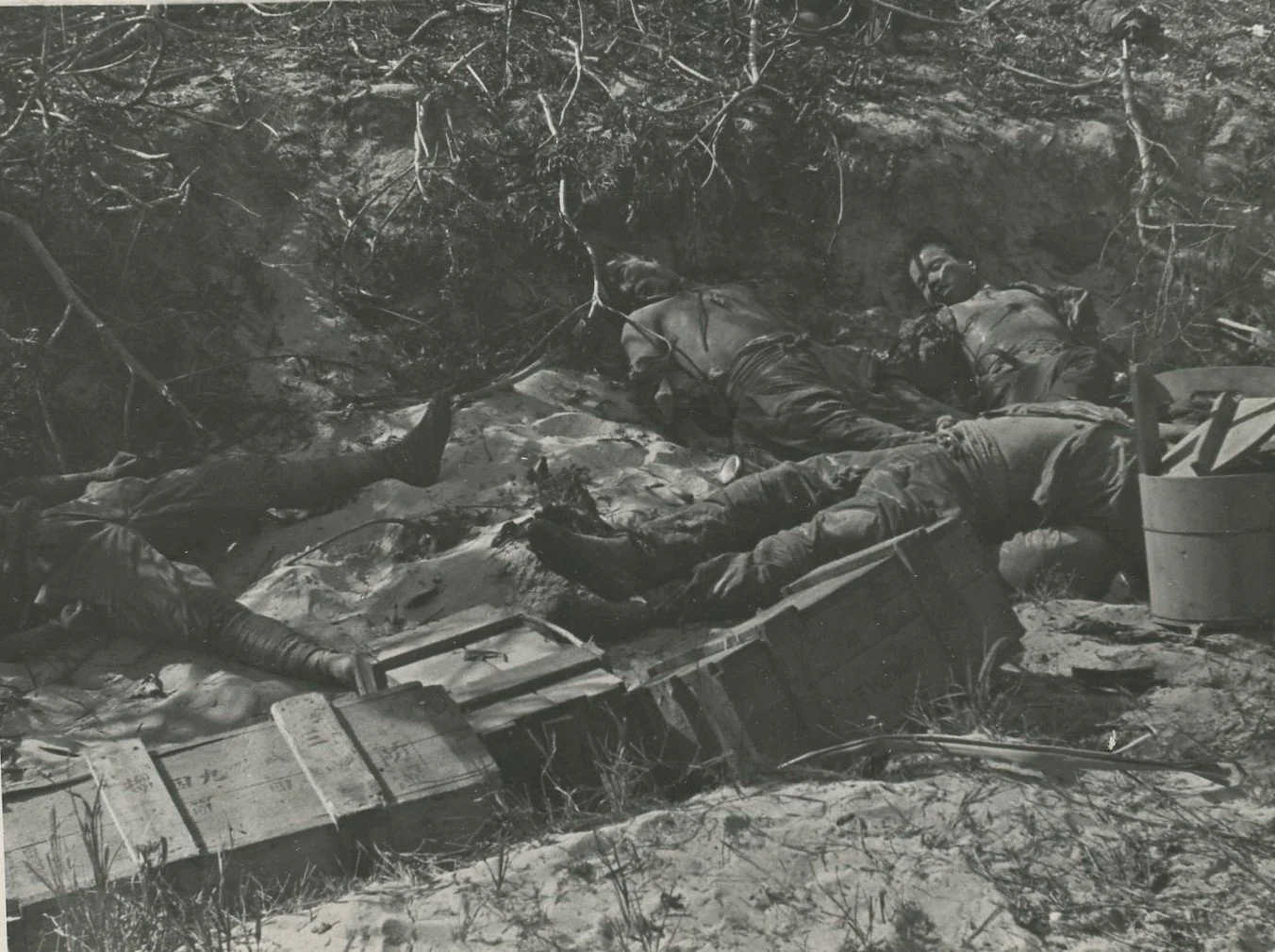
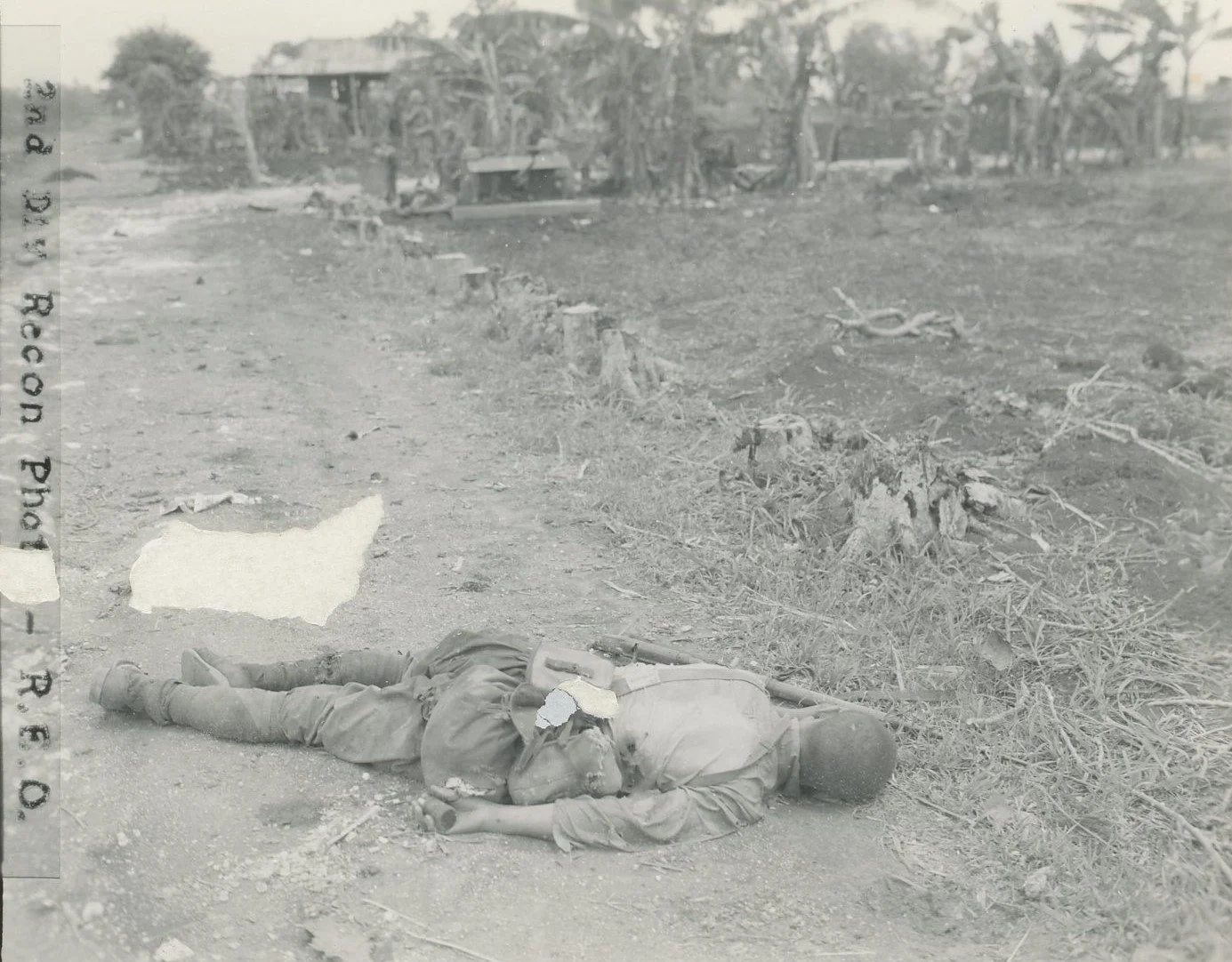
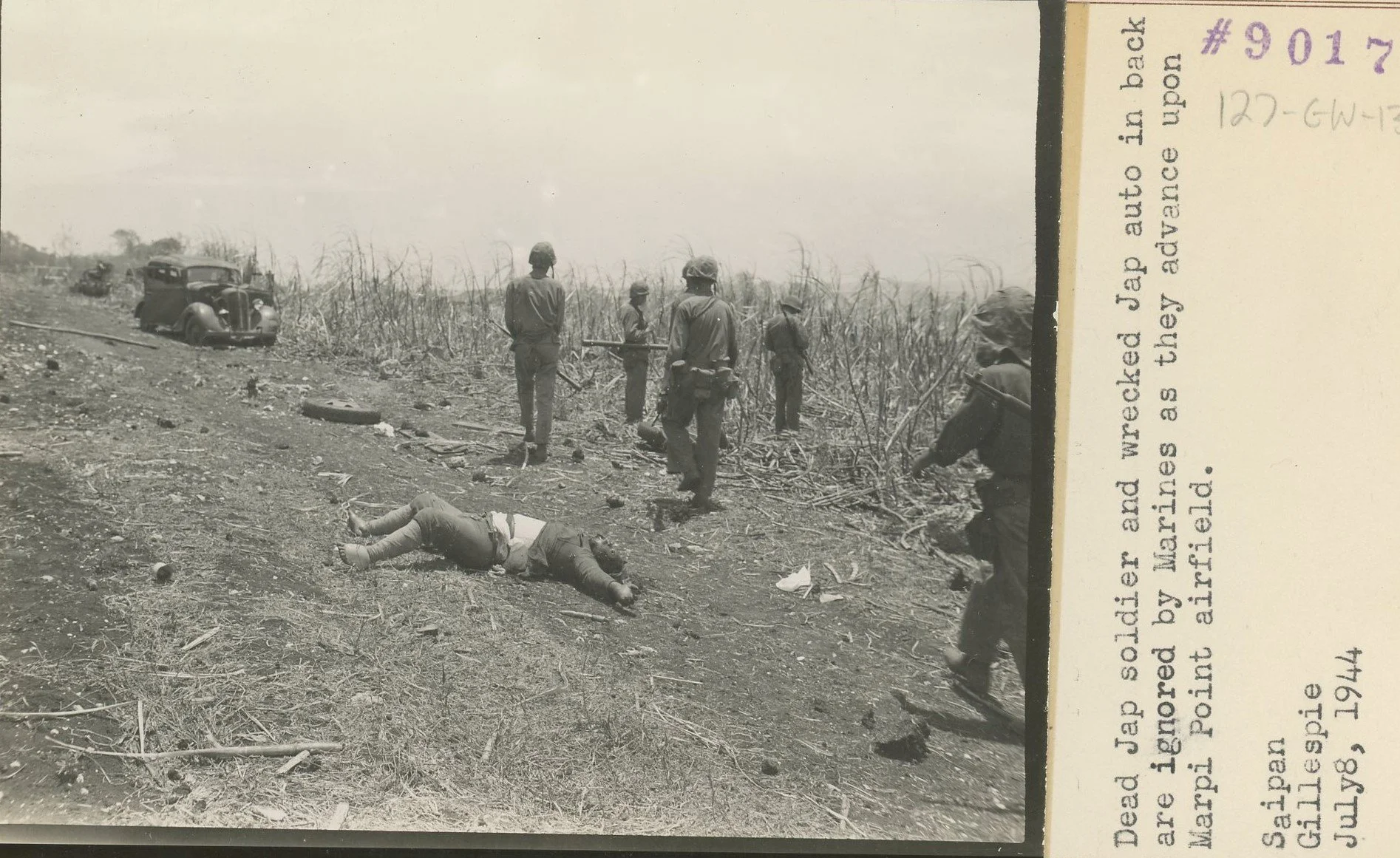
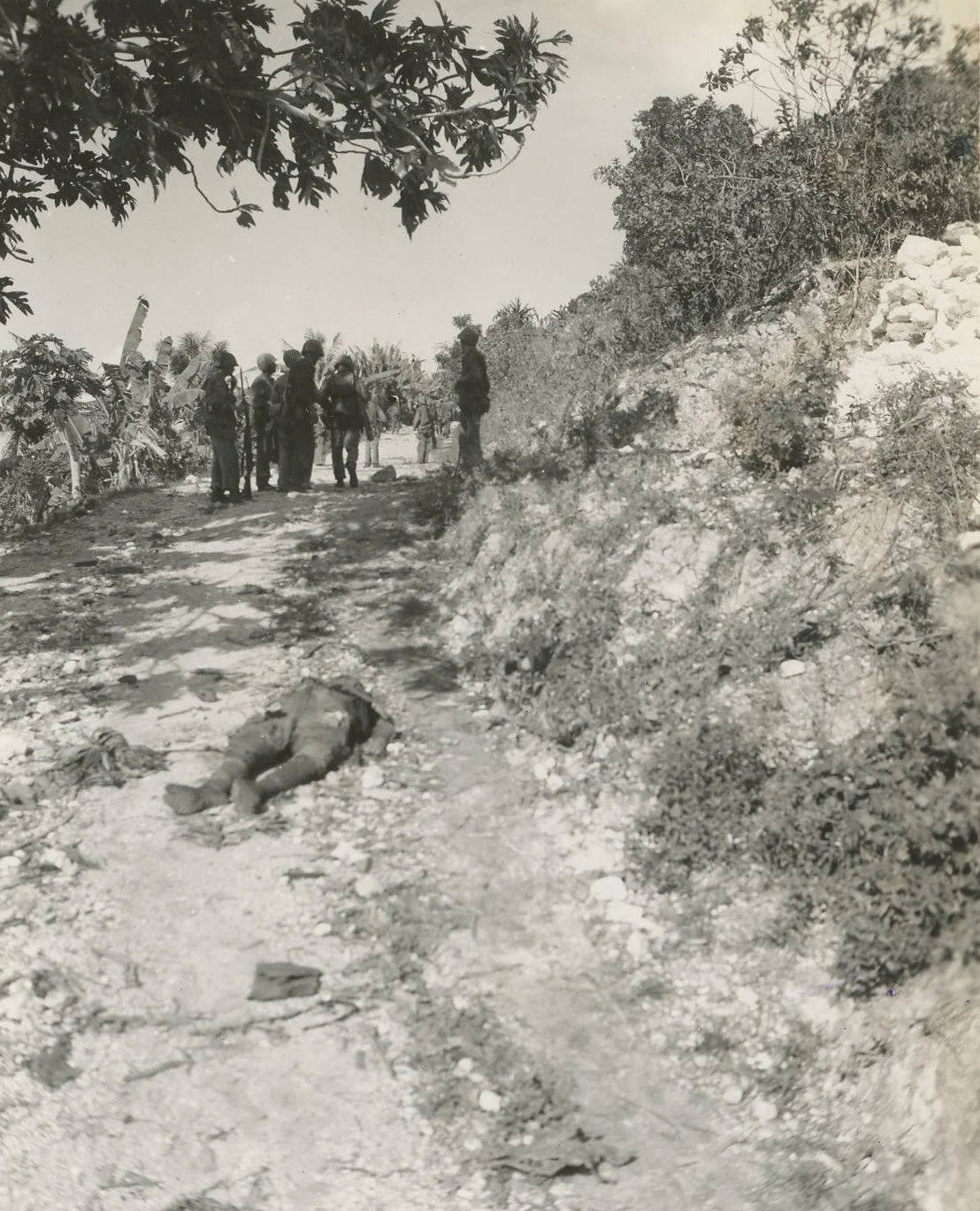
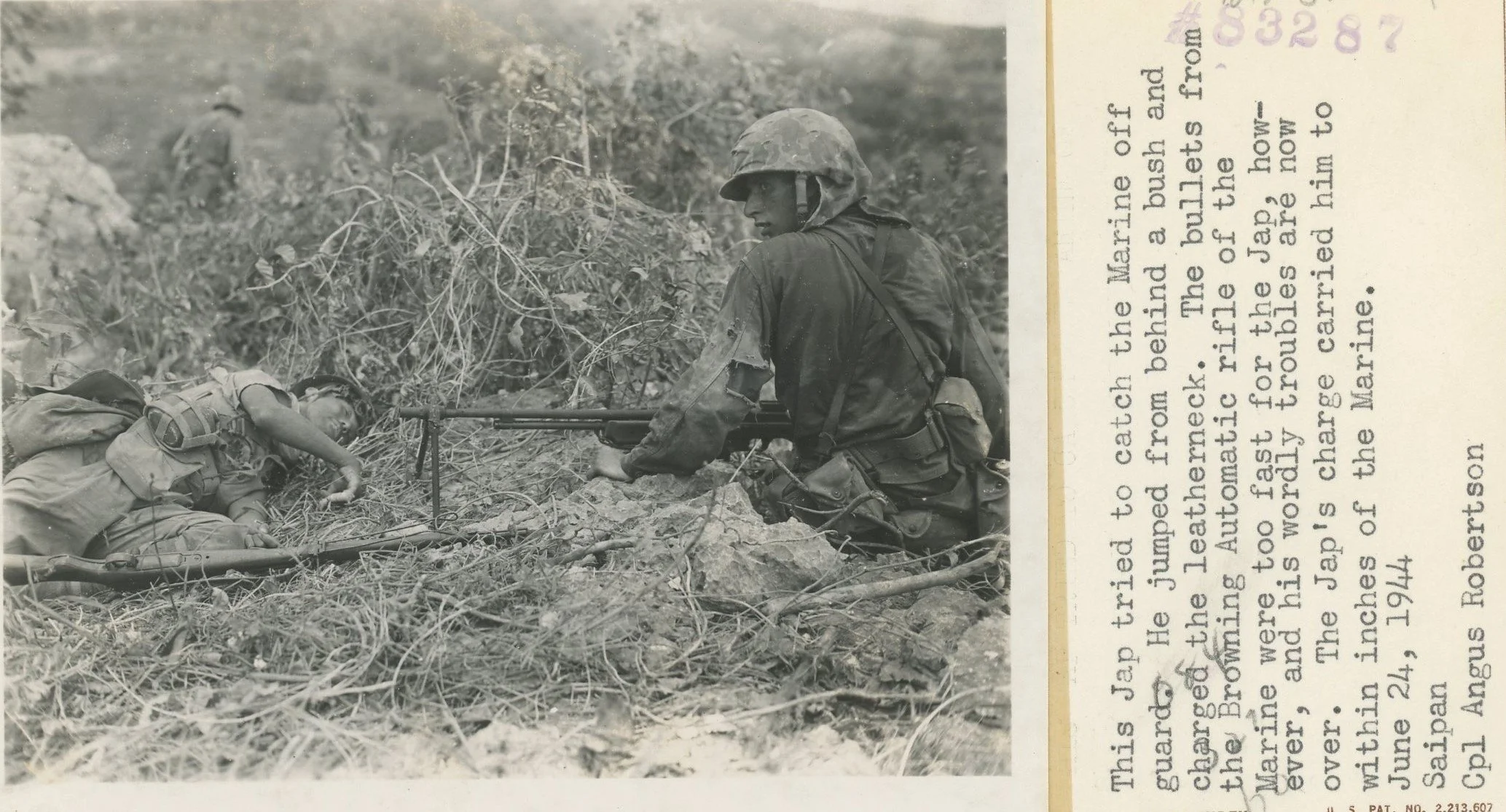
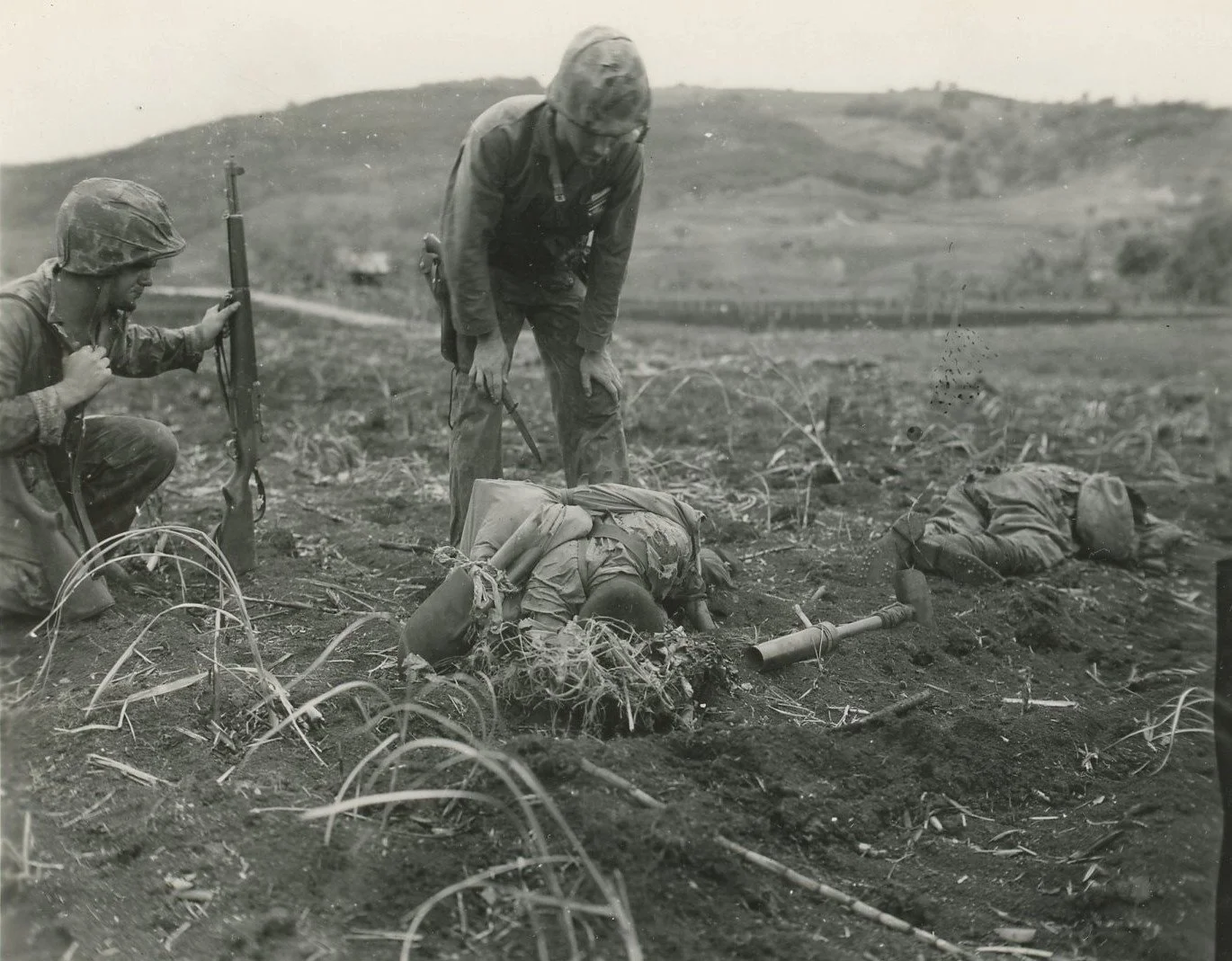
Imperial Japanese Army Type 96/99 light machine gunner lying beside a road, killed during combat.
Although light machine gunners were not typically issued rifles, this soldier is armed with a Type 99 rifle, likely acquired after leaving his light machine gun behind. His role is identifiable by the two canvas pouches mounted at the rear of his belt, used respectively for spare parts and tools.
Additional equipment includes an army-model haversack and a Showa 5 regulation canteen. He wears Type 98 trousers, puttees, Showa 5 regulation boots (without hobnails), and a long-sleeved collared jyuban. A Type 99 grenade is visible in his right hand, with an early-war Type 99 rifle lying behind him.
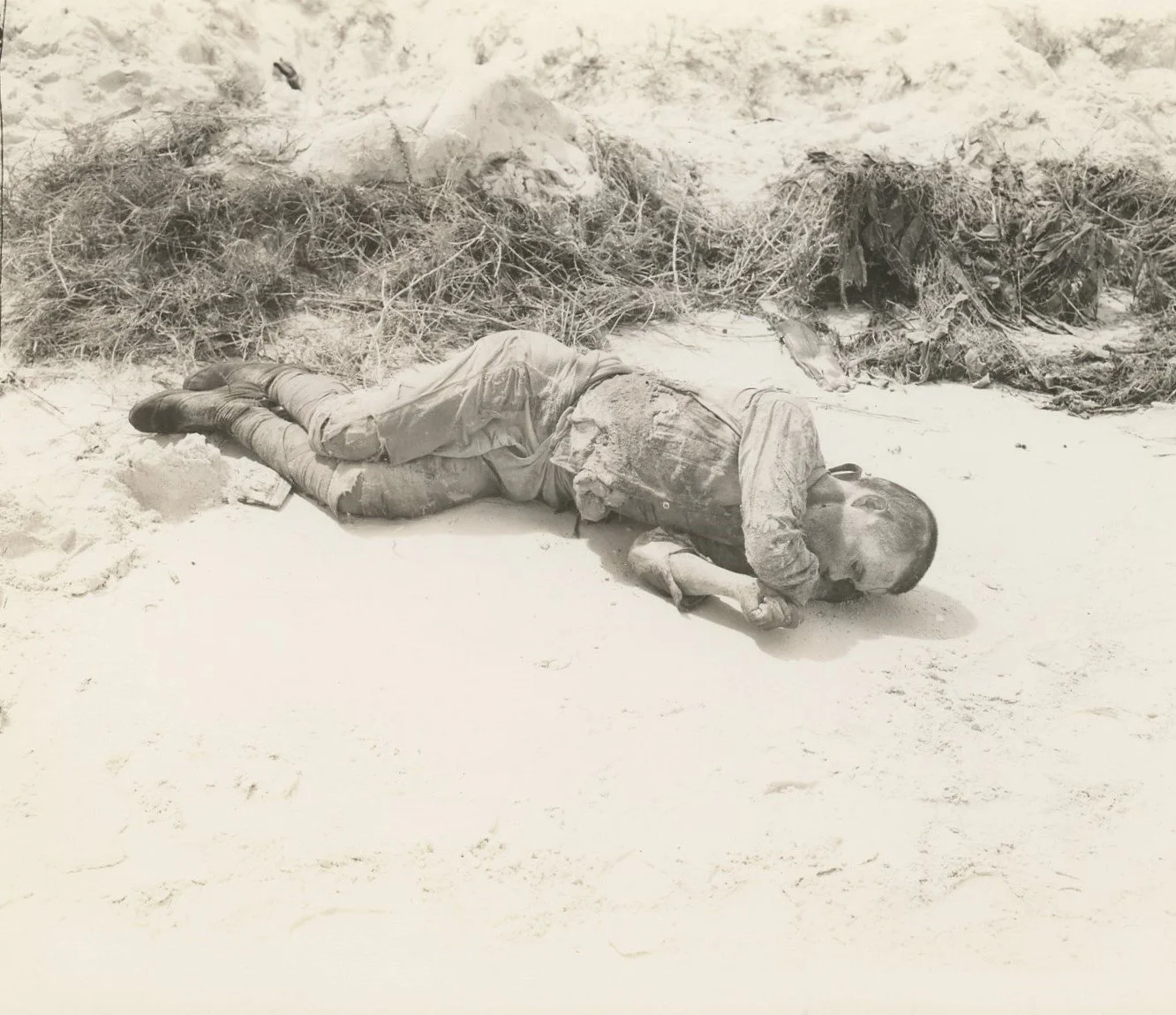
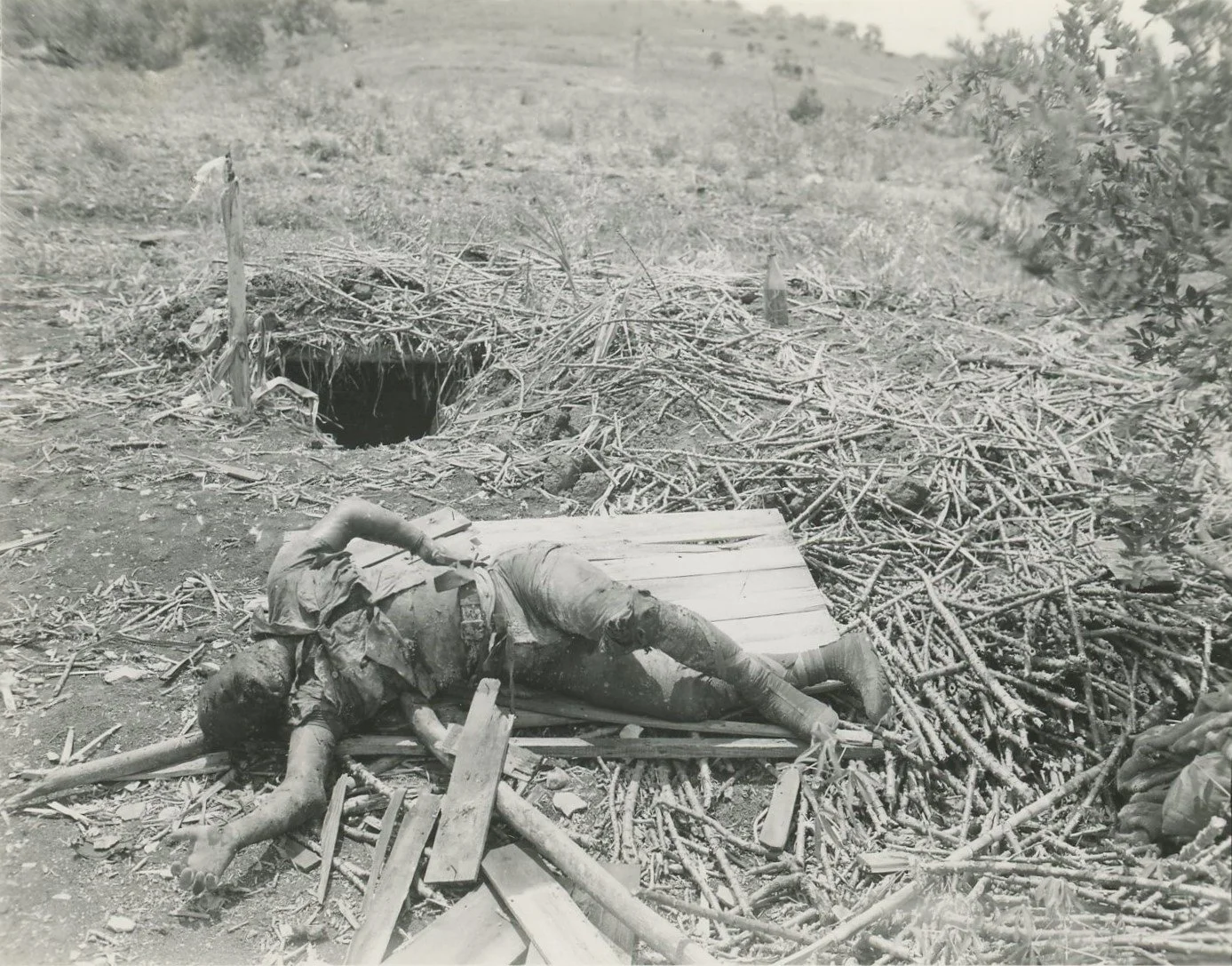
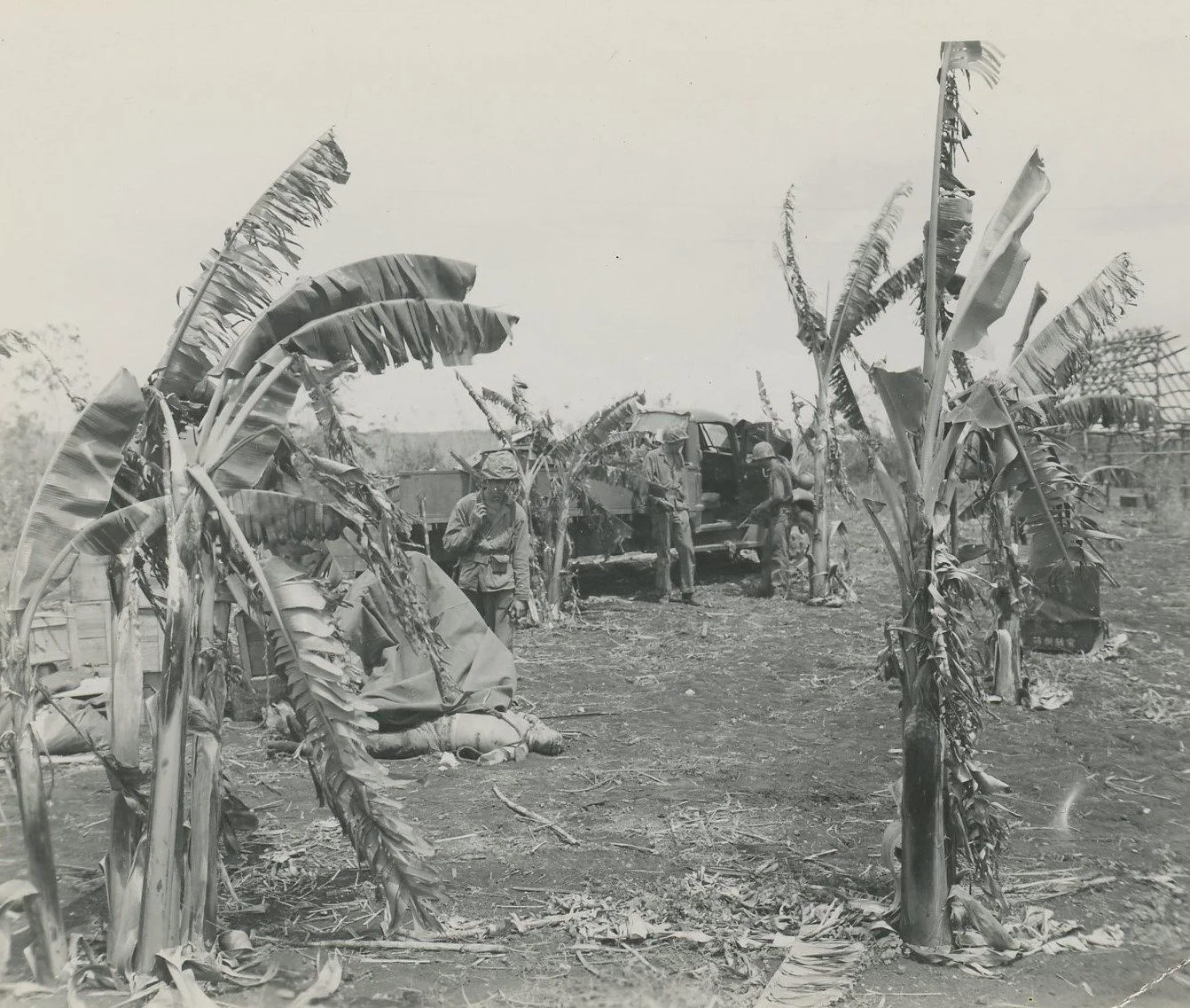
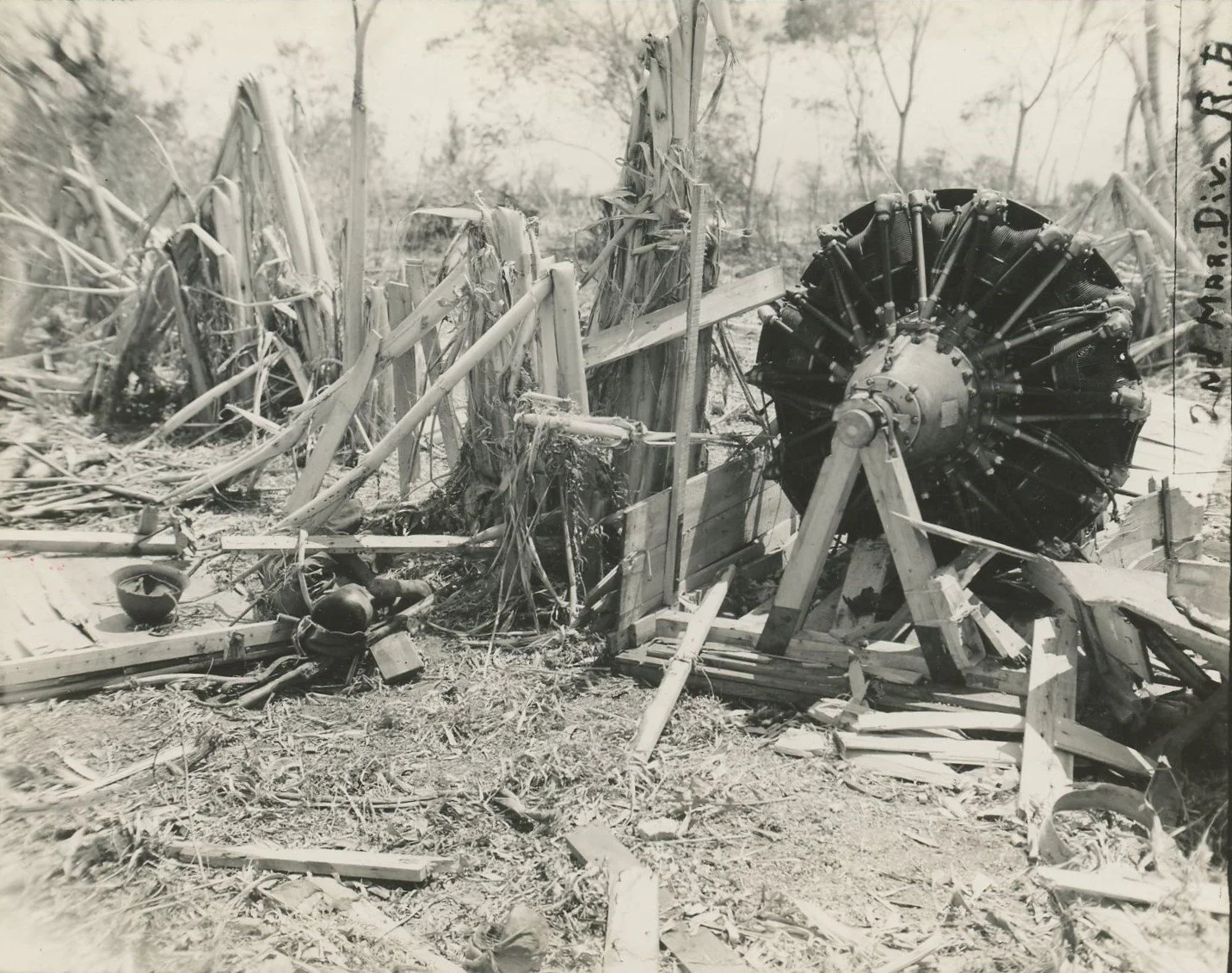
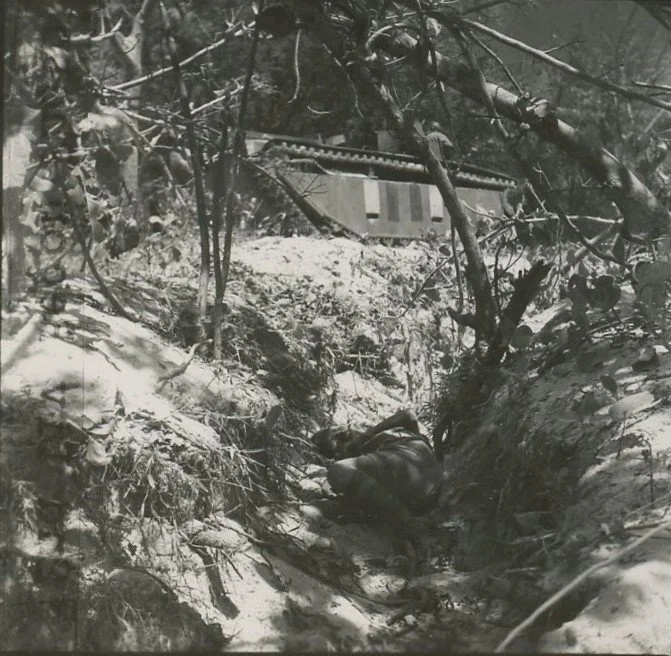
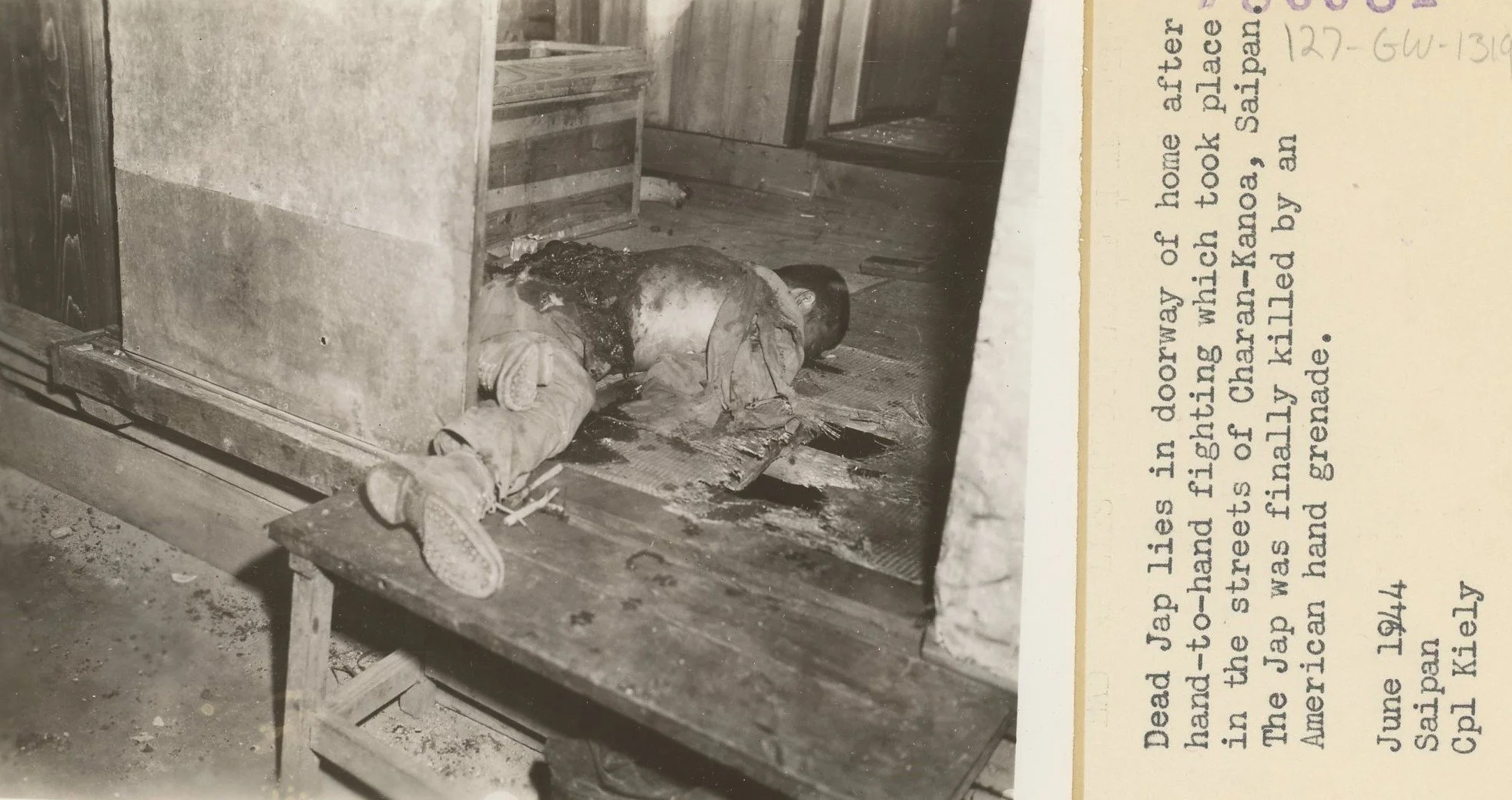
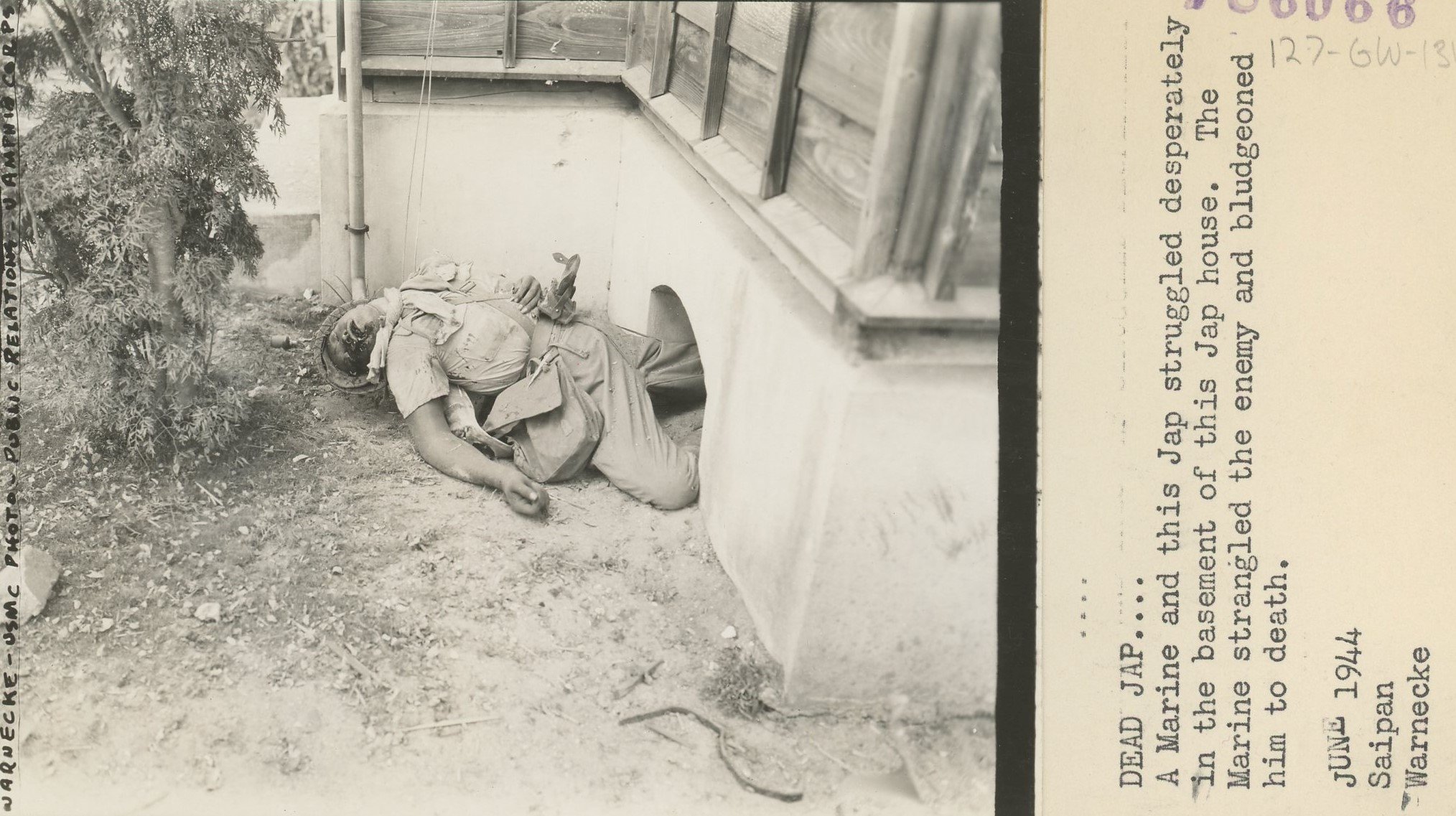
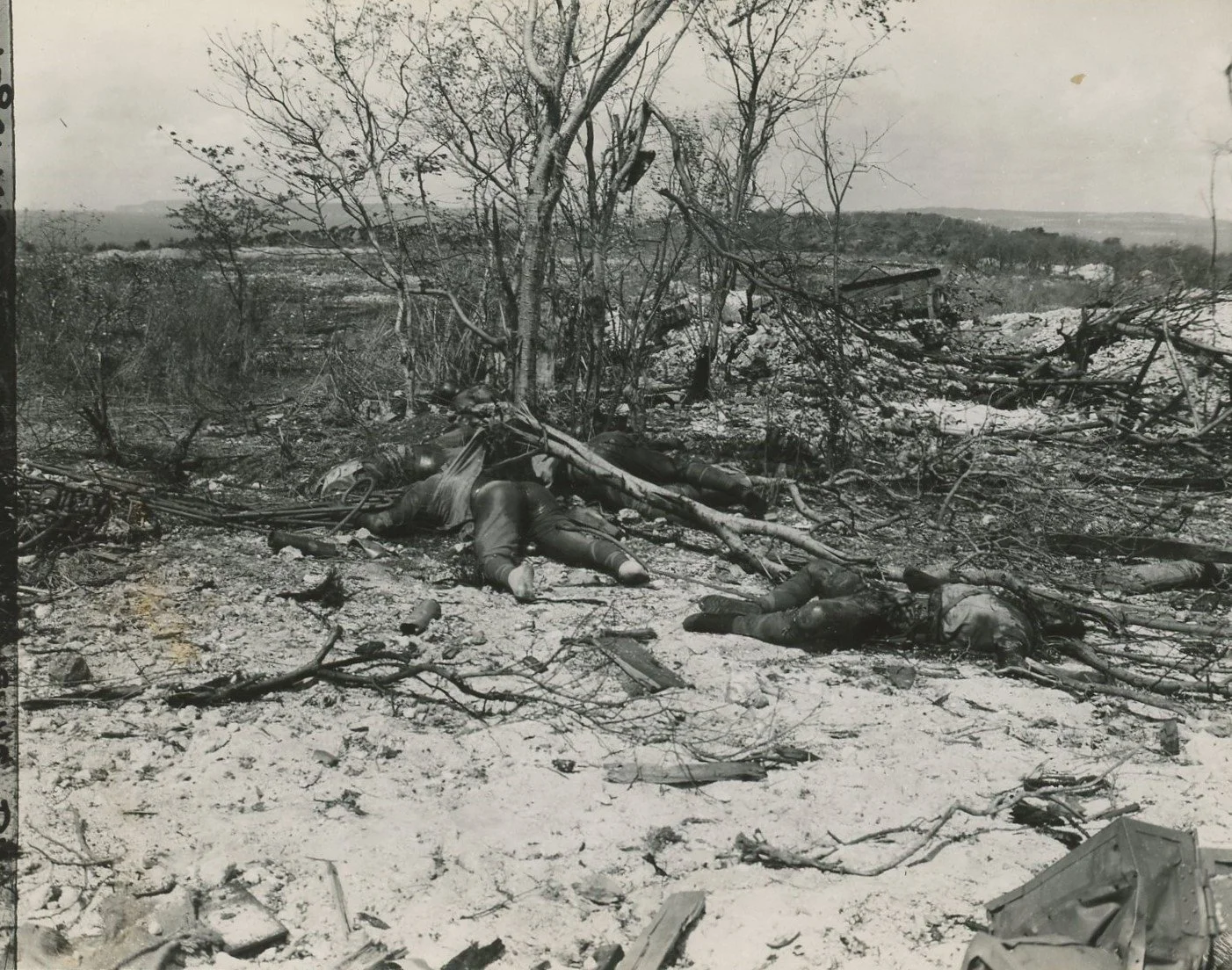
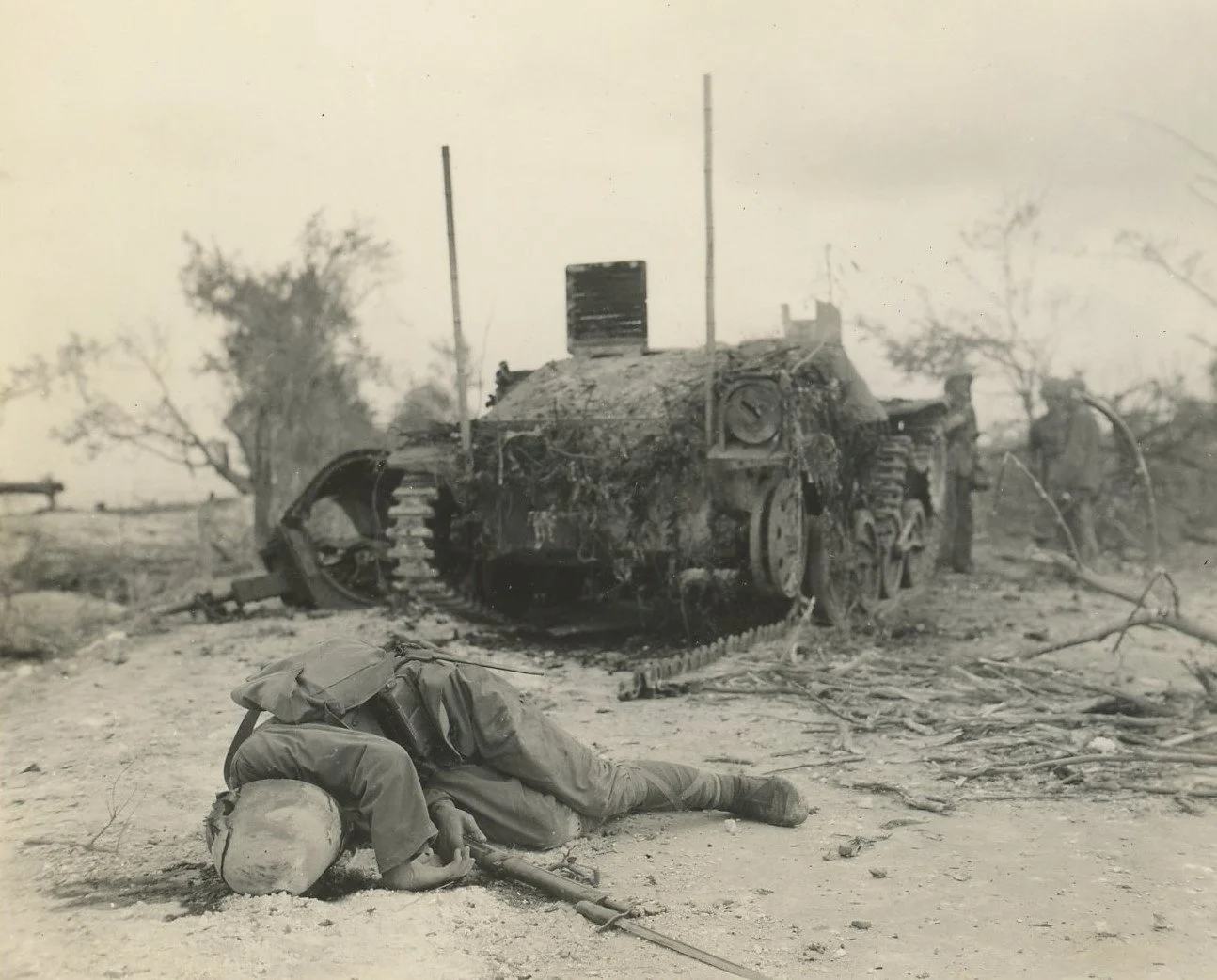
In the background, a Type 95 Ha-Go light tank of the 52nd Infantry Division is visible with its turret displaced.
In the foreground lies an Imperial Japanese Army soldier wearing a bare Type 90 helmet, Type 98 uniform set, late Ko leather equipment set, army-model gas mask carrier, puttees, and closed-toe tabi. He is holding a mid-war Type 99 rifle fitted with a mid-war straight-quillon Type 30 bayonet.
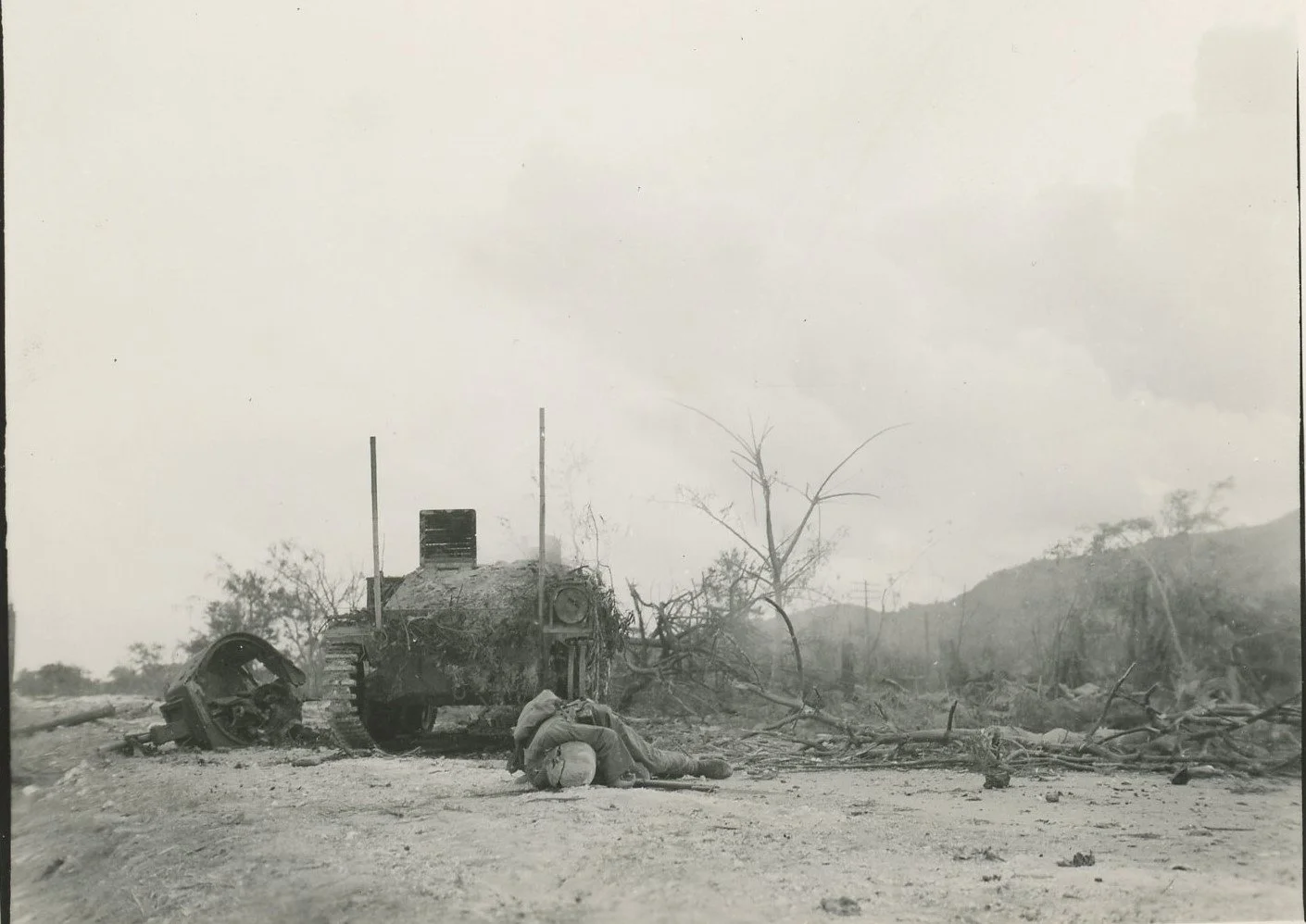
In the background, a Type 95 Ha-Go light tank of the 52nd Infantry Division is visible with its turret displaced.
In the foreground lies an Imperial Japanese Army soldier wearing a bare Type 90 helmet, Type 98 uniform set, late Ko leather equipment set, army-model gas mask carrier, puttees, and closed-toe tabi. He is holding a mid-war Type 99 rifle fitted with a mid-war straight-quillon Type 30 bayonet.
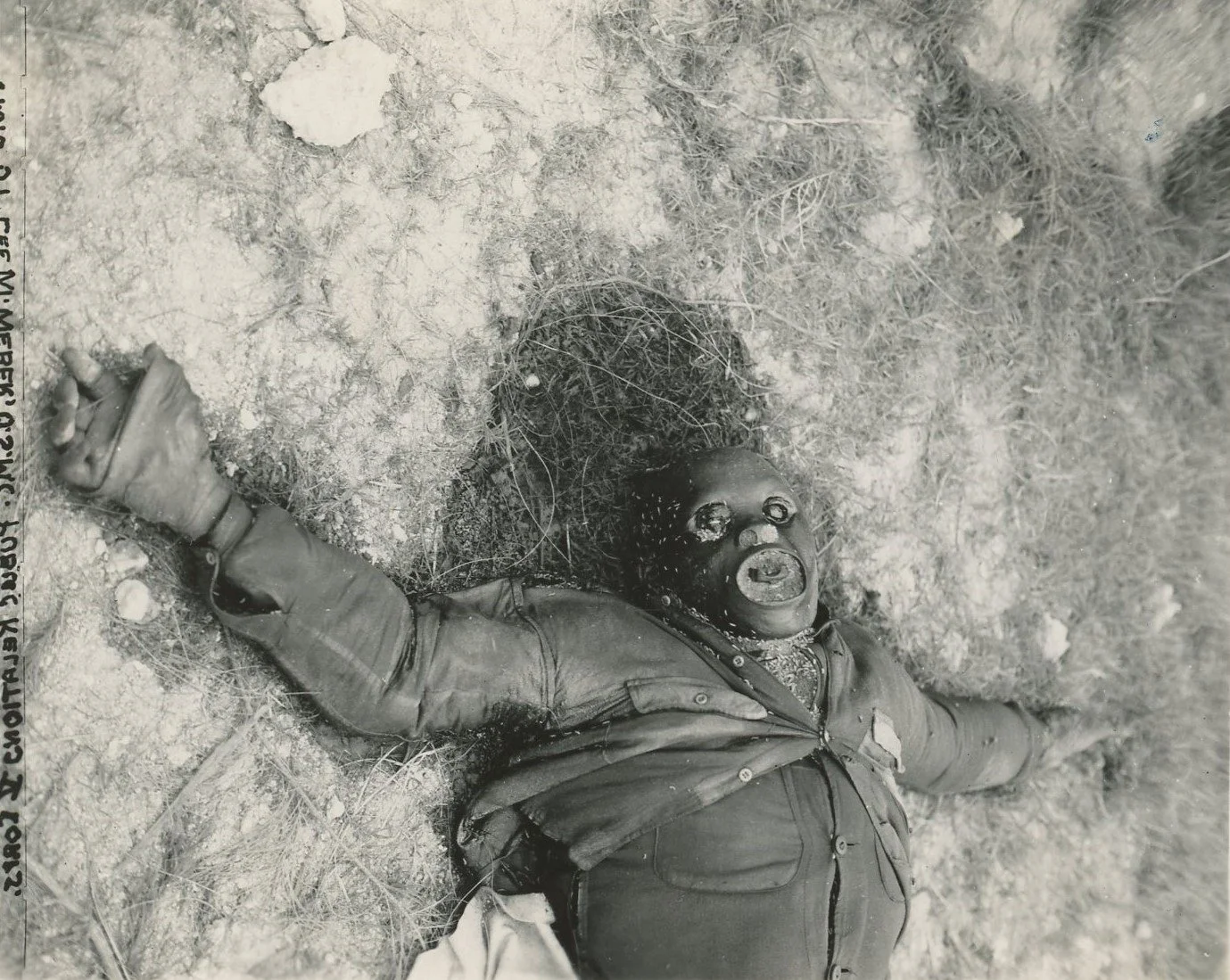
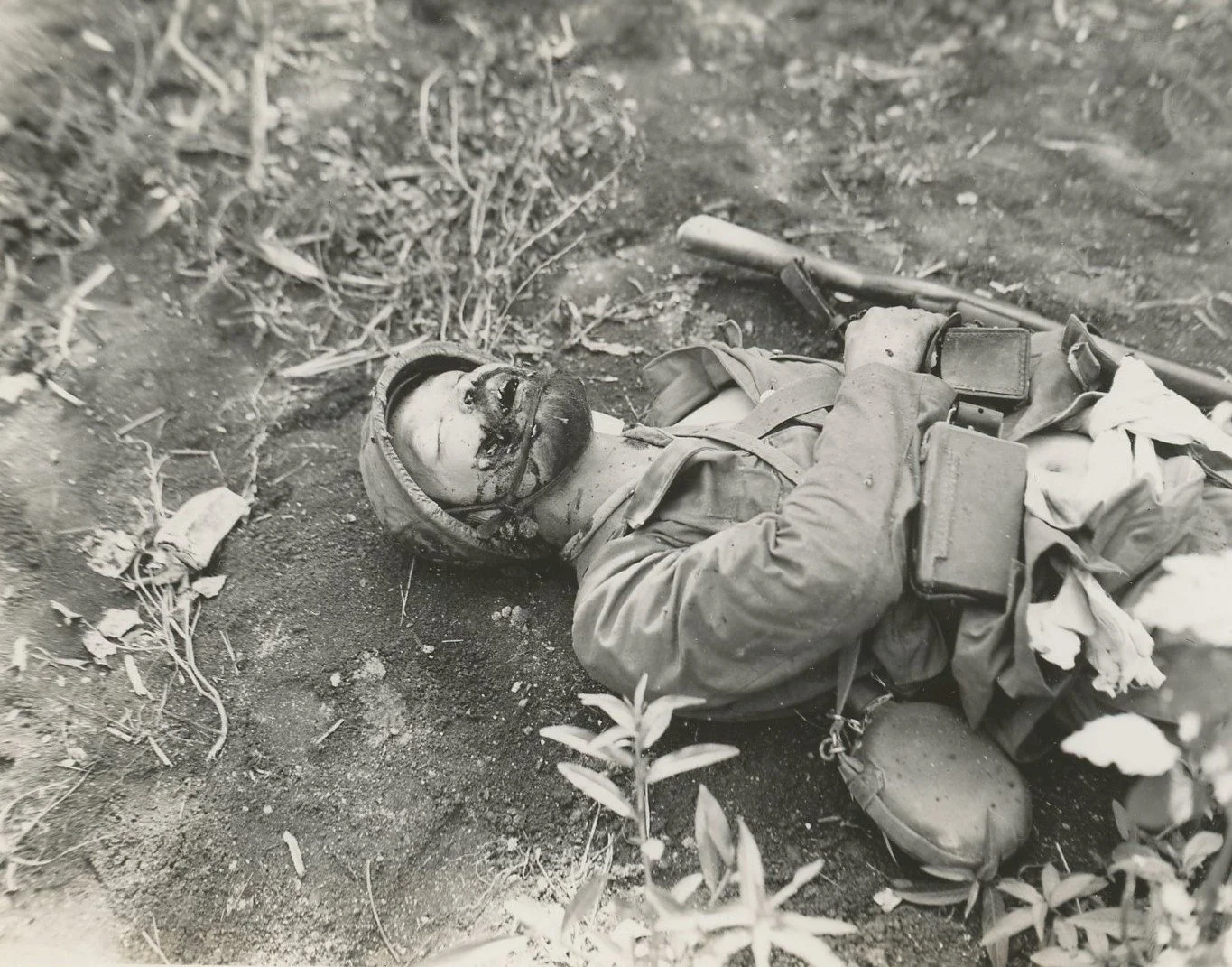
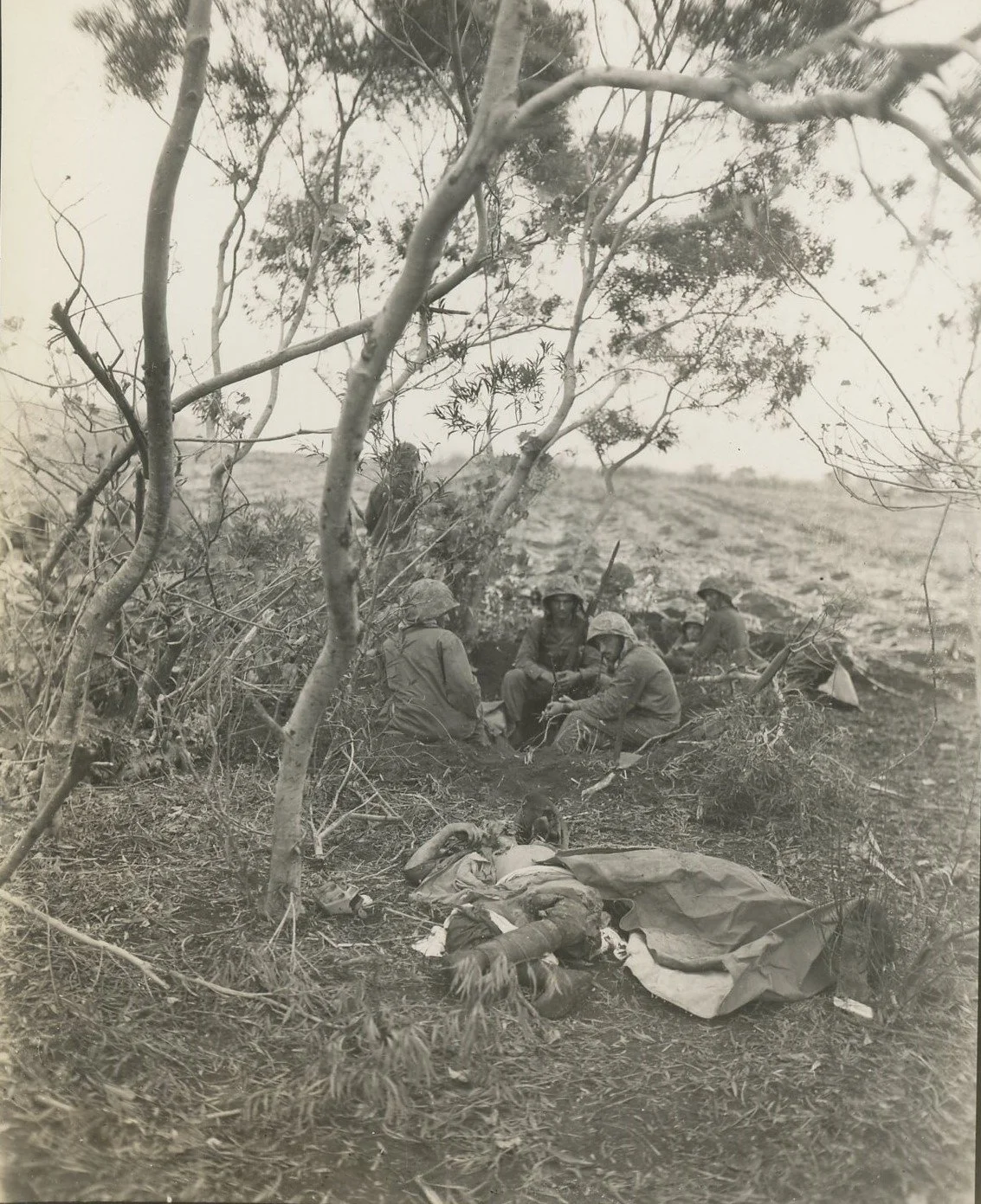
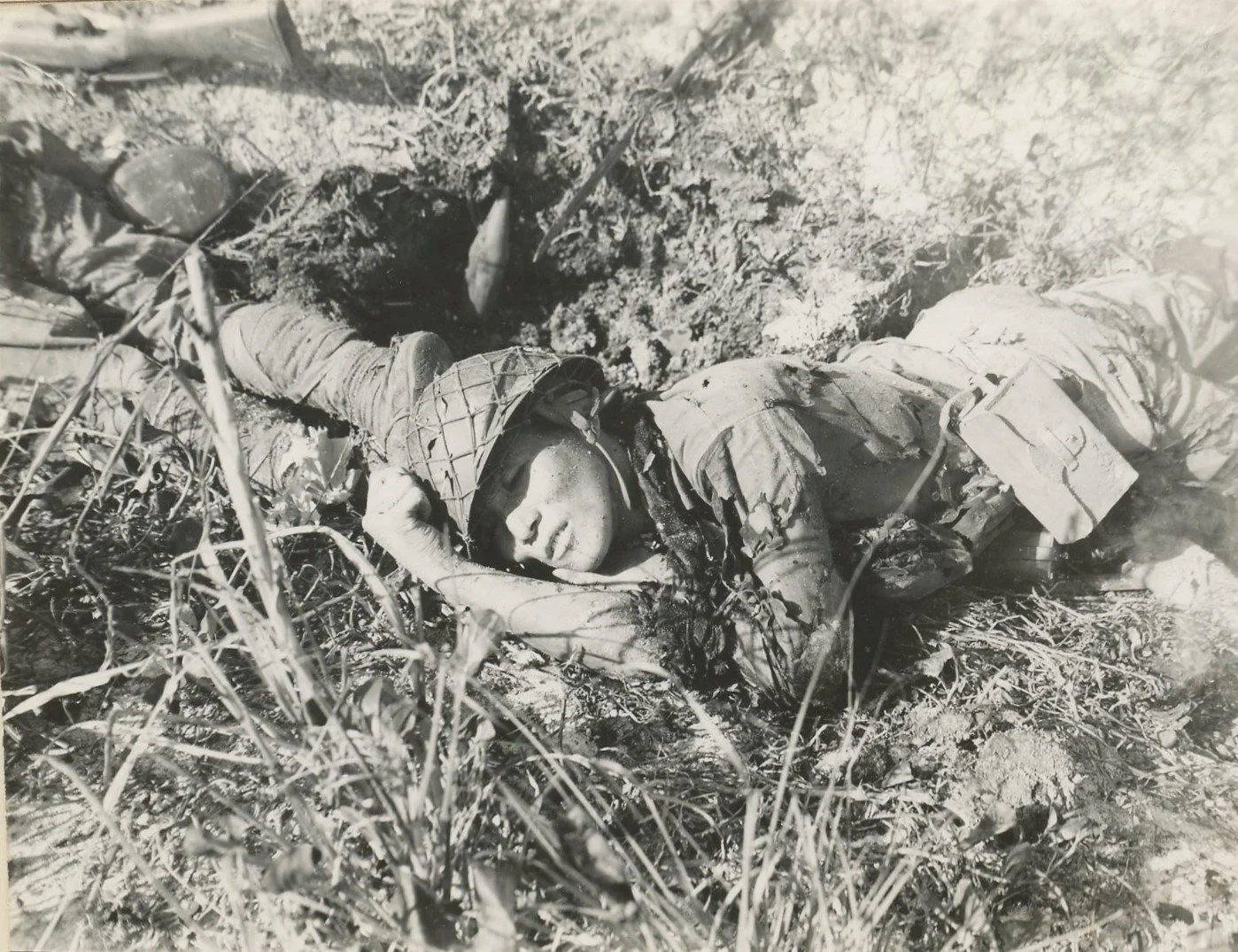
Imperial Japanese Navy sailor lying on his back, without visible rank insignia on his tunic.
He wears a navy-model helmet with cover and a three-button rikusenfuku. His equipment includes a leather belt with reserve pouch worn at the front, paired with a rubberized front pouch, a navy-model haversack, and an IJN canteen fitted with a later-model black topper. A Type 38 infantry rifle lies behind him.
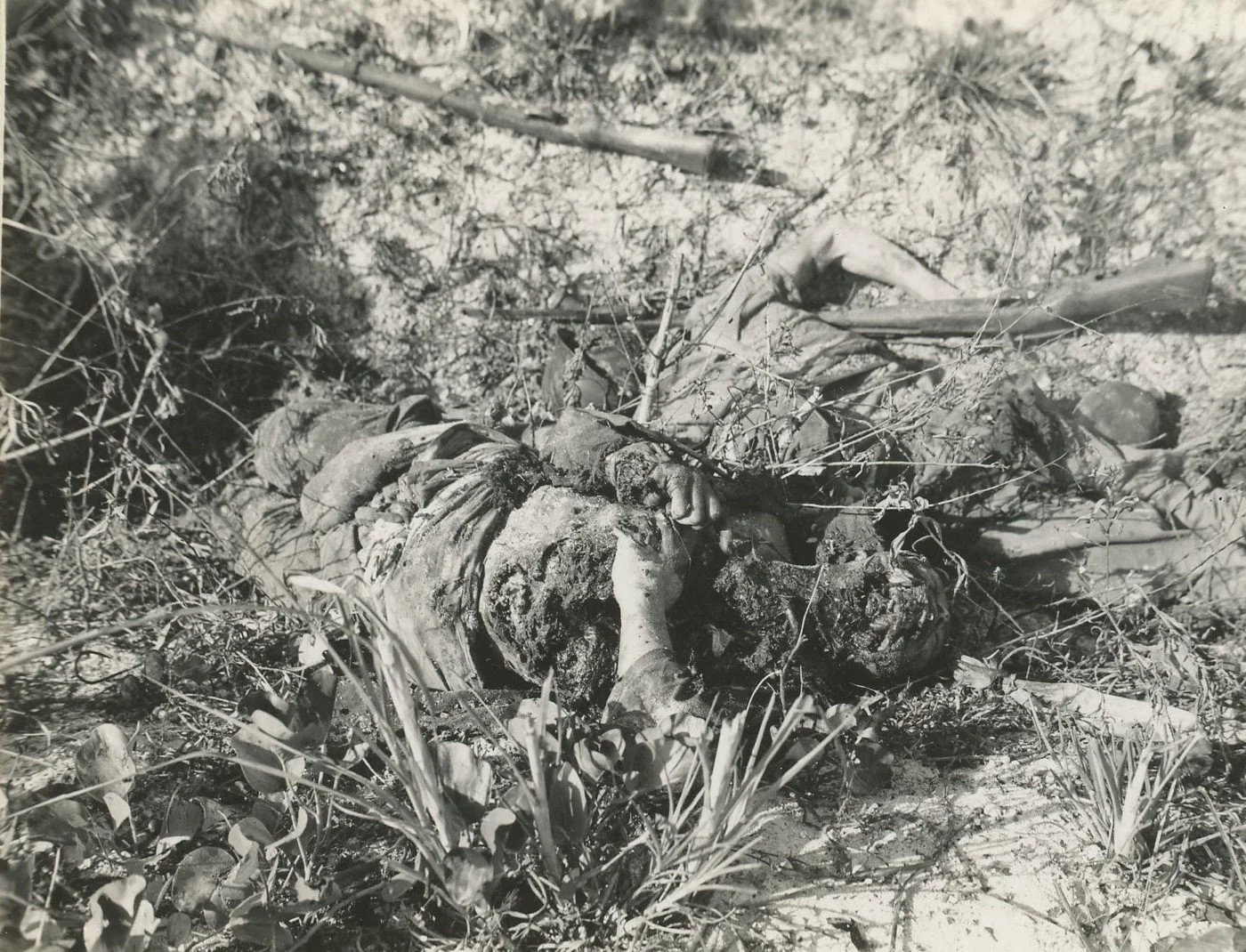
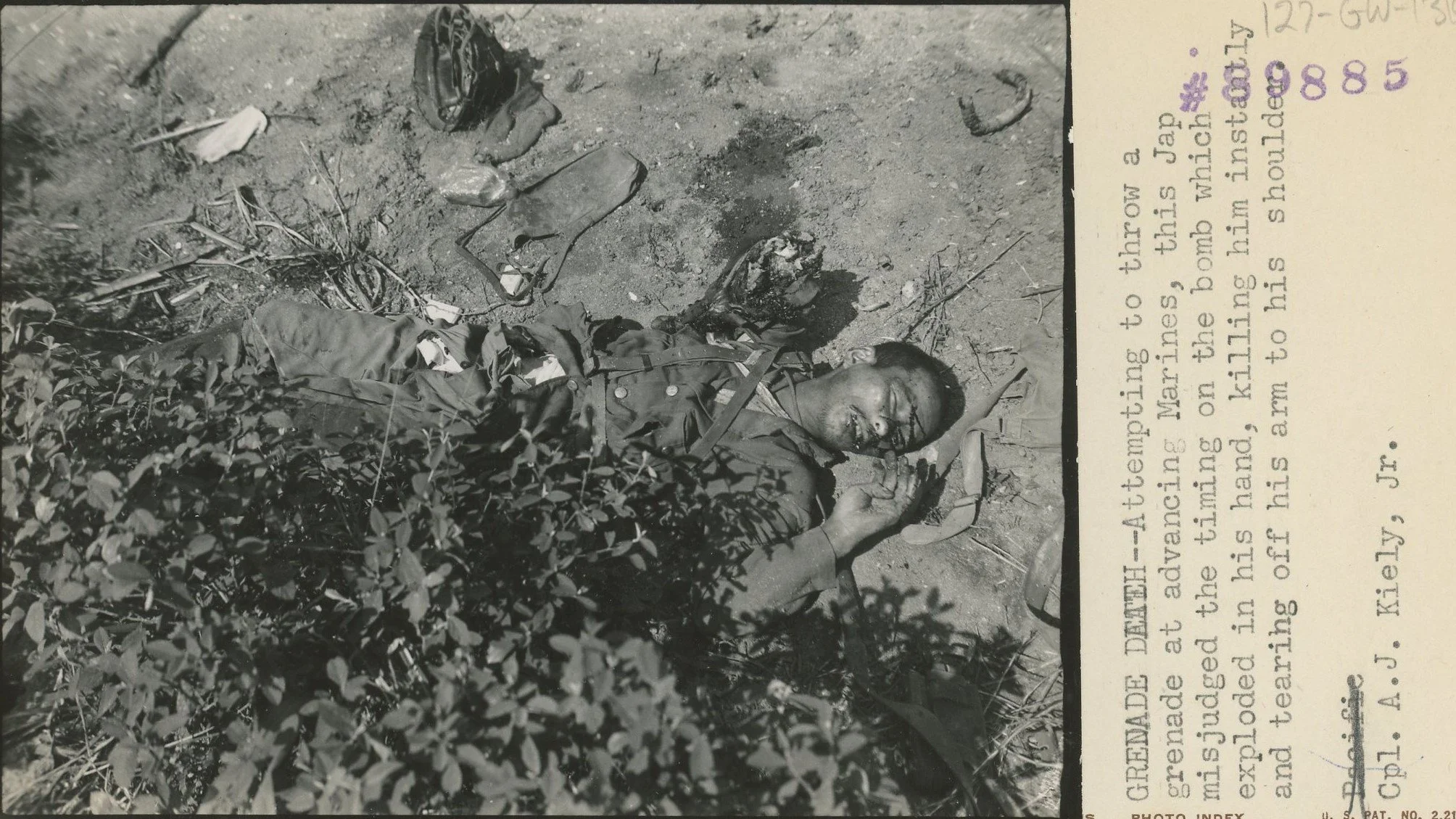
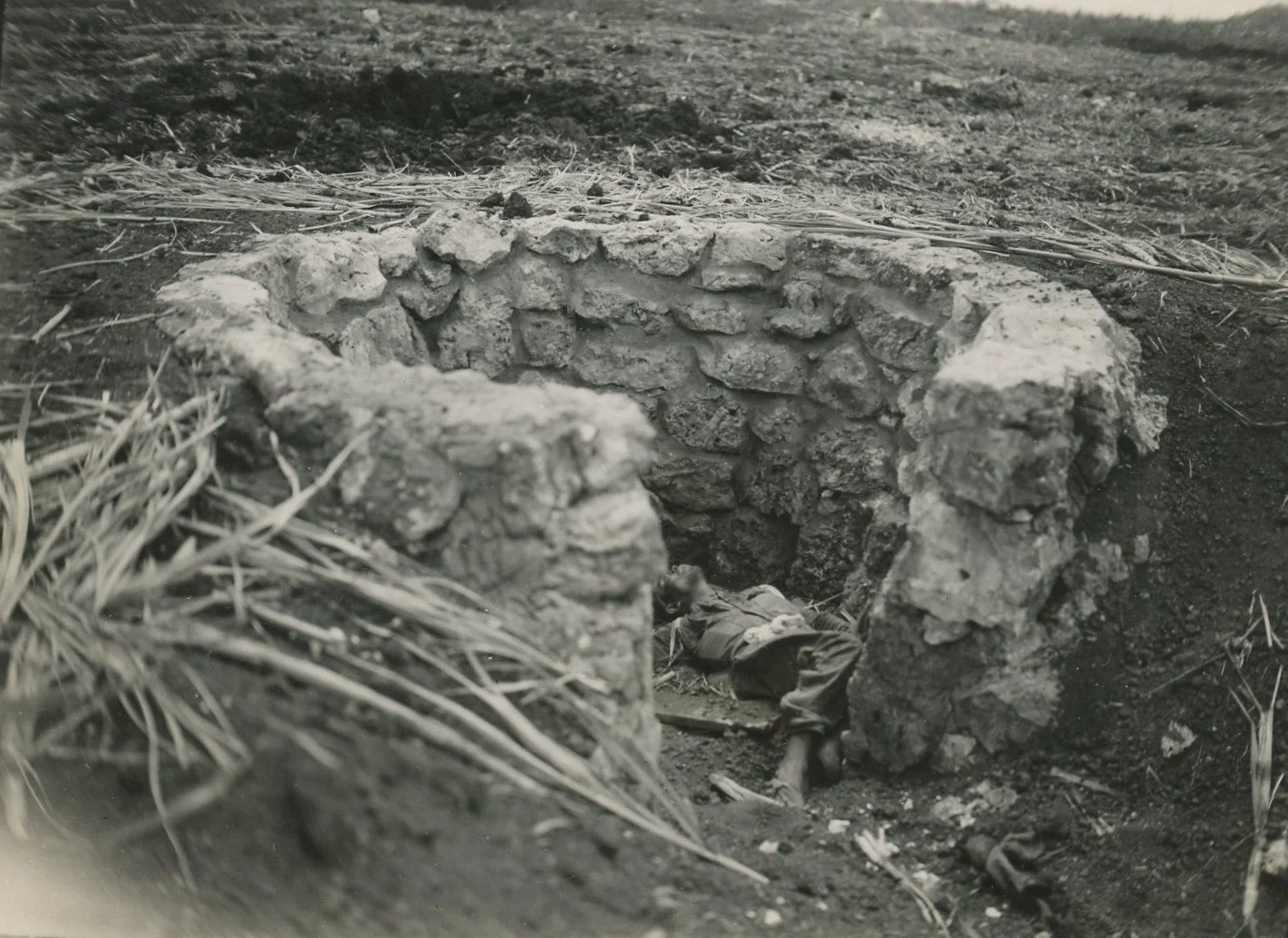
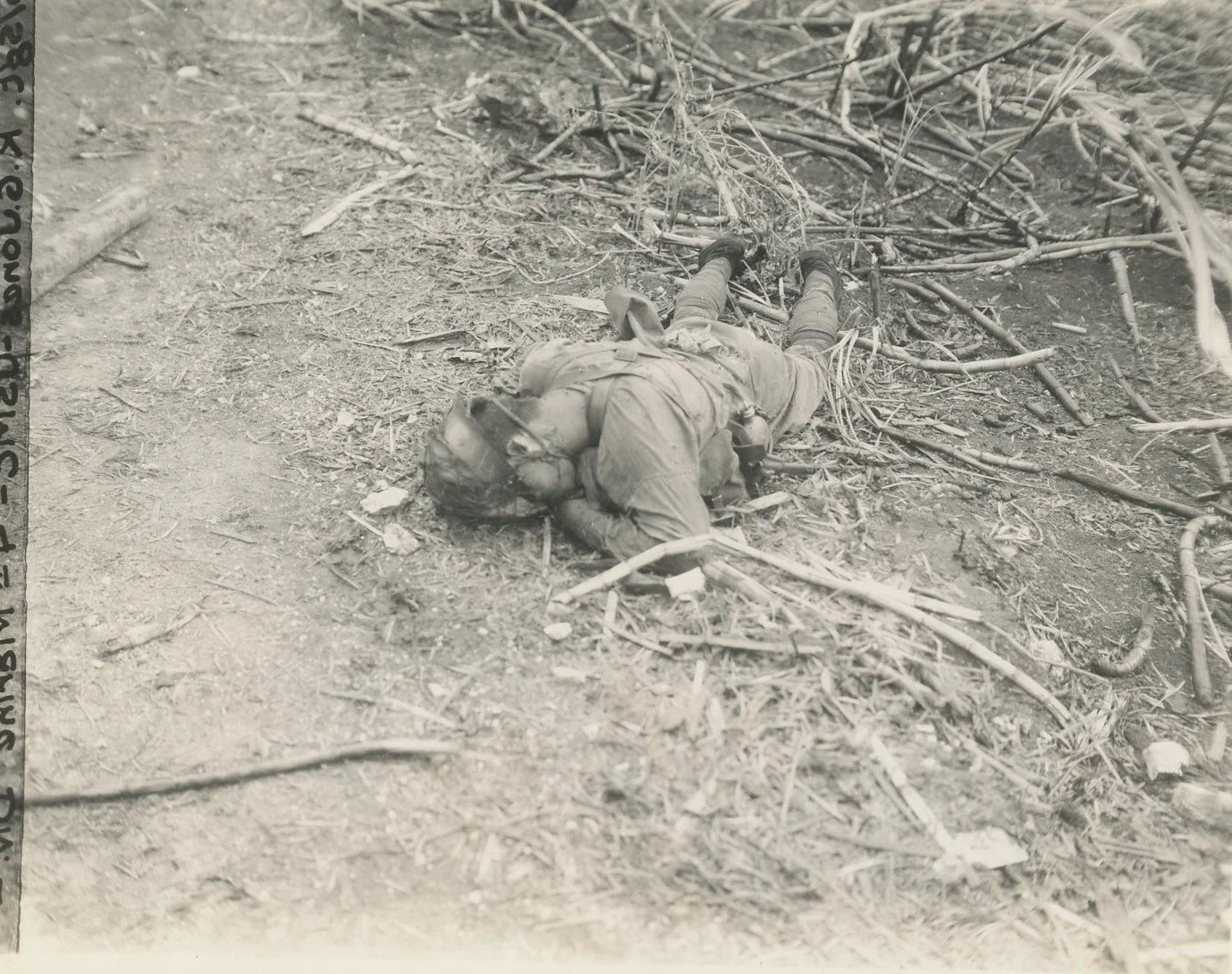
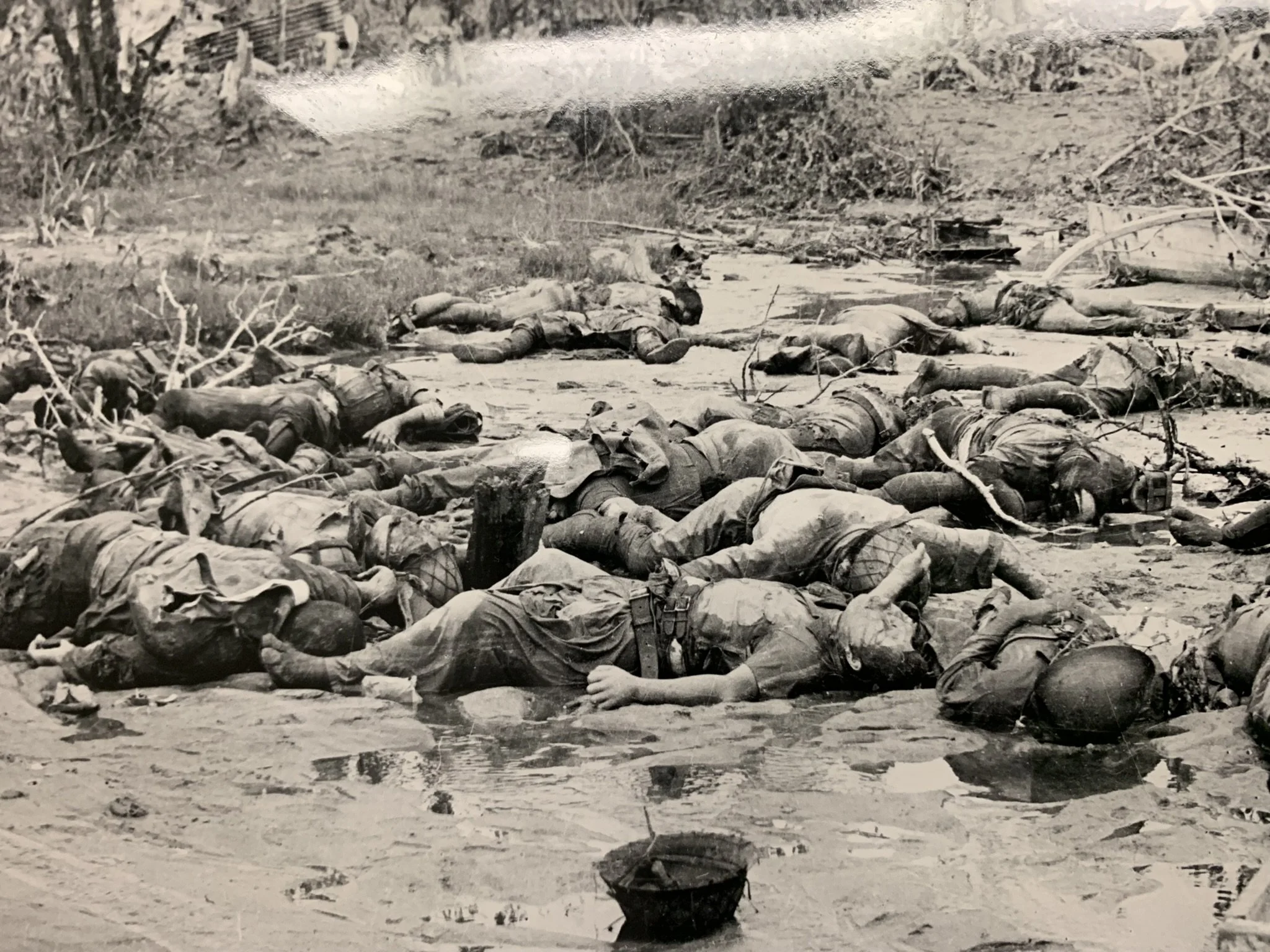
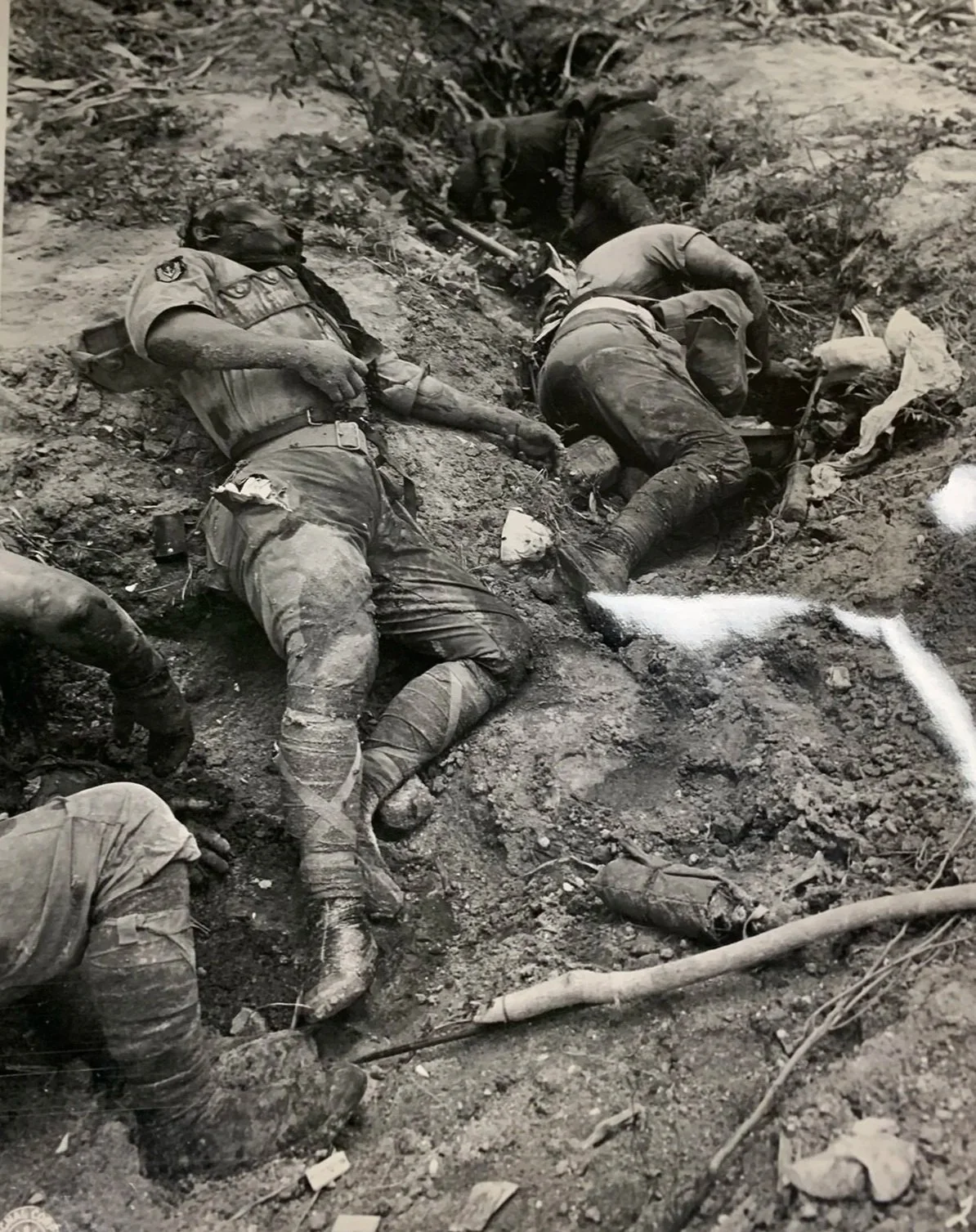
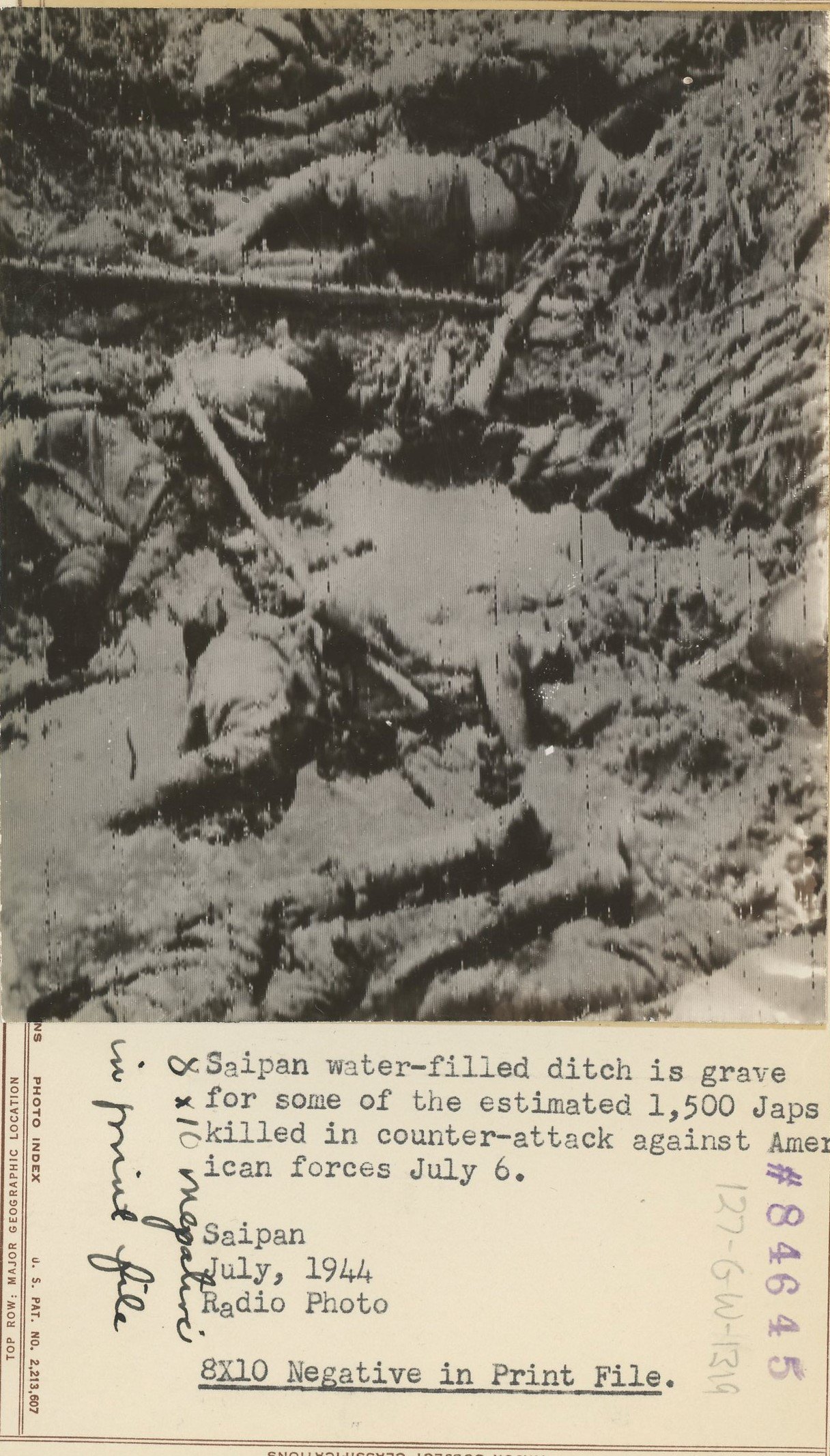
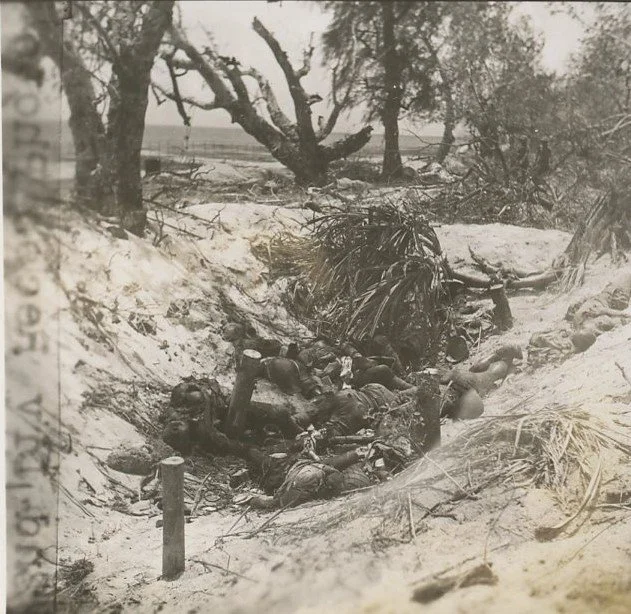
Four Imperial Japanese Navy personnel lie in a ditch following a failed counterattack during the fighting at Garapan, 1944.
The sailor on the left wears puttees with closed-toe tabi. The sailor lying on his back wears the rank insignia of a Petty Officer on his navy-collared undershirt and is equipped with an ammunition bandolier, pistol holster with waist belt, rubberized belt, puttees, and closed-toe tabi.
To his right, another sailor lies head-first, wearing a navy-collared undershirt, navy-model haversack, closed-toe tabi, and puttees. He lies atop a helmet. Behind him is a fourth sailor wearing an unidentifiable uniform. Two mid-war Type 99 rifles are visible nearby.